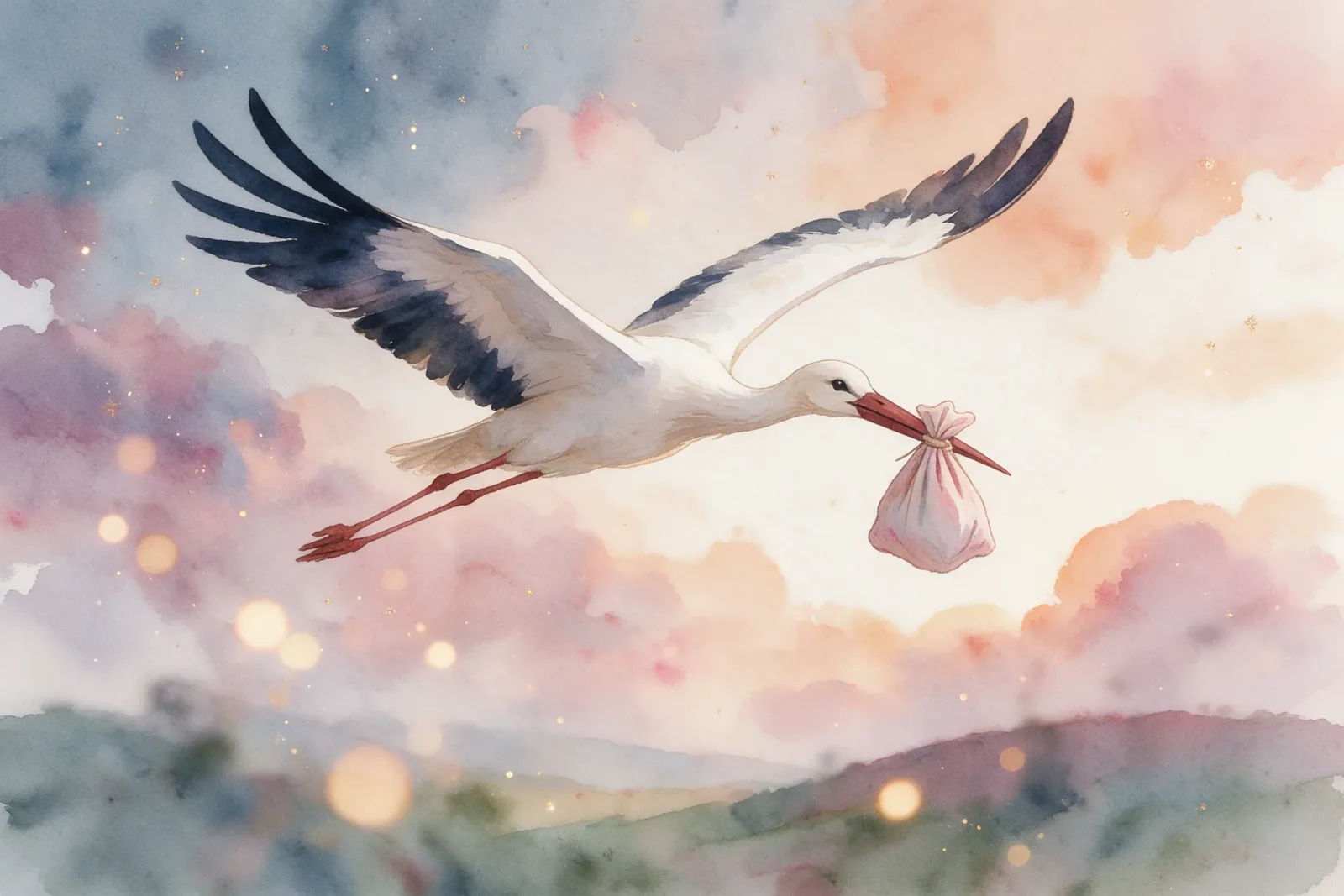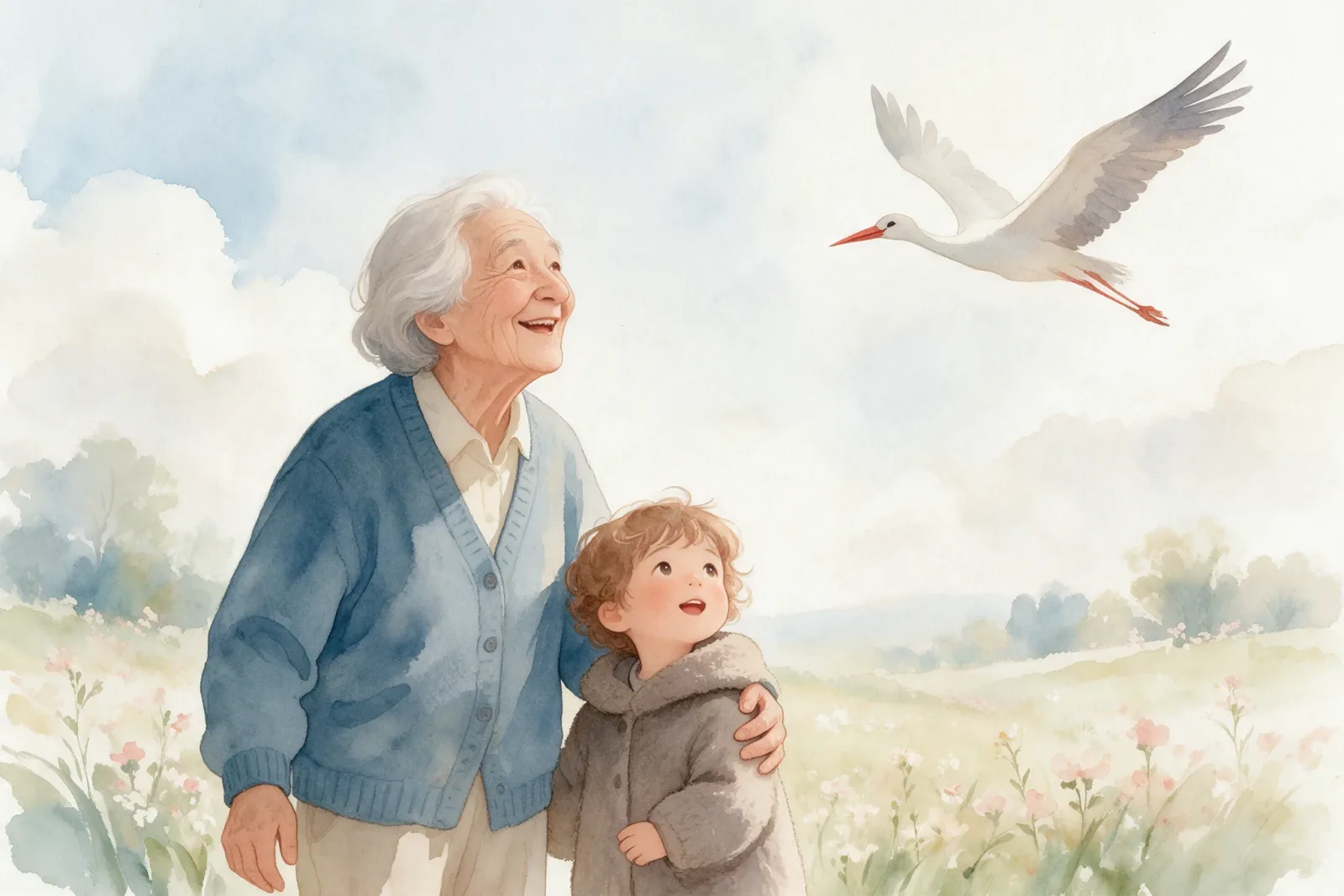
Every legend survives only if someone tells it again. Telling the story anew is how the stork's legend has lasted, passed from one generation to the next, and it usually happens in a single moment, a grandparent and a child looking up at a white bird together. The story changes a little each time it is told, and that is why it is still alive.
The moment the story is handed over
It often begins with a question. A child sees a stork on a roof and asks what it is doing there, and an adult, remembering another adult, begins to tell. The story does not arrive as a lesson. It arrives as a gift, offered at the exact moment the child is looking.
That timing is everything. A legend passed on demand is a fact. A legend passed in the presence of the bird is a memory, and memories are what stick.
The telling that changes shape
No two tellings are the same. One grandparent tells it straight, as a tale of babies and bundles. Another adds the marsh, or the nest of luck, or the clattering bill. Each retelling trims and embellishes, and the story shifts the way a bird adjusts its course.
This drift is not a corruption. It is how oral stories stay fresh. The stork legend has survived precisely because no one froze it, and each new voice found a way to make it fit the child in front of them.
The child who will tell it next
The child listening today is the one who will tell it tomorrow. The legend moves forward only through the children who remember it, and it is kept warm by the hands that pass it on.
A child who once looked up at a stork with a grandparent will, years later, look up with a child of their own, and the same question will come again, and the same story will rise to meet it. That is the whole machinery of the legend, a loop of looking and telling.
Why the story is worth keeping
The stork legend earns its retelling because it carries more than a bird. It carries the idea of welcome, of return, of a faithful creature bringing good news to a home. These are things a family wants its children to believe in, even as the world grows complicated.
The story gives a child a gentle picture of how a new life arrives, and it gives the teller a way to say, without saying it plainly, that this child was waited for and wanted.
The story that will not end
As long as there are storks to look up at, there will be someone to say look, and someone else to remember. The legend does not need protection or revival. It only needs the next child, the next question, the next bird on the next roof.
Telling the story anew is the oldest ritual the stork has. The bird flies back every spring, and the words come back with it, and between them they keep the legend aloft.
Explore the gift