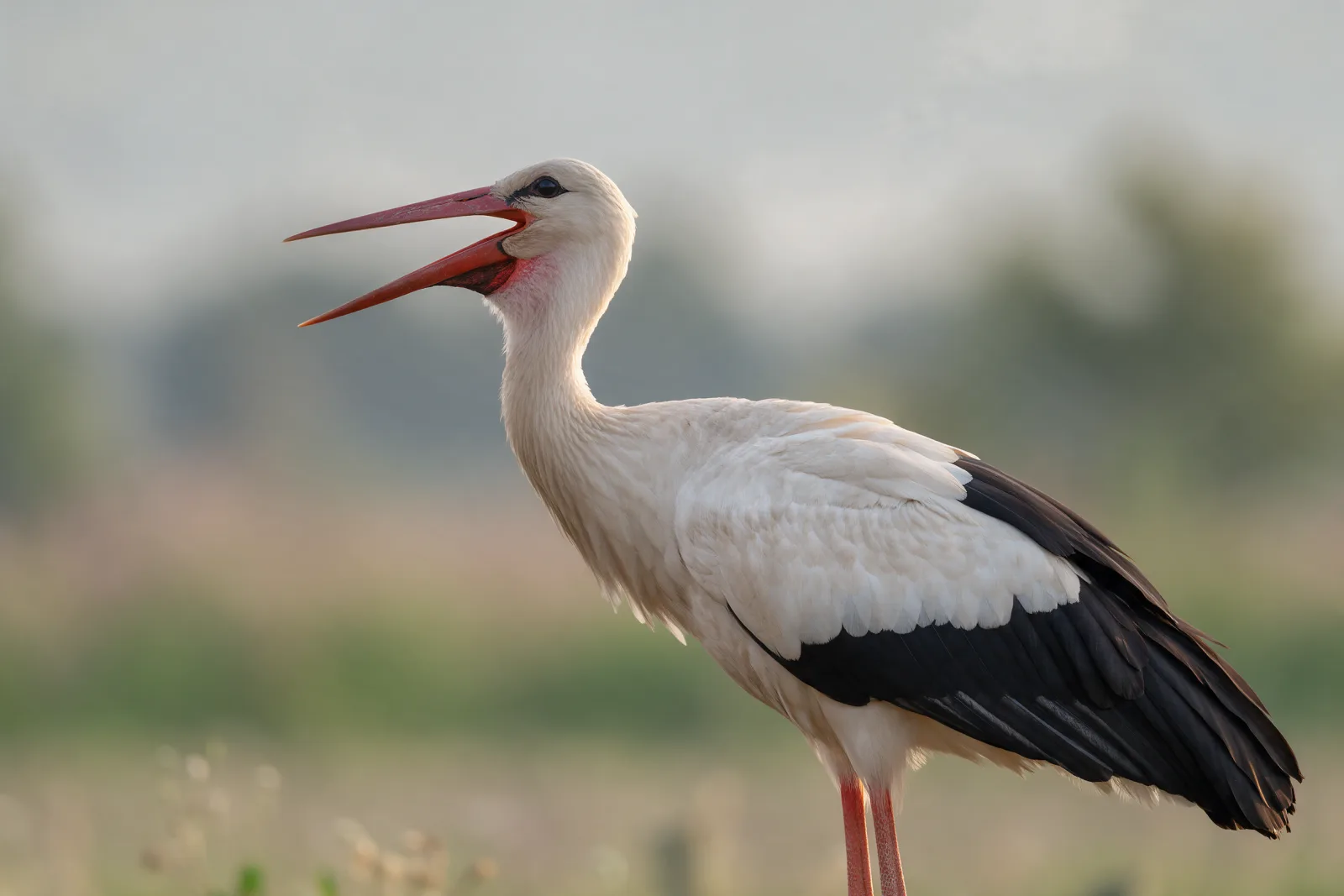
A white stork has no song, and yet it makes one of the most distinctive sounds in the bird world. The clattering song is not a song at all, but a rapid rattle of the bill, struck fast and hard so that it carries like a small drum across the rooftops and fields.
The stork's voice is not in its throat but in its bill. Where a songbird pours out a melody, the stork simply snaps its two mandibles together, over and over, at a speed that blurs them. It is the bird's only real sound, and it says a great deal.
Why no song
Most birds that sing use a specialised organ called the syrinx, a kind of voice box deep in the chest. The white stork's syrinx is simple and weak, and it produces almost nothing, a faint hiss at most. So the stork has learned to speak with its bill instead.
This is not a flaw. It is a different way of being heard. The clatter is loud, and it carries, and it works perfectly for a bird that lives in the open and needs to be recognised from a distance.
What the clatter means
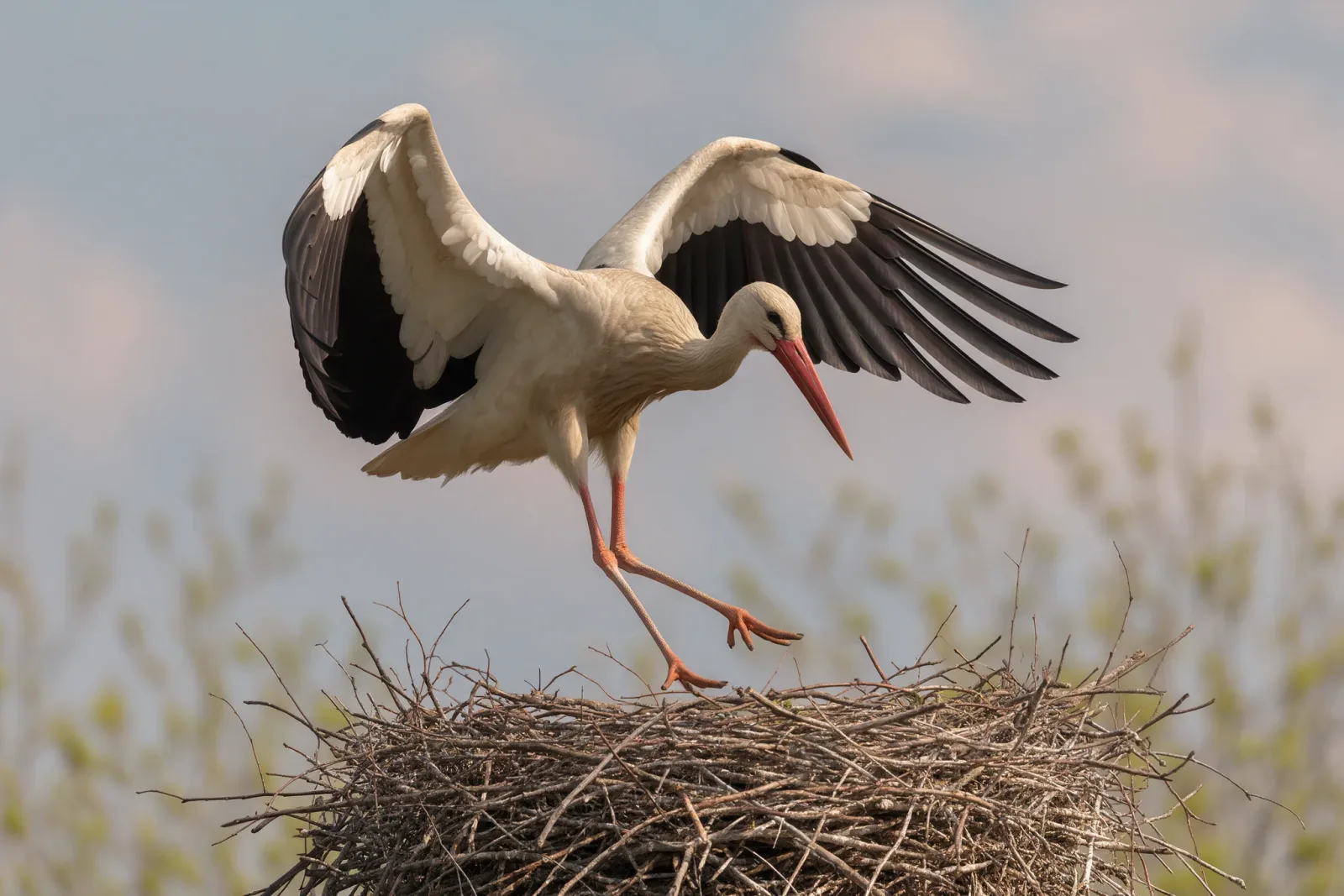
The clattering song has several meanings, all of them social. A stork clatters to greet its mate, to claim its nest, and to warn off rivals. The sound is most famous at the nest, when a returning bird lands and both partners throw their heads back and rattle together.
It is also used in display, and by the young, who practise their own weak versions from the nest. The clatter is the stork's whole language of greeting, alarm, and claim, packed into one sound.
The shape of the sound
The clatter is made by the upper and lower bill striking together, faster than the eye can follow. It sounds like a burst of dry knocking, and it rises and falls as the bird shifts its head. From close by it is astonishingly loud, a sound that seems too big for a bird.
There is a rhythm to it, a kind of urgent percussion, and once you have heard a stork clatter you never mistake it for anything else. It is the sound of the species, as much as the white and black of its wings.
The song that is not one
So the clattering song is a paradox, a song with no notes and a voice with no melody. It is made by a bird that cannot sing, and yet it fills the spring air above a thousand villages every year.
It is a reminder that the natural world does not always follow our categories. A bird need not sing to be heard, and a life need not be musical to be full of music.
Explore the gift