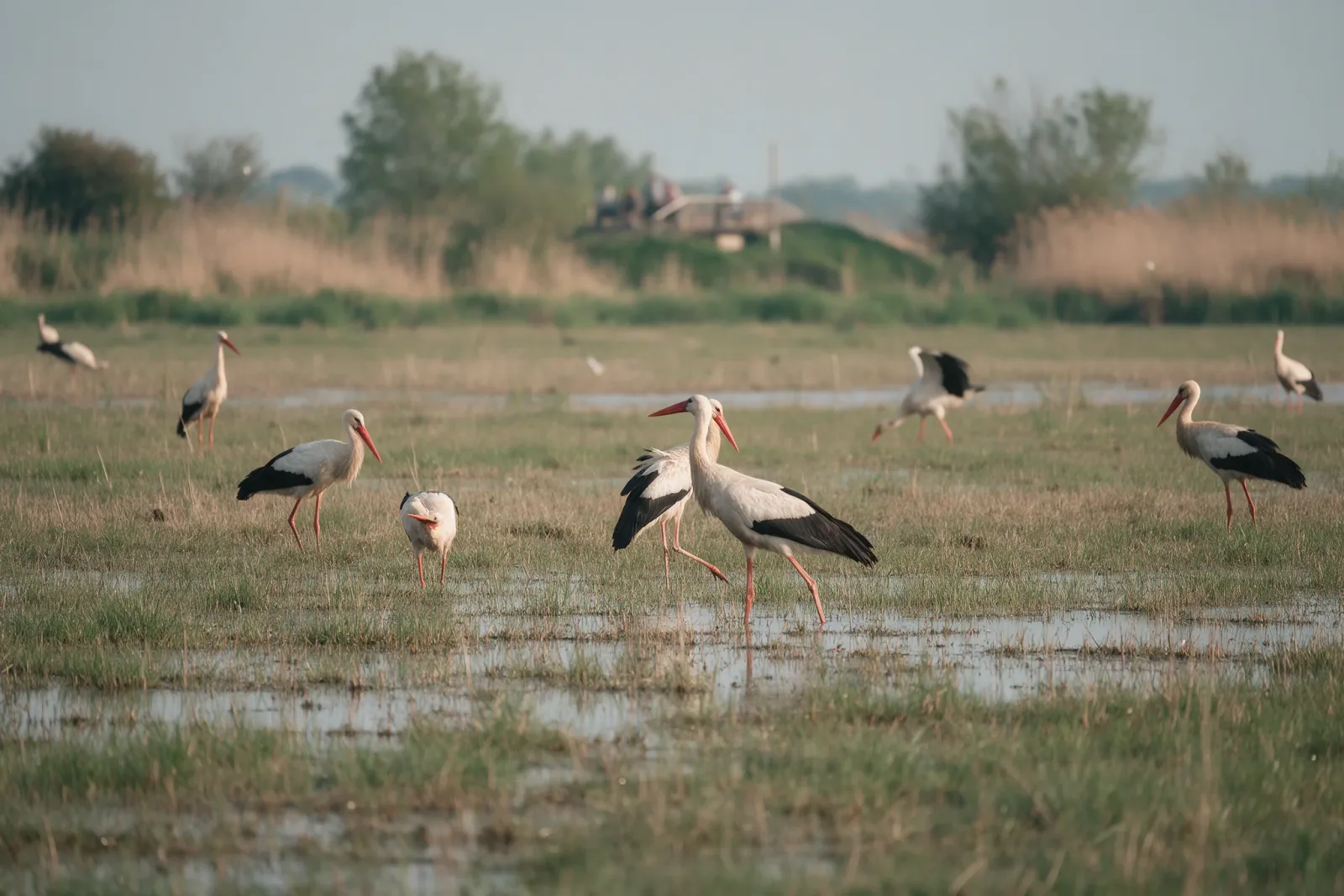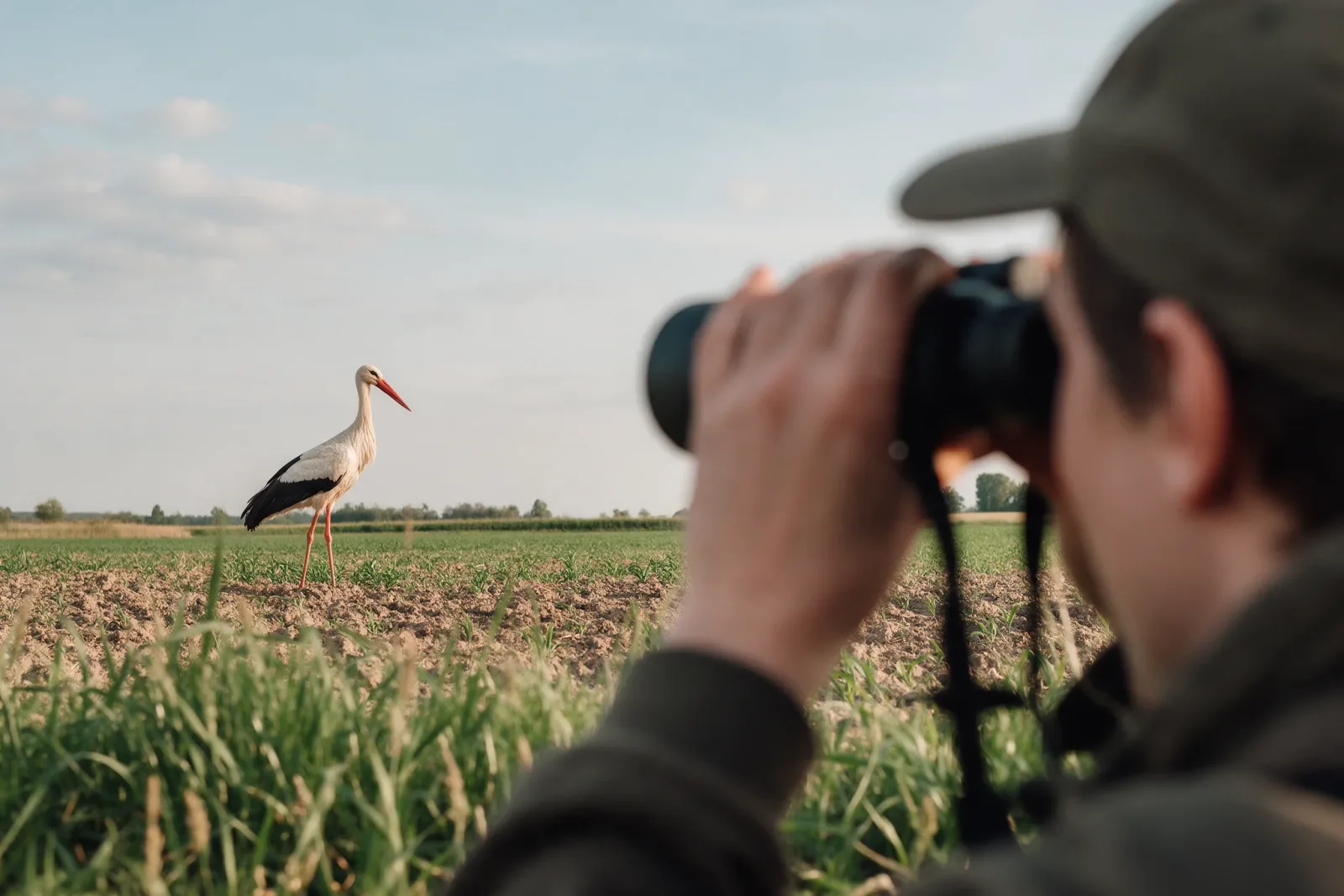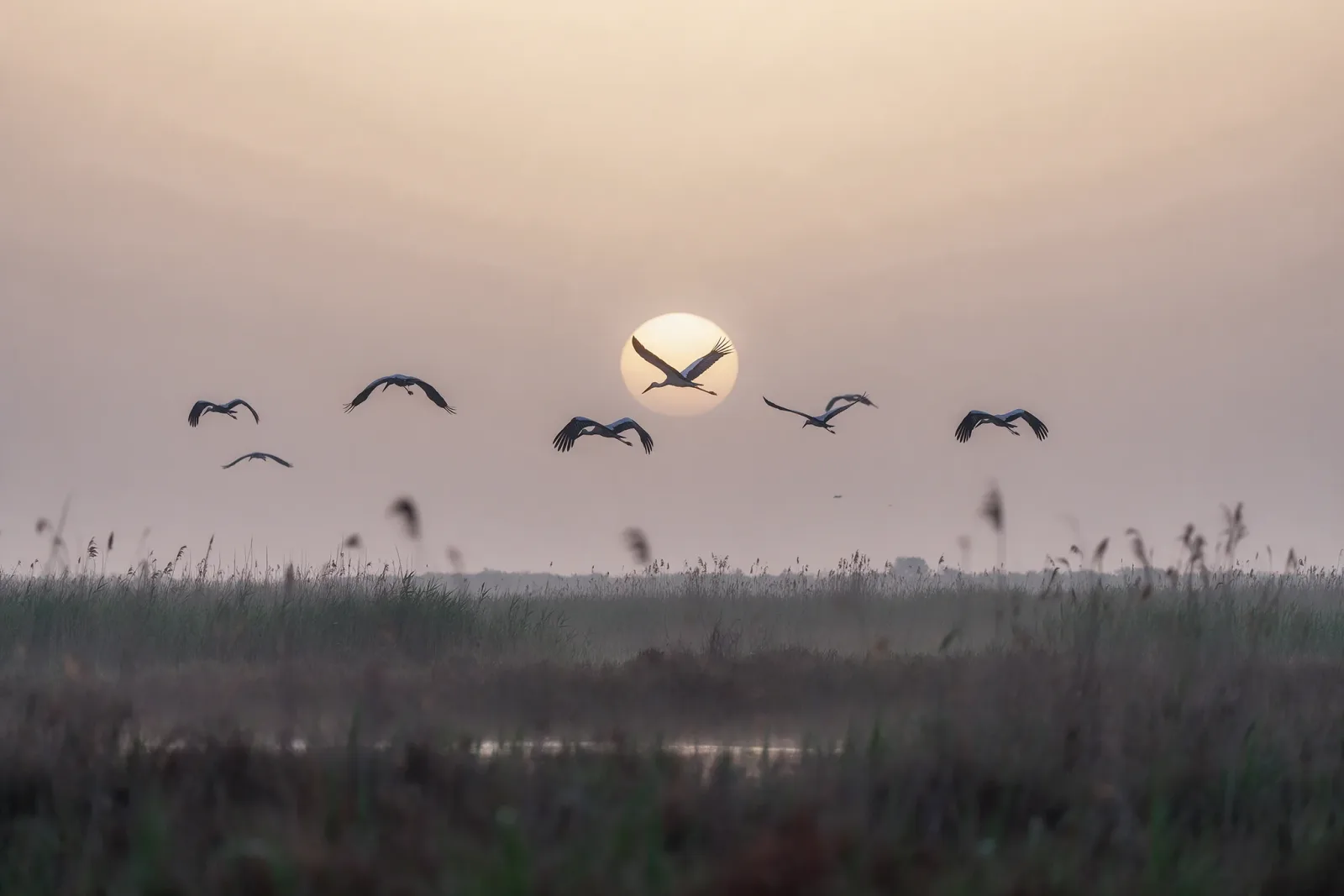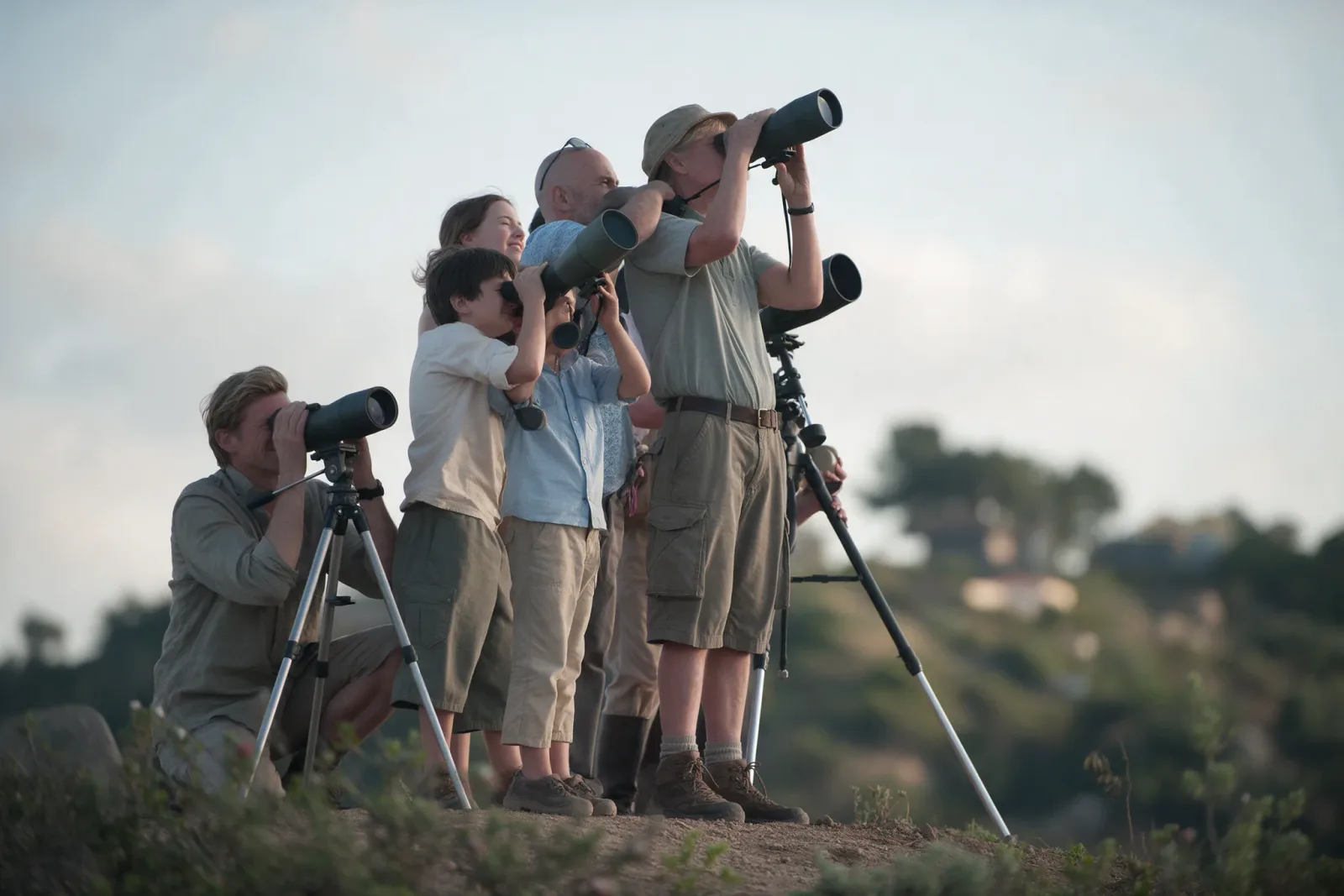
The community of watchers is an old and quiet one, and you may not notice it at first, because watching is usually a solitary act. But the people who keep an eye on the storks are out there, on the hillside with their telescopes, at the marsh with their notebooks, and in the spaces where sightings are shared and compared. A stork seen alone is a pleasure. A stork seen and then shared becomes part of something larger.
A sighting is not finished until it is shared
When you watch a stork, you are only the latest link in a long chain of attention. Someone found the nest, someone noticed the bird arrive, someone noted the date of the first egg, someone else will note the day the chicks fledge. Each of these people is watching alone, and together they are keeping a running account of a bird's whole life. Your own sighting joins that account the moment you pass it on.
The people you meet at the marsh
Birdwatchers are easy to find and easy to approach. Stand near someone with a telescope and ask what they are seeing, and you will usually get an answer and a story. The community of watchers is generous by habit, because everyone in it remembers the first time someone showed them a bird. The person who points out a stork to you today was once the person it was pointed out to.
Shared sightings make the birds safer
There is a practical side to all this sharing. When watchers record what they see, the records add up to knowledge: where the storks nest, when they arrive, what they need. That knowledge, gathered over many seasons by many hands, is what lets people protect the birds. A community of watchers is not just company. It is a set of eyes stretched across a whole country.
The quiet rules of the community
The community keeps a few gentle rules, and they are worth learning. Keep your distance from nests, never disturb a breeding bird, be careful about sharing the exact location of a vulnerable nest, and be generous with newcomers. These rules are not written down anywhere much. They are passed from watcher to watcher, the way a good spotting scope is handed across.
You are already part of it
If you have ever stopped to watch a stork, you are already part of the community of watchers. You do not need to join anything or call yourself a birder. You only need to keep looking, and to tell someone what you saw. The chain of attention runs through you now, and the next watcher you meet is only waiting for you to speak.
Explore the gift