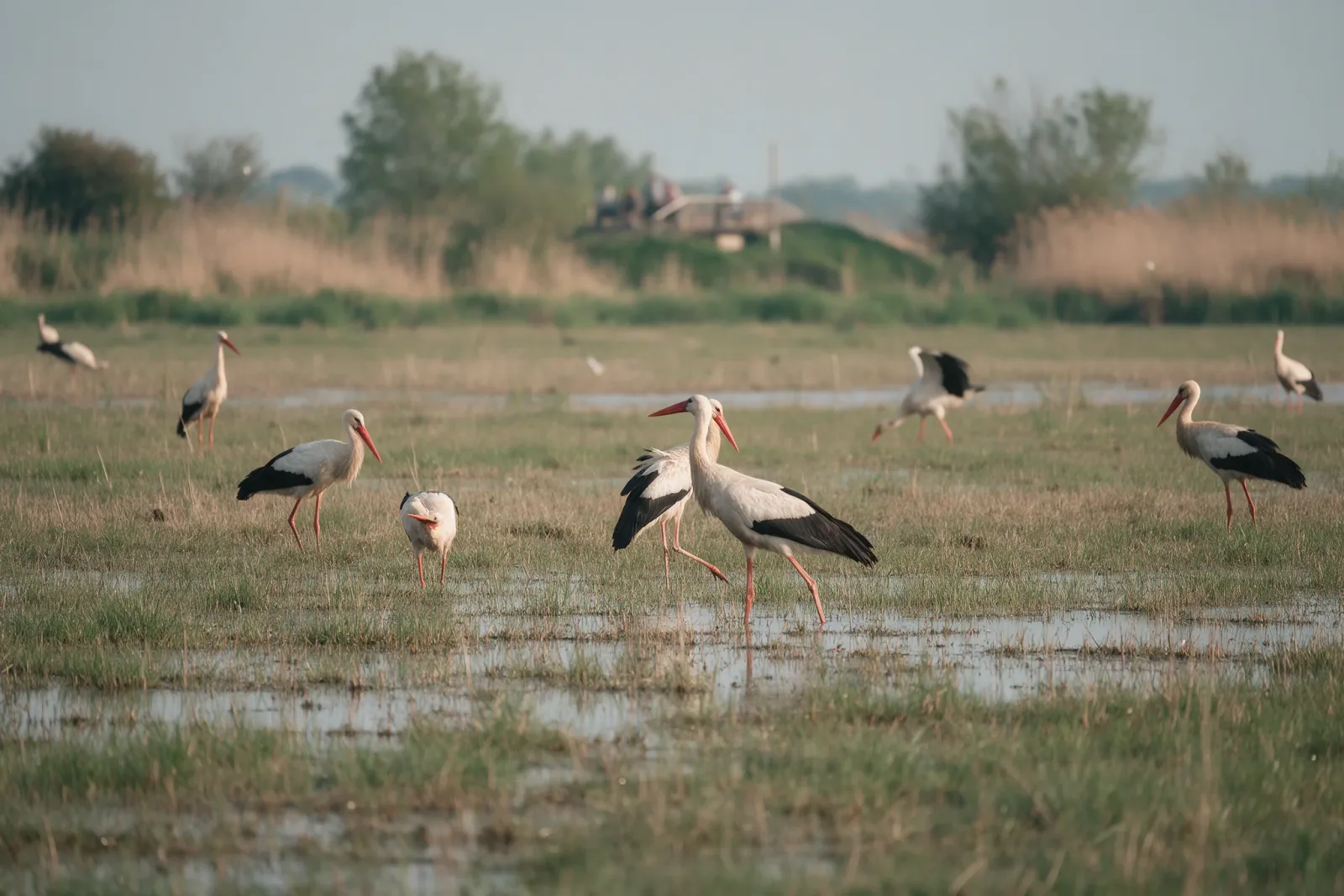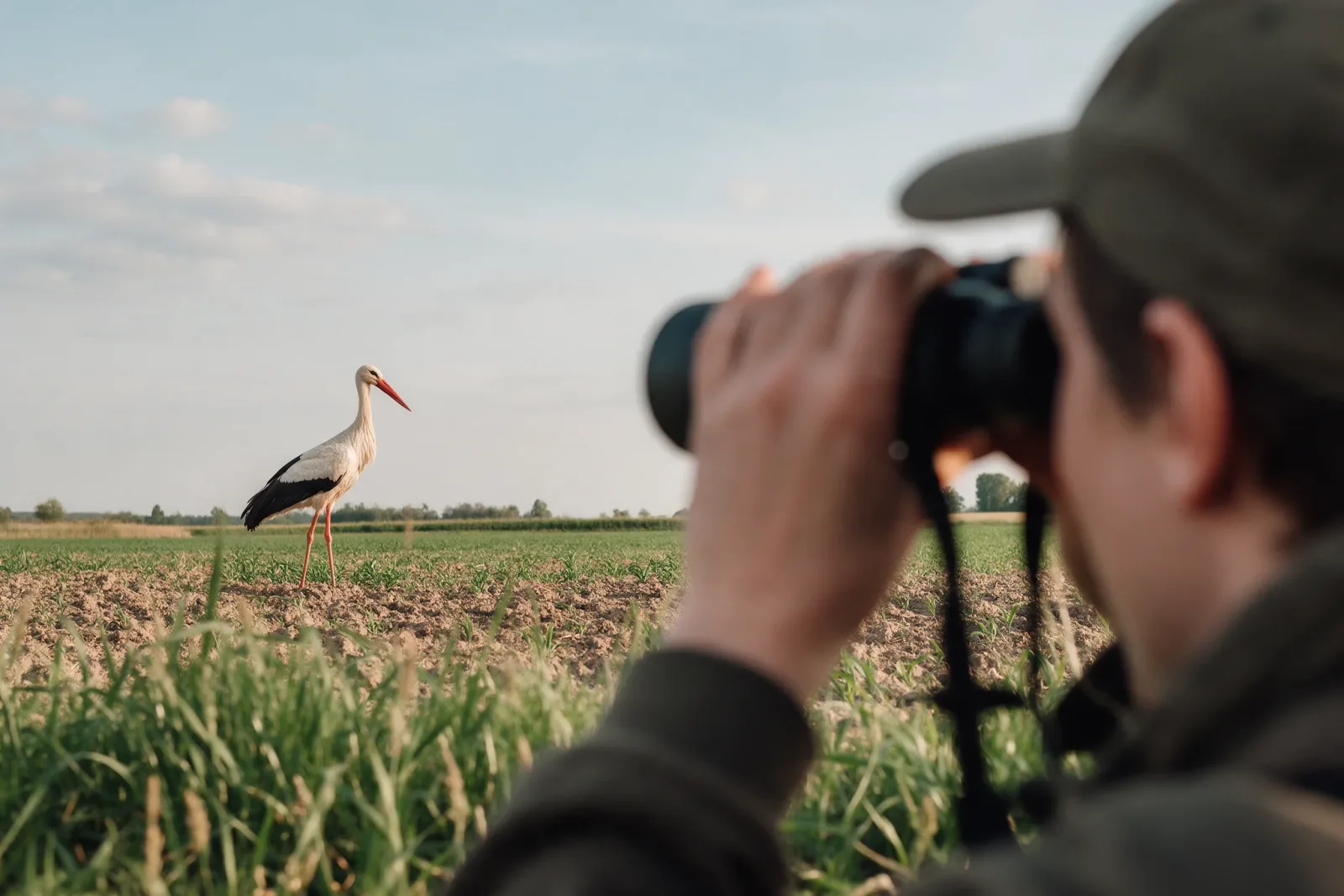
Storks versus herons is a confusion that begins the moment both birds stand in the same marsh, white or grey, long legged, patient as fence posts. From a distance they can look alike. Up close, or even through binoculars at a hundred paces, the differences are clear and easy to learn. The neck, the bill, the way each bird flies, these are the marks that separate a stork from a heron.
Look at the neck in flight
The quickest test is a bird in the air. A heron flies with its neck folded back into an S, the head pulled in close to the shoulders. A white stork flies with its neck held straight out in front, long and unbent. This single difference, neck folded versus neck extended, is the one to learn first, because it works at any distance and in almost any light.
Look at the bill
On the ground, the bills are the next clue. A white stork has a long, thick, red bill. A heron, whether grey or white, has a slimmer bill, often yellow or dull orange, built for stabbing fish. The stork's bill looks heavier, more like a tool, and the red is vivid against the white face. If the long-legged bird in front of you has a bright red bill, it is almost certainly a stork.
Watch how they hunt
Herons are ambush hunters. They stand in or beside water, perfectly still, waiting for a fish to come within reach, then strike with a sudden dart of the neck. Storks are walkers. They stride through grass and shallow water, pausing to stare down at the ground, picking up frogs, insects, and small creatures as they go. A heron waits for the water to bring it food. A stork goes out and finds it.
Look at the legs and the stance
Both birds have long legs, but the colour and the way they carry themselves differ. A white stork has long red legs, and it stands upright, chest up, looking almost formal. A grey heron is more hunched, the neck often retracted, the grey and black streaking on its head giving it a shadowed look. The white stork is clean white with black wing edges; the grey heron is grey and black and white in a pattern that seems to belong to the reeds.
The white heron confusion
The bird most often mistaken for a stork is the little egret or the great white egret, both snow white and long legged. The test holds for them too. Egrets fold their necks in flight, they have black or yellow bills rather than red, and they are smaller and more slender. Keep the two marks in mind, the straight neck in the air and the red bill on the ground, and you will rarely mix the birds of the marsh again.
Explore the gift