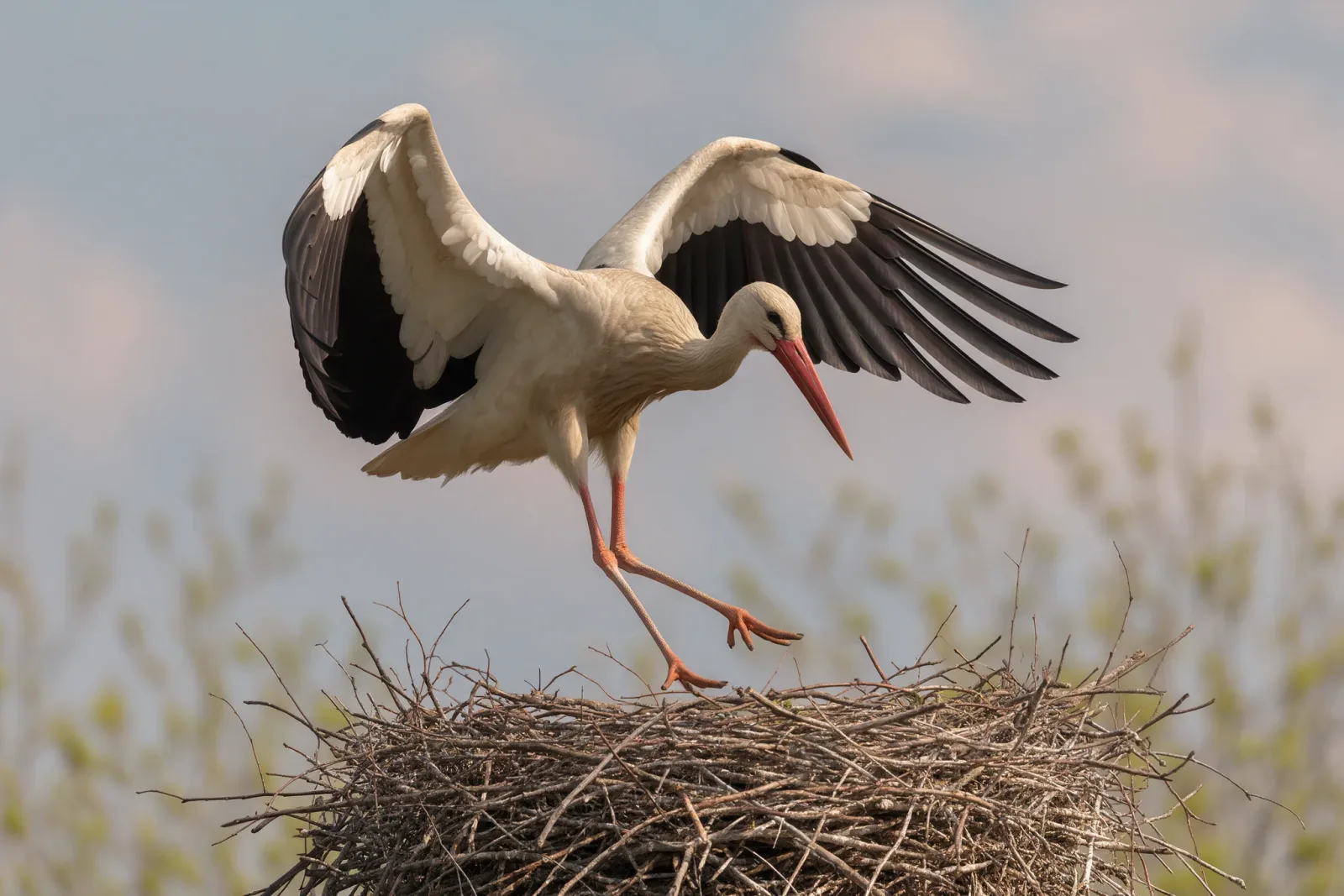
The first days of a chick are small, blind, and entirely dependent, and yet they set the whole course of a stork's life in motion. When a white stork egg hatches, the bird that emerges is nothing like the soaring white creature it will become. It is a wet scrap of down with a closed eye and a hunger that never quite switches off.
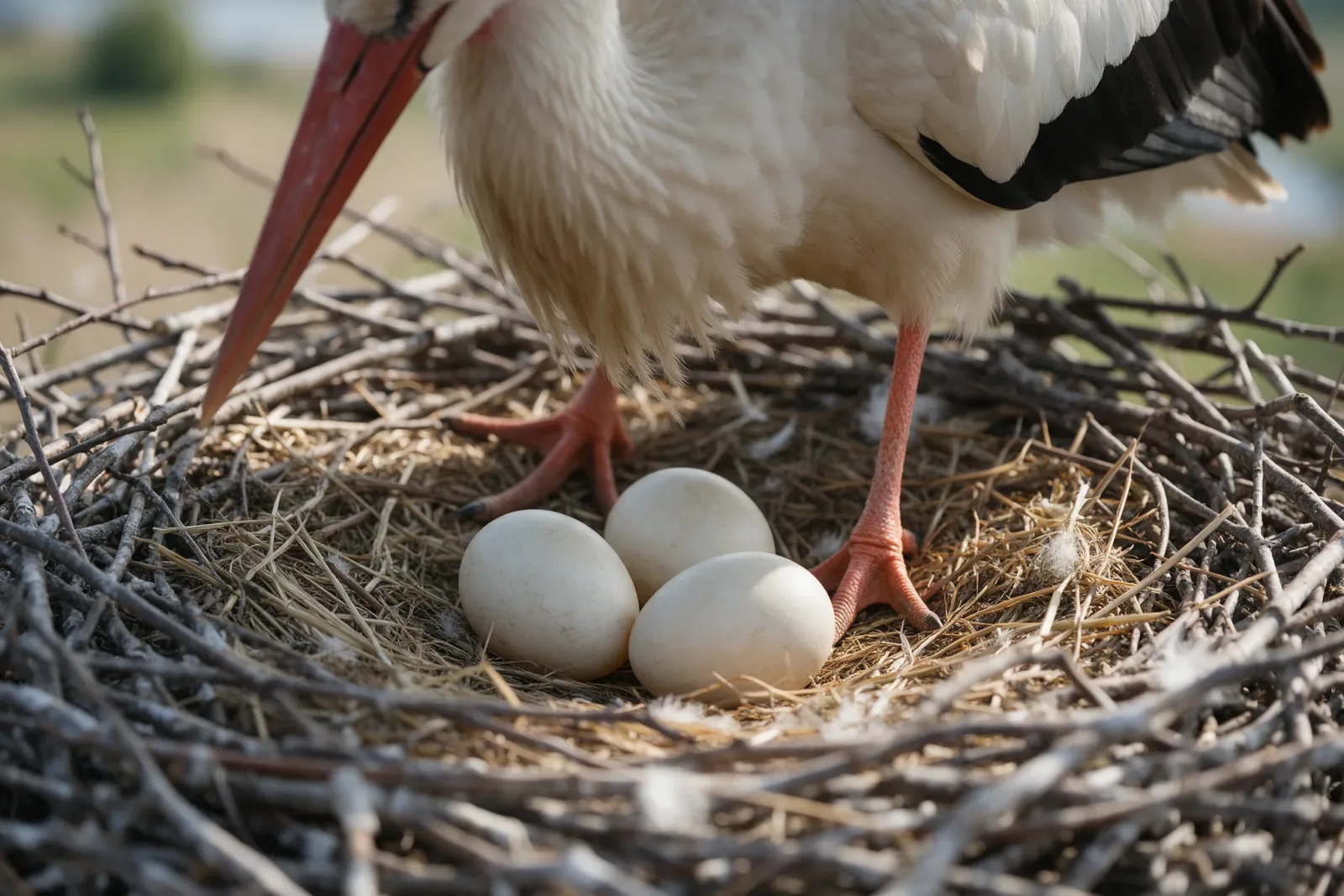
Hatching is slow work. The chick pecks at the inside of the shell for hours, sometimes a day or more, chipping a ring around the egg until it can push the two halves apart. It is born exhausted, and it rests in the warmth of the parent for the first stretch of its life.
Warmth and shelter
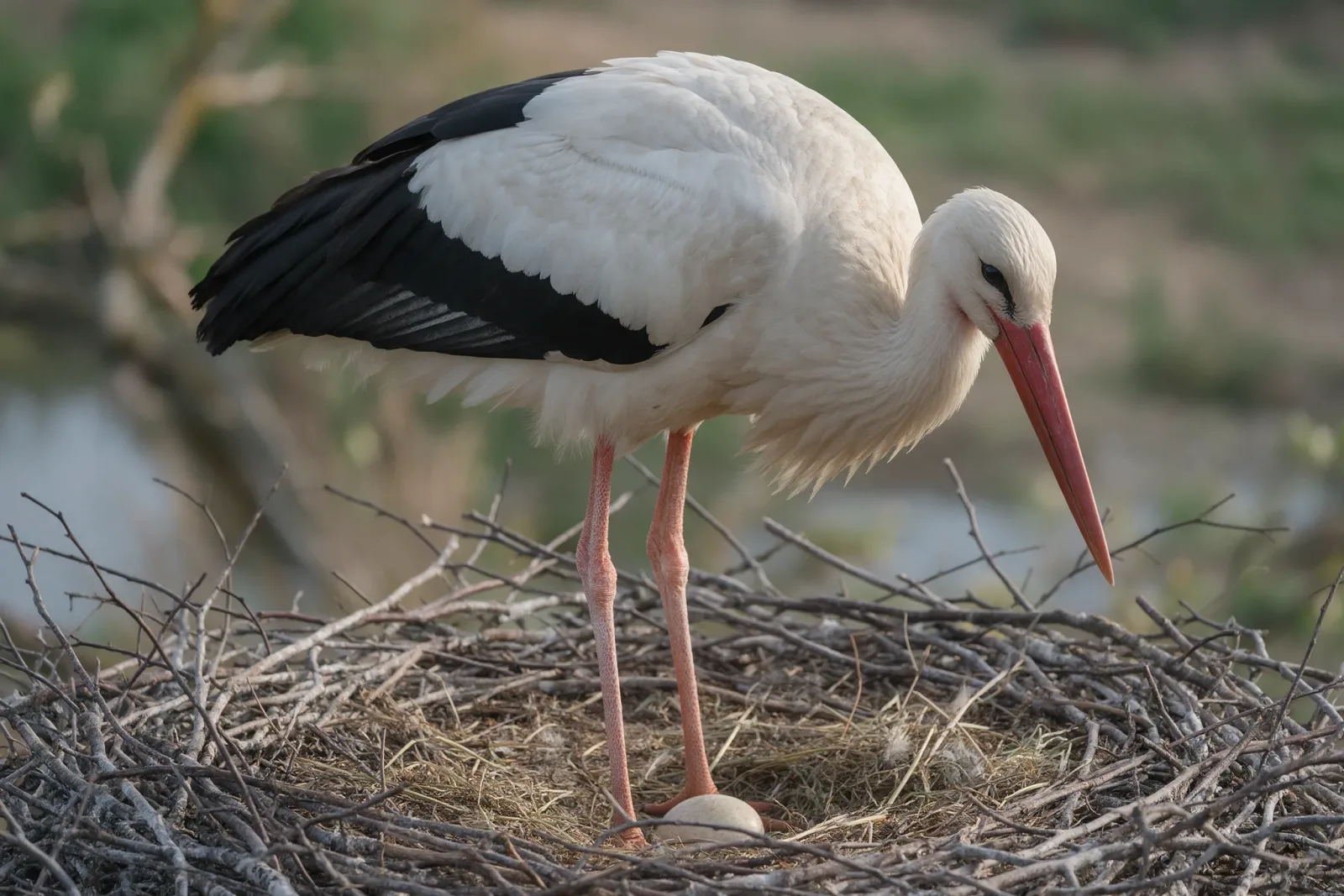
The nest is everything in those first days. The chicks are too small and too featherless to keep themselves warm, so the parents do it for them. One bird, usually the larger and heavier female, settles over the brood and lets them push into the soft down of her belly.
She rises only to be relieved by her mate, who takes a turn so she can stretch, drink, and feed. Between them the pair keeps the nest bowl at a steady warmth, the chicks heaped together like a single breathing mound.
The first meals
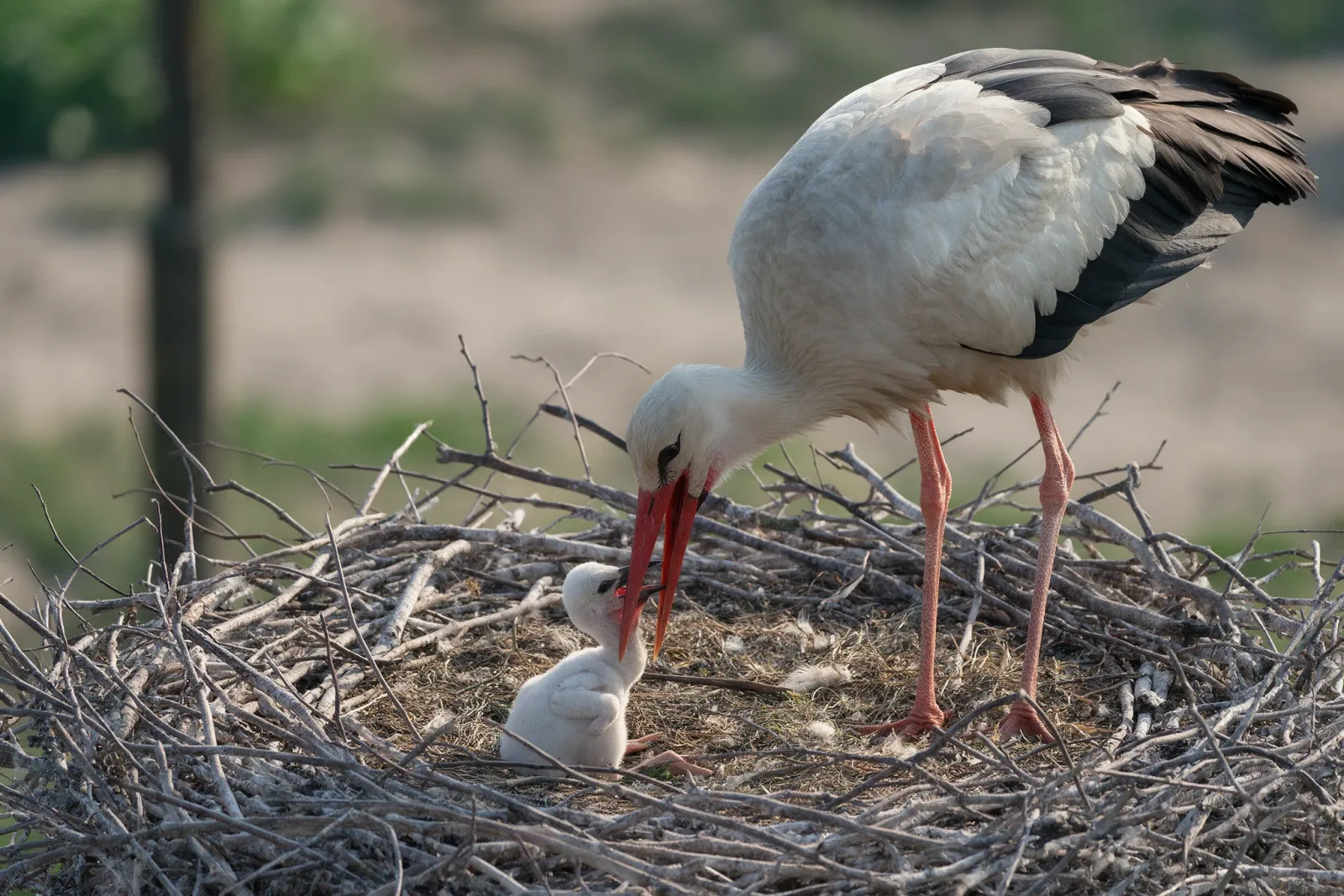
Stork chicks cannot feed themselves. The parents bring food back to the nest and spill it into the center, small morsels of insects and worms and frogs, soft enough for tiny bills to take. The chicks reach for it blindly, mouths open, and the parents drop each piece carefully within reach.
In those early days the food is small and often. The parents fly out many times a day, returning with full crops, and the sound of their wings over the nest is the soundtrack of the brood's first week.
Growing in a hurry
Storks grow fast because they must. The summer is short, and a chick has only a couple of months to go from a blind scrap to a bird that can cross a continent. The first days of a chick are the foundation of that rush, the quiet period when it is nothing but a mouth and a body that needs to double and double again.
Within days the eyes open. Within a week the down thickens. The chicks begin to stand on the edge of the nest, wobbling, and to look out over the rooftops at the wide world they will one day cross.
The parents' steady care
Through it all the parents keep watch. They guard the nest from crows and from the weather, standing over the brood in rain and sun. They do not sing, for storks have no song, but the clatter of their bills is a constant reassurance to the young below.
The first days of a chick are, in the end, a lesson in plain devotion. No words, no ceremony, just warmth and food and a roof of sticks, and the slow turning of a scrap of down into a bird.
Explore the gift