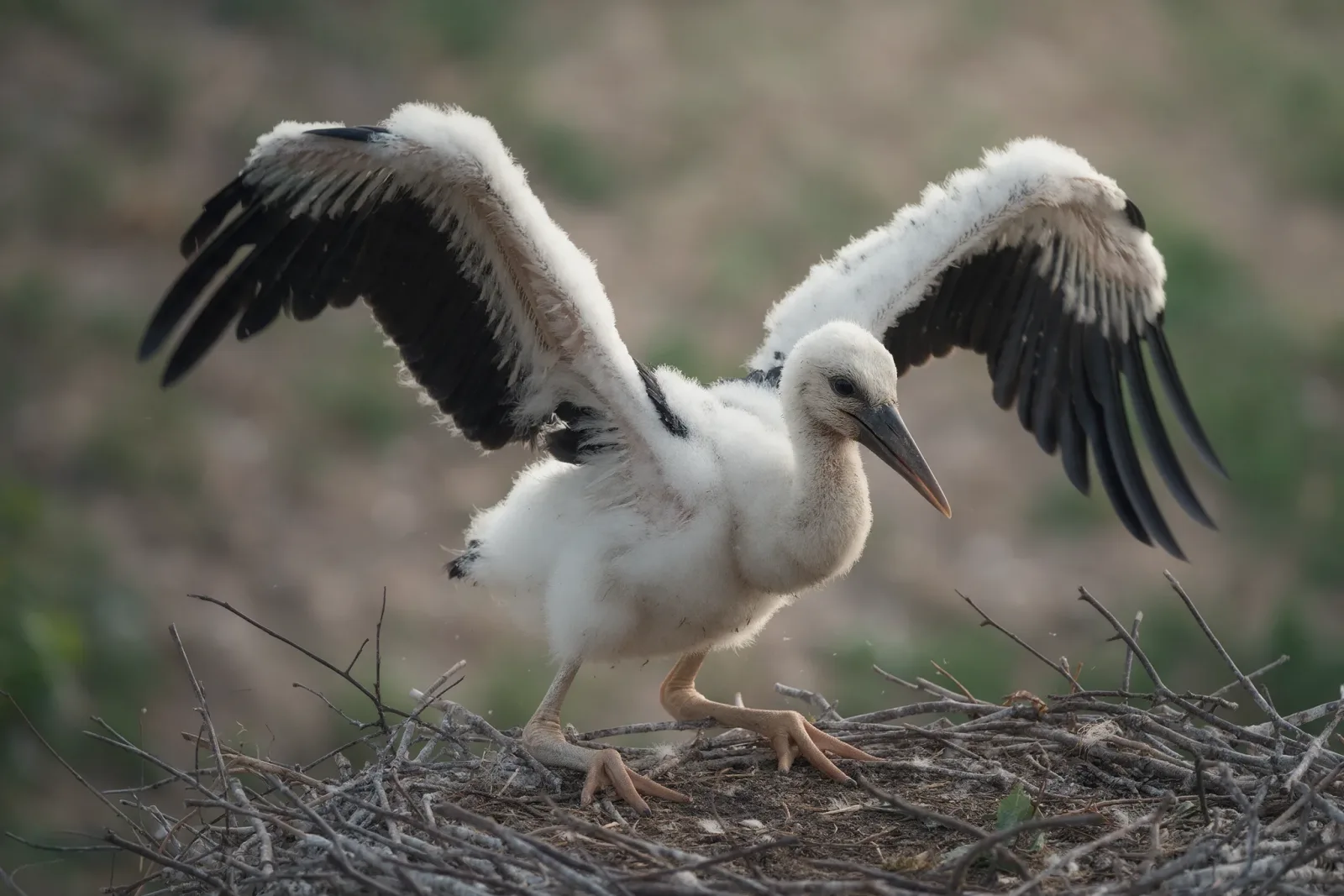
The first flap is a small, comic, serious thing, and it is the moment a stork begins to become what it will be. A young white stork stands on the rim of the nest, opens its wings, and beats them hard against the air, going nowhere. The body stays put. The wings do the work of imagining.
It looks awkward, and it is. The wings are long and new, the muscles untrained. The chick flaps for balance as much as for flight, steadying itself on the high edge of a nest that now feels far too small for its growing body.
Why the flapping matters
Flapping is how a bird builds the strength it will need for real flight. Each beat pulls at the muscles of the breast and shoulder, and each day those muscles grow a little firmer. The first flap is weak and uncertain, but it is the beginning of everything.
The chick also learns what wings are for. It feels the air move beneath them, learns to angle them this way and that, and discovers that the wind can lift and hold it. These lessons cannot be taught. They must be felt, again and again, at the edge of the nest.
Practice on the rim
Most young storks begin their flapping in the nest itself, wings buffeting the other chicks as they all jostle for room. Then they move to the rim, the highest and most exposed place, where the wind is strongest and there is nothing between them and the ground.
There they stand and beat, half lifting, half balancing. Sometimes a gust of wind catches a wing and lifts the bird a little, and it startles and settles back down. The first flap is not flight. It is the rehearsal for flight, and the nest is the stage.
Watching it happen
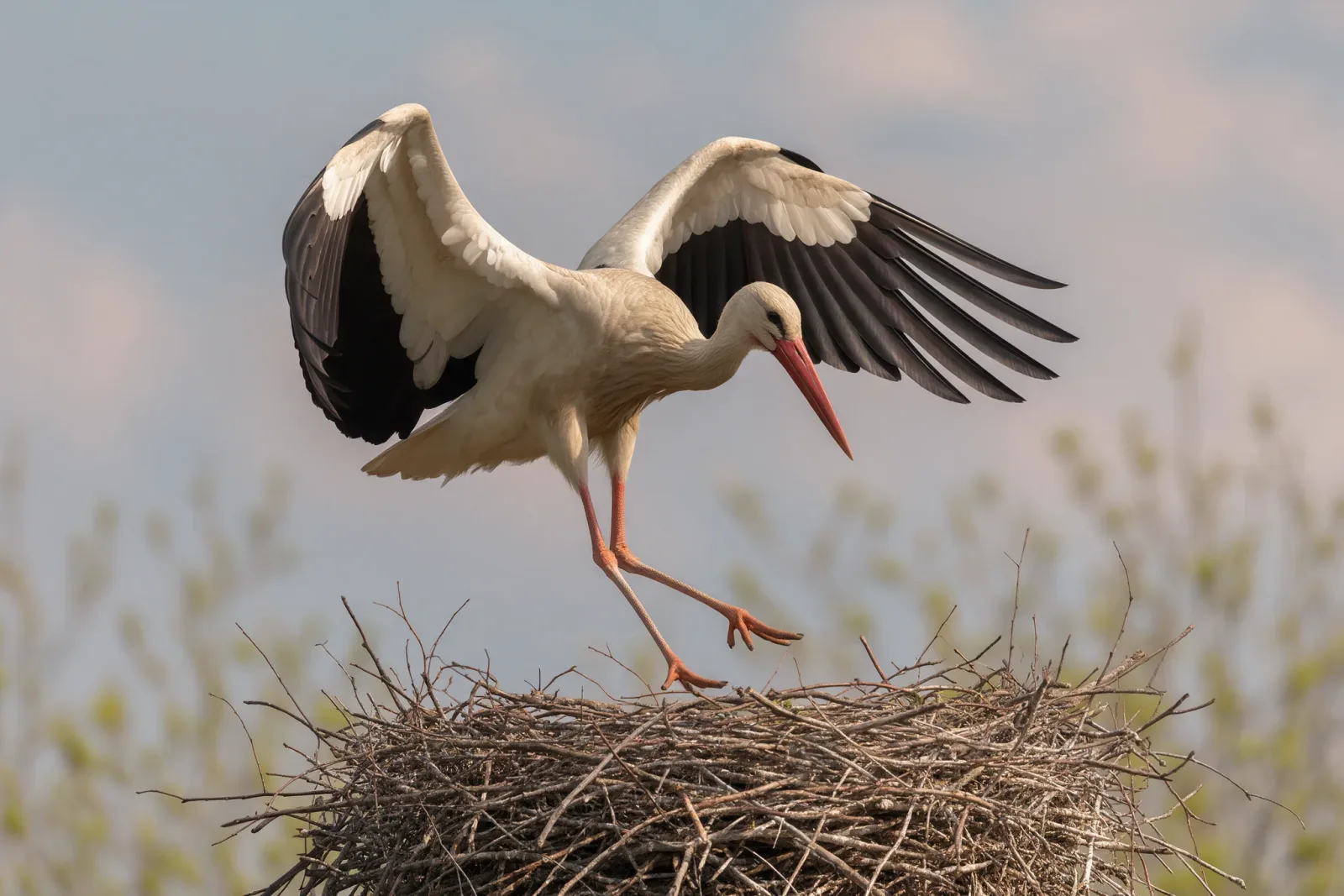
For a human watching from below, the first flap is a moment of recognition. The chicks that were once hidden in the down are now standing tall, opening wings as wide as a grown bird's, and it is suddenly possible to see the stork they will become.
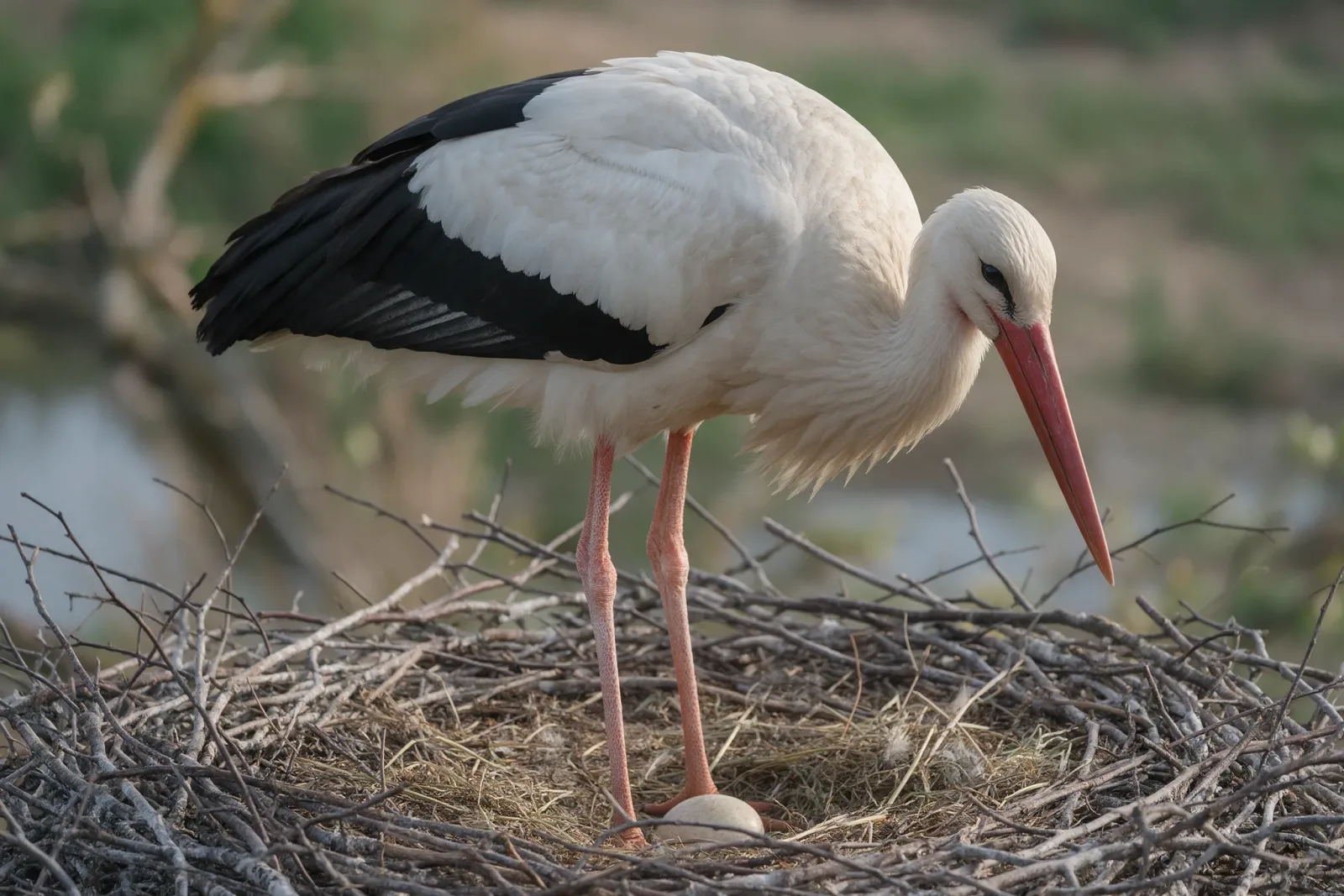
The parents watch too, with the calm of birds who have done all this before. They know what the flapping leads to. They have seen many summers and many young birds test the same air from the same rim.
The door to everything
The first flap is the door to everything that follows. Before it, the chick is a bird of the nest. After it, and after many more, the chick is a bird of the sky. The difference between the two is measured in thousands of small beats, each one carrying the bird a little closer to the day it lets go.
And so the young stork stands at the edge, flaps hard against a sky that is not yet ready for it, and prepares, with every beat, to join it.
Explore the gift