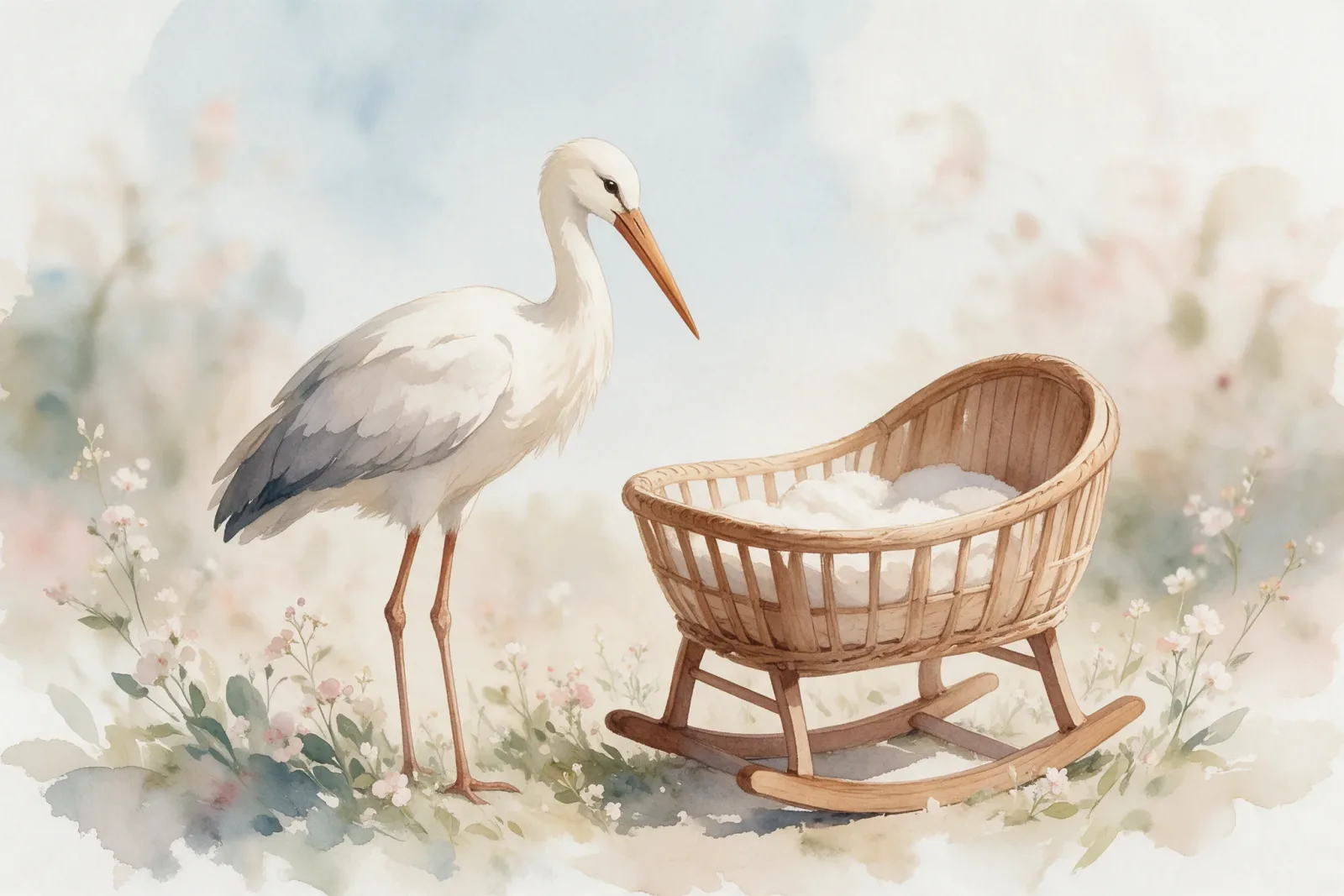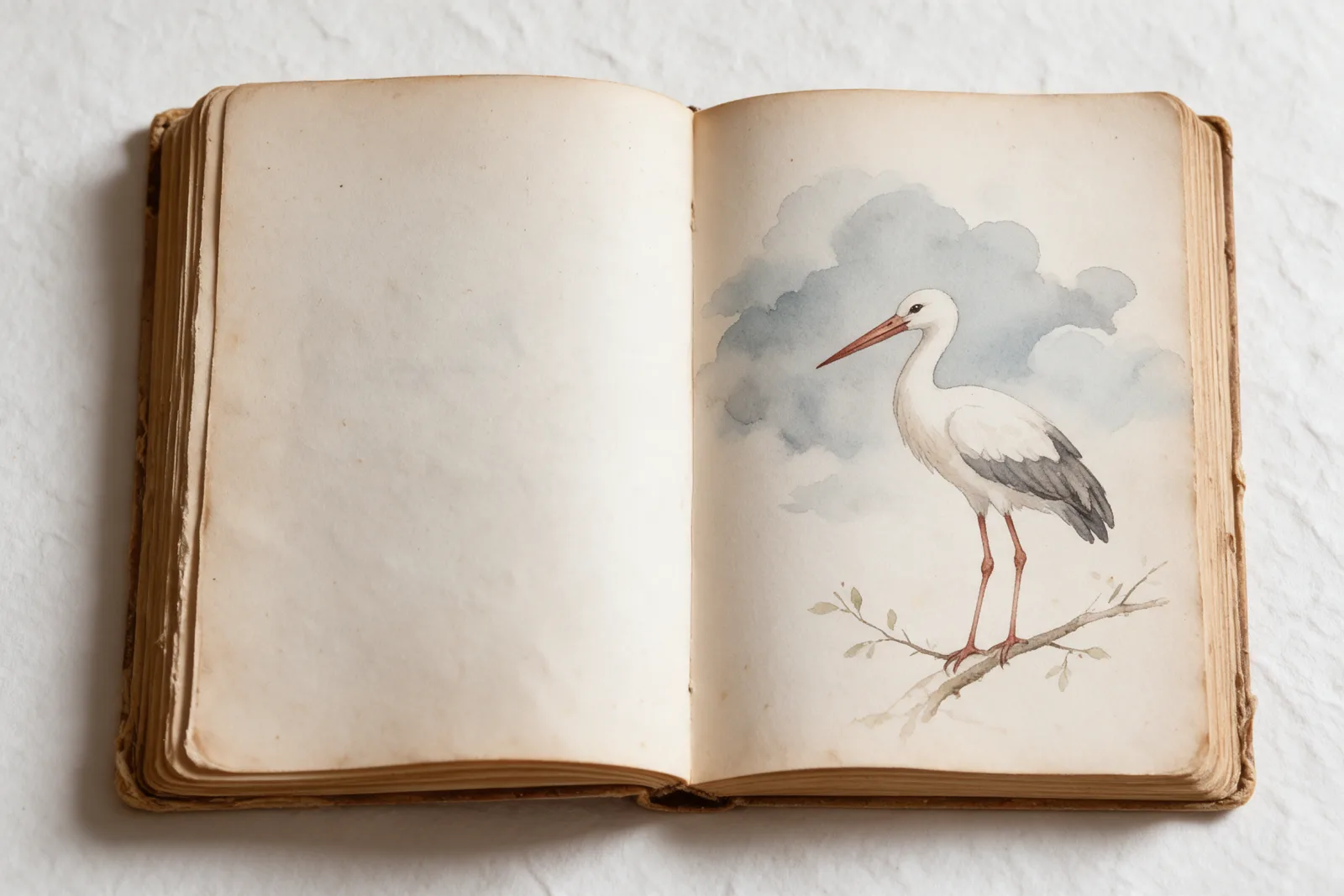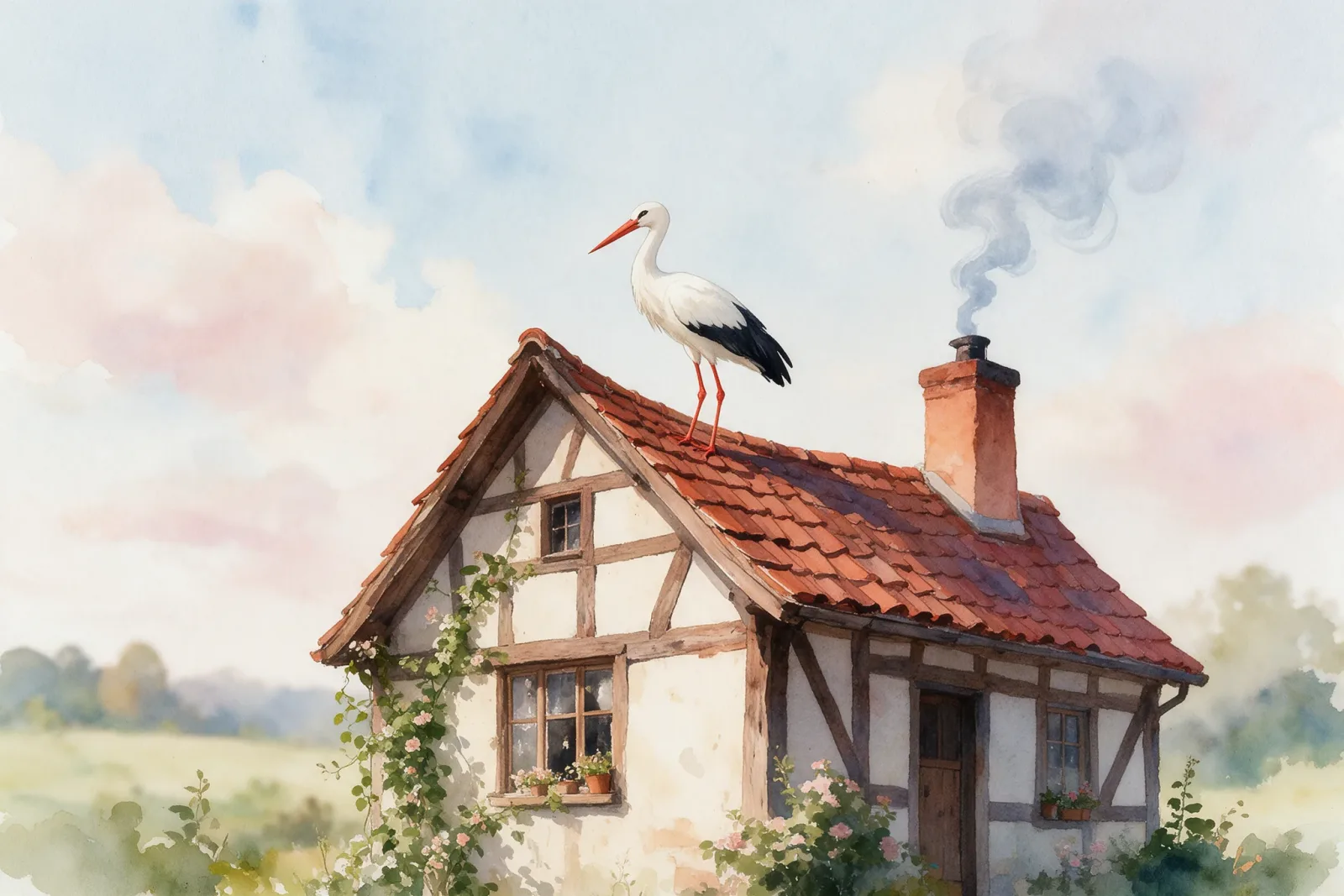
The German Adebar is the stork with a name of his own. Across Germany the white stork has been called Adebar for centuries, a word so old that its origins are half lost. The name carries the bird's whole office with it, for Adebar is the bringer of luck, the guardian of the roof, and the one who comes back with the spring.
The name and its meaning
The word Adebar is thought to be very old, and scholars have argued over its parts. One common reading links it to wealth or good fortune, another to a river or a bog, the wet ground where the bird likes to stand. Whatever its first meaning, the name settled into everyday speech as the friendly, almost personal title for the stork.
Giving a bird a proper name is a form of respect. It moves the stork from a species into a relationship. When children in a village said "Adebar is back", they were not reporting a bird sighting. They were announcing a homecoming.
The bringer of luck
Adebar's chief office is luck. A nest on the house means the household will thrive, the fields will bear, and a child will soon be on the way. The luck is not vague. It is specific and domestic, tied to the roof, the table, and the cradle.
This is why the nest was never disturbed. To harm Adebar or his young was to break a bargain with fortune itself, and the stories warned that such a household would lose what it had. The luck, in other words, was a loan that the bird could call back.
The stork as a name for the season
In the old farming year, Adebar's return was a date to remember. The bird came north when the frost loosened, and its arrival was read as a sign that the cold had truly broken. A late stork meant a late spring, and an early one was welcome news for everyone waiting to plant.
The bird became a calendar, and the name became a weather word. To speak of Adebar was to speak of spring itself, folded into a single familiar syllable.
The bird in the fairy tale
Adebar also wandered into the tales. In the nursery rhymes and stories of the German countryside, the stork delivers the new baby, wrapped and lowered toward the waiting family. The name gave the story a local warmth, so that each village felt the bird belonged to it alone.
The delivery myth and the luck myth are the same story told twice. Adebar brings the child and brings the fortune, because to an old household the two were not really different. A new baby was the luck made visible.
A name that has lasted
People still say Adebar in parts of Germany, though the world has modernised around it. The name survives because it is affectionate, and because affection for a bird this loyal does not fade quickly.
The German Adebar is a small proof that a people once loved a wild creature enough to give it a home in their language. The stork kept the roof, and the name kept the stork alive.
Explore the gift