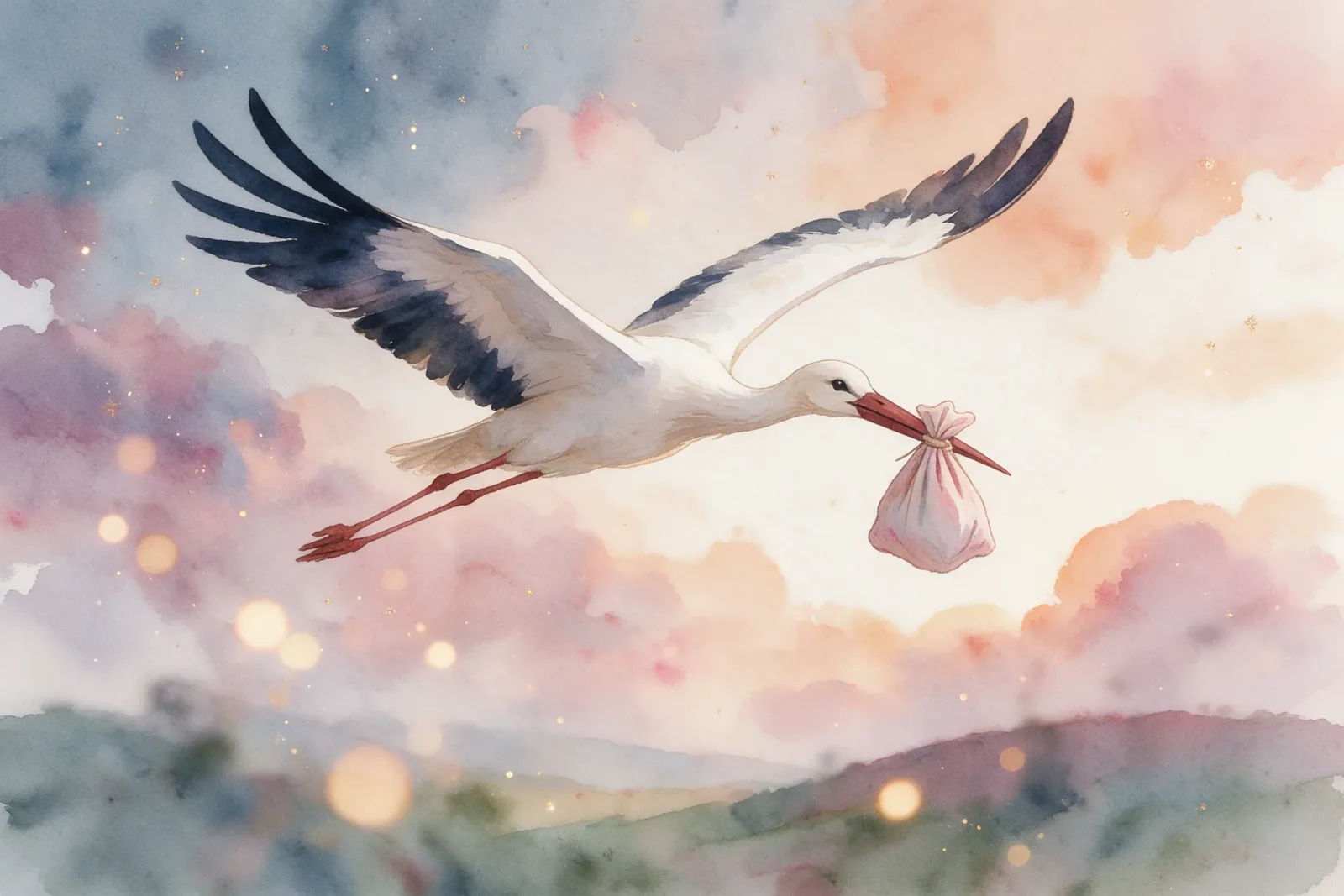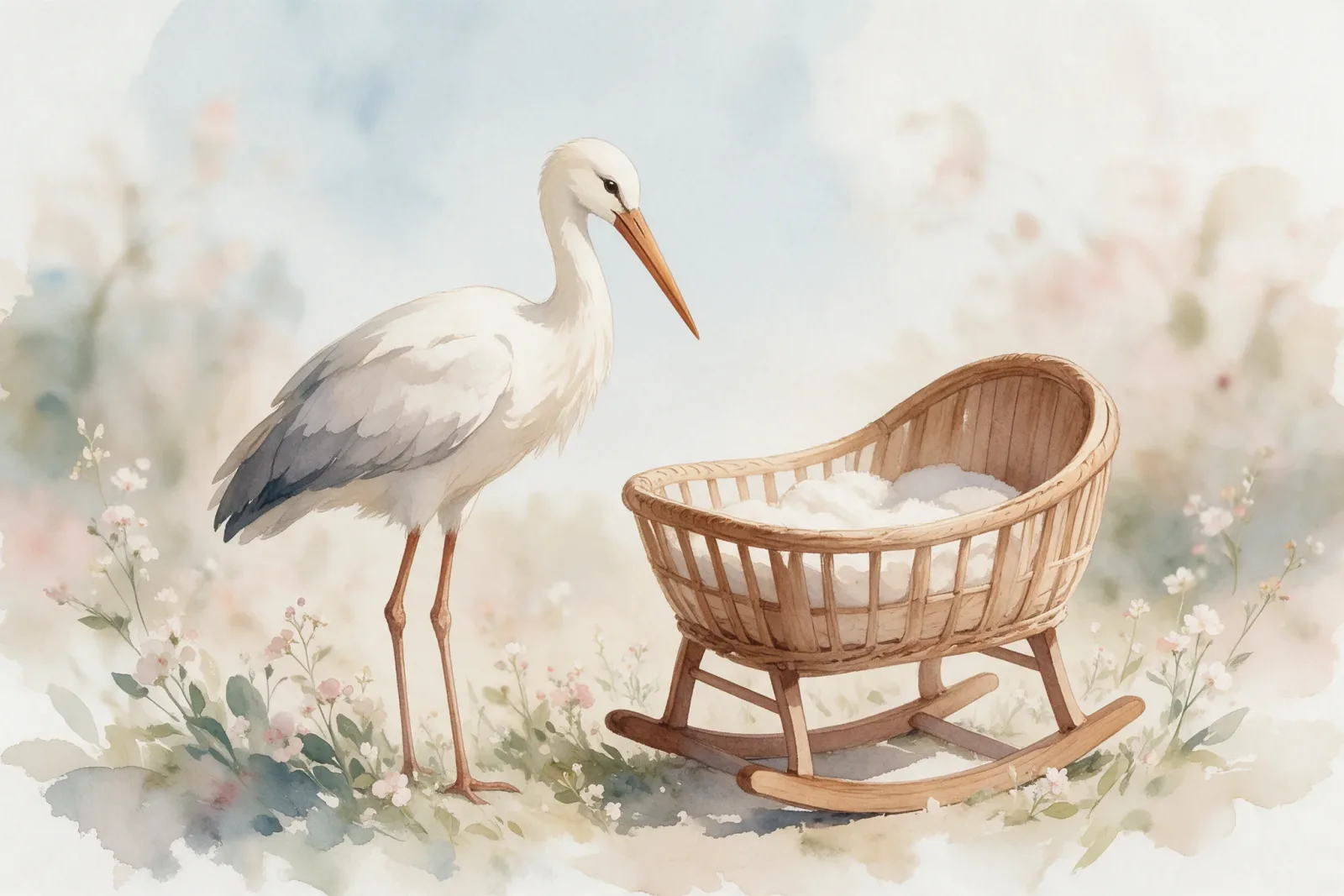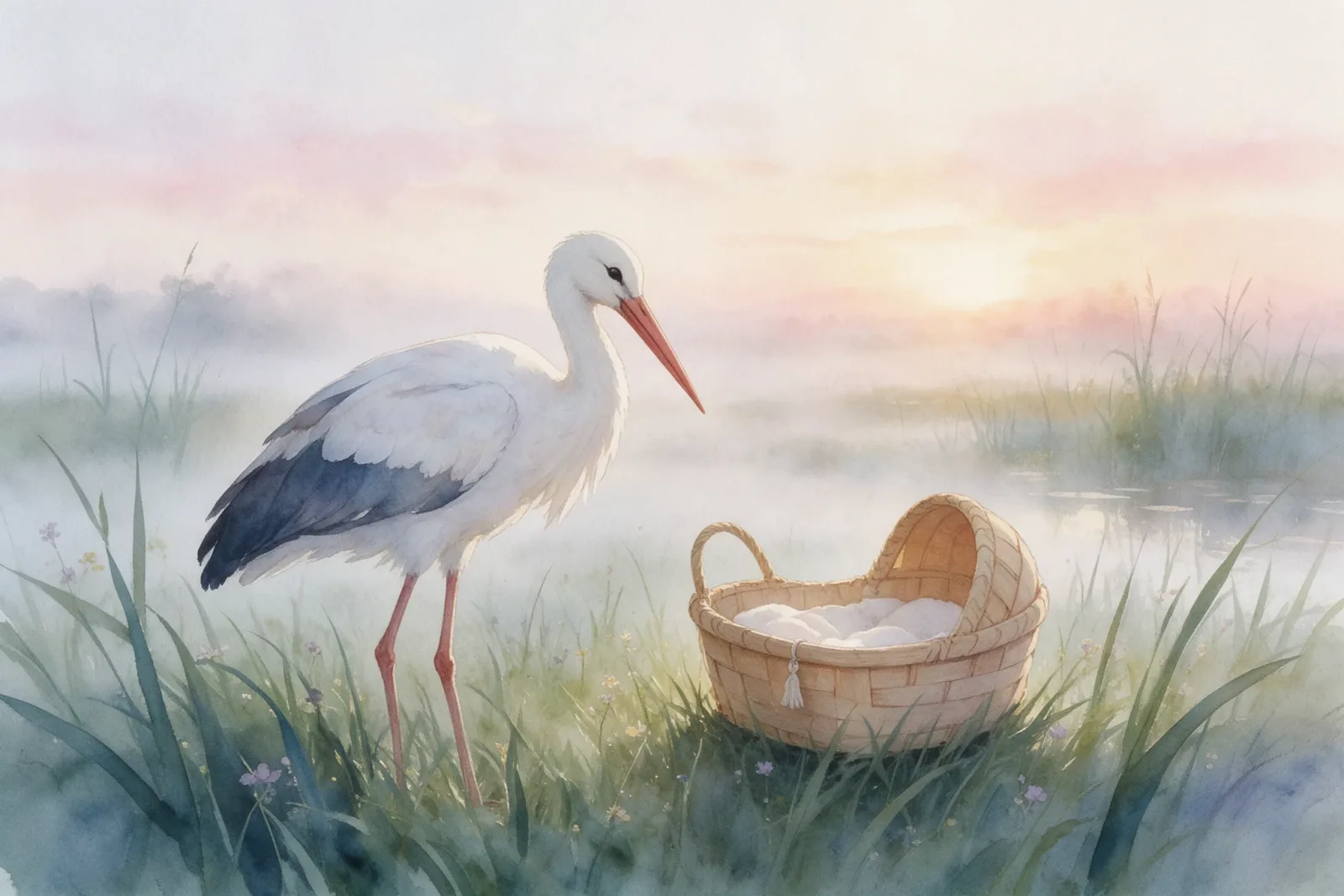
The legend of the marsh baby is one of the tenderest stories the stork has gathered around it. It tells of a child found among the reeds, cradled at the water's edge where the storks nest, and carried home to a family that had been waiting. The tale sits at the very heart of the stork myth, where the marsh, the child, and the bird all meet.
The child in the reeds
Every telling begins the same way. Someone, a mother, a grandmother, a young couple, hears a sound from the marsh at dawn and goes to look. There, in the reeds, wrapped in cloth and laid on a dry hummock, is a baby.
The child is not abandoned in the story, not lost and not harmed. It is waiting. The marsh has held it safely, and the reeds have kept the wind off, and the whole scene has the stillness of something arranged by a kind hand.
The stork as witness and guardian
Beside the cradle, or wheeling above it, there is always a stork. In some tellings the bird has brought the child there. In others it has simply been keeping watch, standing on one leg in the shallows through the night.
The stork's role matters because it ties the child to the bird forever after. The found child grows up with a special bond to storks, understood to be lucky, protected, or somehow claimed by the marsh itself.
The family that was waiting
The legend usually ends with a homecoming. The child is carried back to a house that has been waiting for exactly this, a couple without children, or a household that has lost much and is given much back.
The marsh baby does not arrive to a full house as a gift might. It arrives to an empty one and makes it full, which is the whole point of the tale. The child is not a surplus but a completion.
Where the story came from
The legend grew in the same wet landscapes that inspired the delivery myth. Marshes, bogs, and reed beds were places of mystery in the old world, neither firm land nor open water, and people imagined them as gates between realms.
It was a short step from the marsh as a place of waiting souls to the marsh as a place where a foundling child might lie safe among the reeds. The stork, the bird of those same wetlands, naturally kept watch.
A story that still softens the heart
The marsh baby legend is rarely told now, but its shape survives in the gentler delivery stories and in the feeling that a stork and a child belong together. It is a story about trust, about the wild world as a place that can hold and protect, and about a home made whole.
The legend of the marsh baby reminds us why the stork endures. It is not the beak or the bundle we remember. It is the idea that somewhere in the reeds, a child might be waiting, safe, for the family meant to find it.
Explore the gift