The longest day is midsummer's gift to the nest, a stretch of light that never quite leaves and lingers at the edges of the sky until the early hours. For a stork raising young, it is a long, golden working day, one that begins early and ends late and is full, from end to end, of the endless small tasks of a breeding season. The light stays on, and the birds keep working.
Light that never quite goes
In the north at midsummer, darkness is only a rumour. The sun dips low but never truly leaves, and the sky holds a faint glow through the night. For the storks, this means more hours to hunt, more hours to feed the young, more hours in which to carry on the work of the nest. The longest day is not a rest. It is an opportunity, a gift of extra light handed to birds whose young are growing fast and hungry.
The busy nest
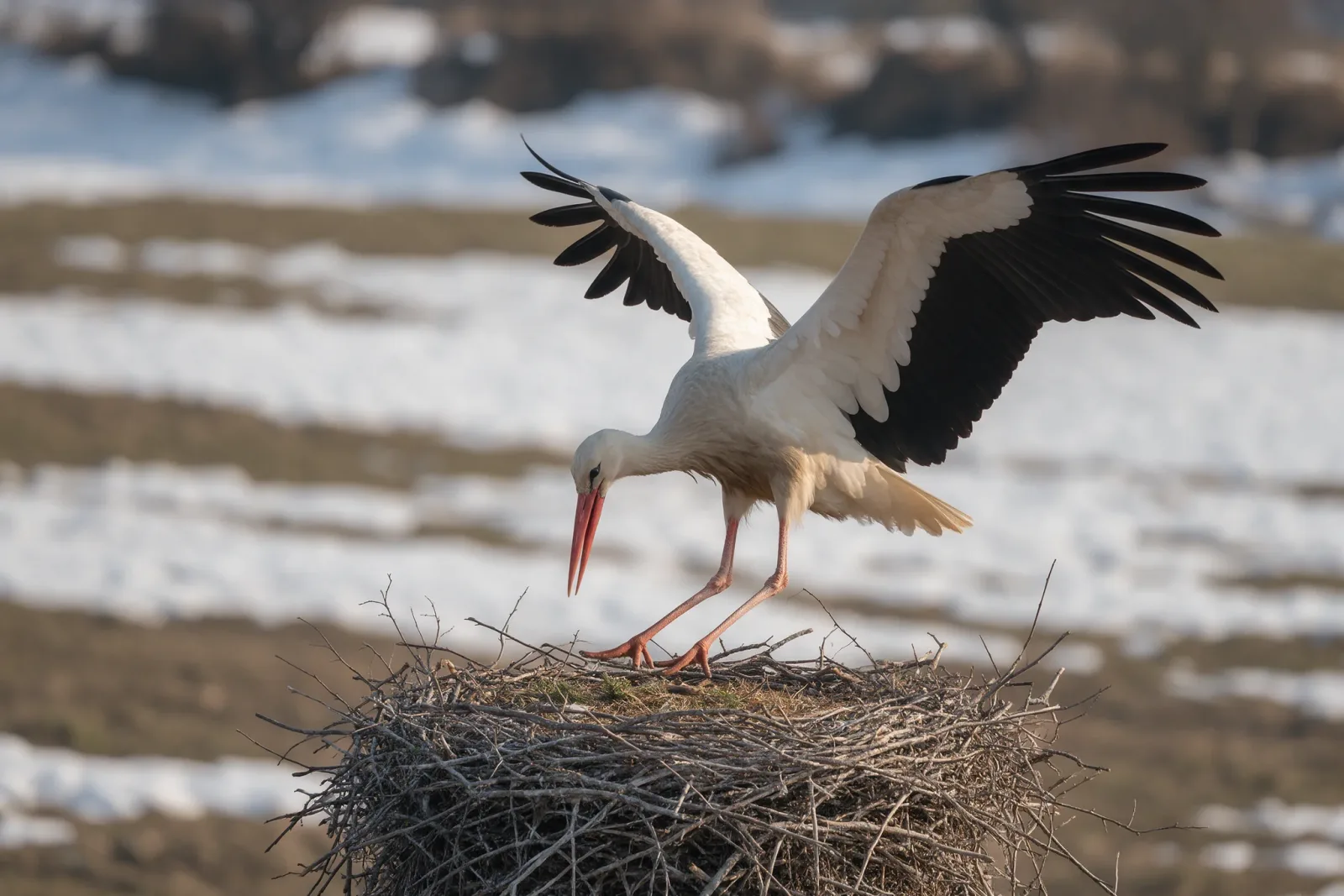
Midsummer is the peak of the nesting season. The chicks are large now, standing in the nest and testing their wings, and their appetites seem to have no bottom. The parents come and go from first light to the last of the twilight, ferrying food to the nest in a rhythm that barely pauses. To watch a nest on the longest day is to watch patience itself at work, the steady, unglamorous labour that keeps a family going.
The gold of the evening
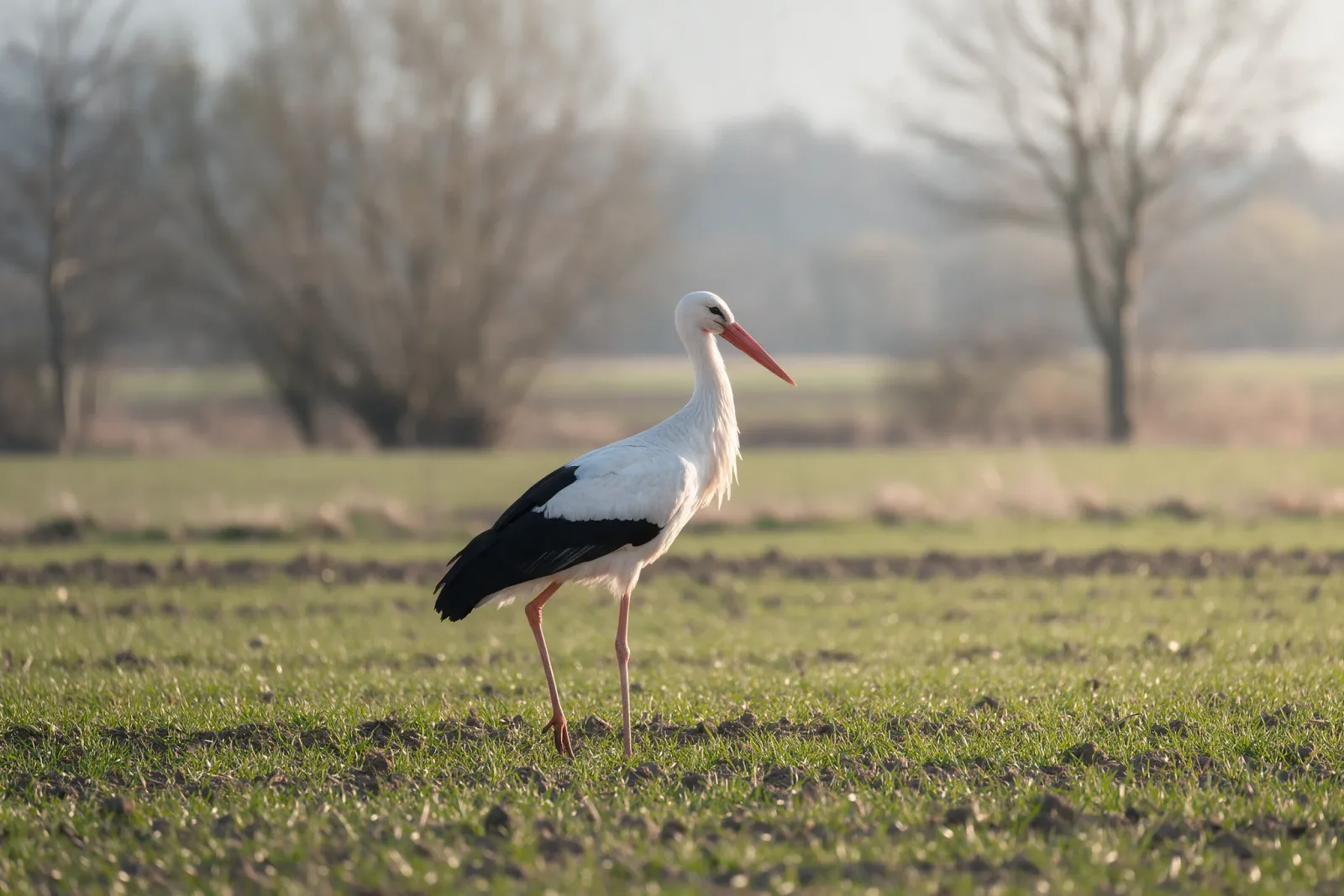
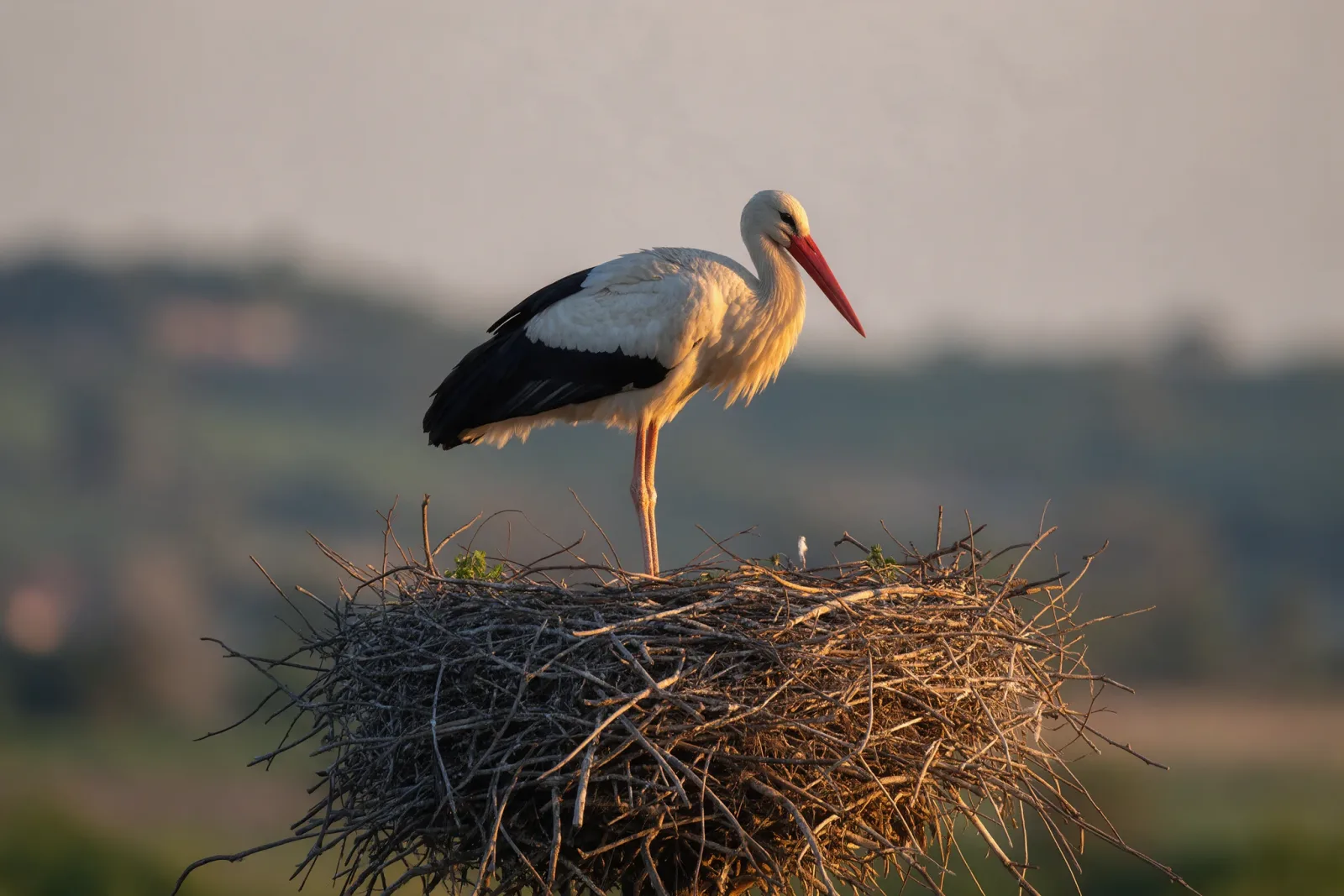
There is a particular light on these evenings, low and warm and golden, that turns everything it touches into something worth looking at. A stork standing in that light, wings folded, is one of the most beautiful things the year has to offer. The long evening gives the birds a long goodbye to the day, and it gives the watchers time to simply stand and look, without hurry, at the white bird in the honey-coloured field.
The quiet after the rush
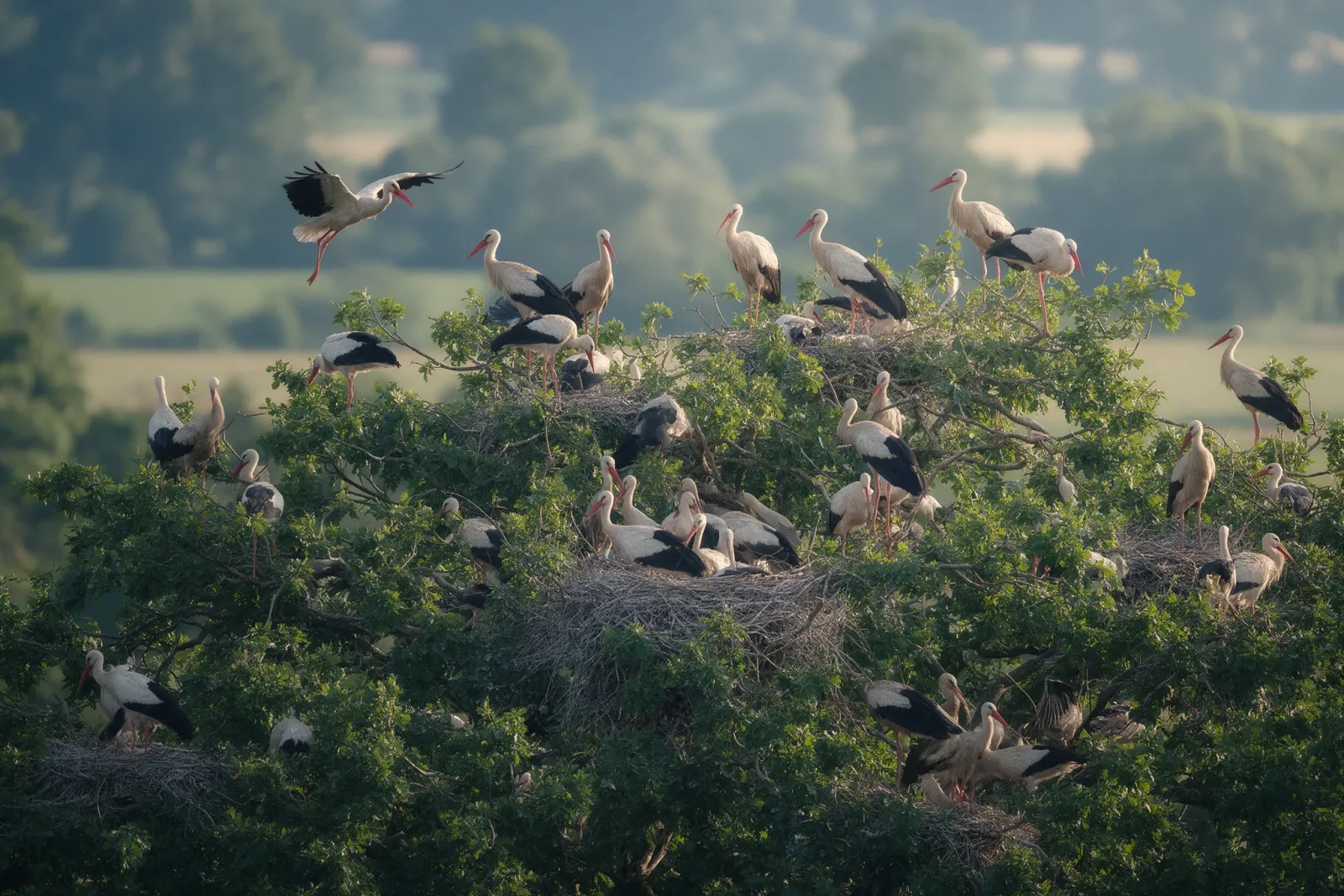
Only at the very end of the day does the pace slacken. As the last of the light fades, the parents settle on the nest beside their young, and the coming and going stops. There is a moment of stillness then, the whole colony going quiet at once, the birds at rest after the long day's work. The longest day ends not in darkness but in a soft dusk that never quite arrives, a blue twilight that holds the world suspended.
A day to remember
The longest day marks the turning of the year, the peak of the light after which the days will slowly, almost imperceptibly, begin to shorten again. For the storks it is the high point of the season, the moment when the nest is fullest and the work is at its most demanding. And for the people who love the birds, it is a day to hold onto, a long golden evening when the light stayed late and the storks, for a little while, seemed to own the whole sky.
Explore the gift