The price of a drained meadow is rarely written down, which is why we keep paying it without noticing. A wet field is not much to look at. It is soggy underfoot, and it grows nothing a farmer can sell at the market. So the ditches are cut, the water is led away, and the land is turned to something more profitable. The ledger looks clean. But the bill keeps arriving, and it is paid in birds, in water, and in the quieter losses a child will never see.
What the stork loses
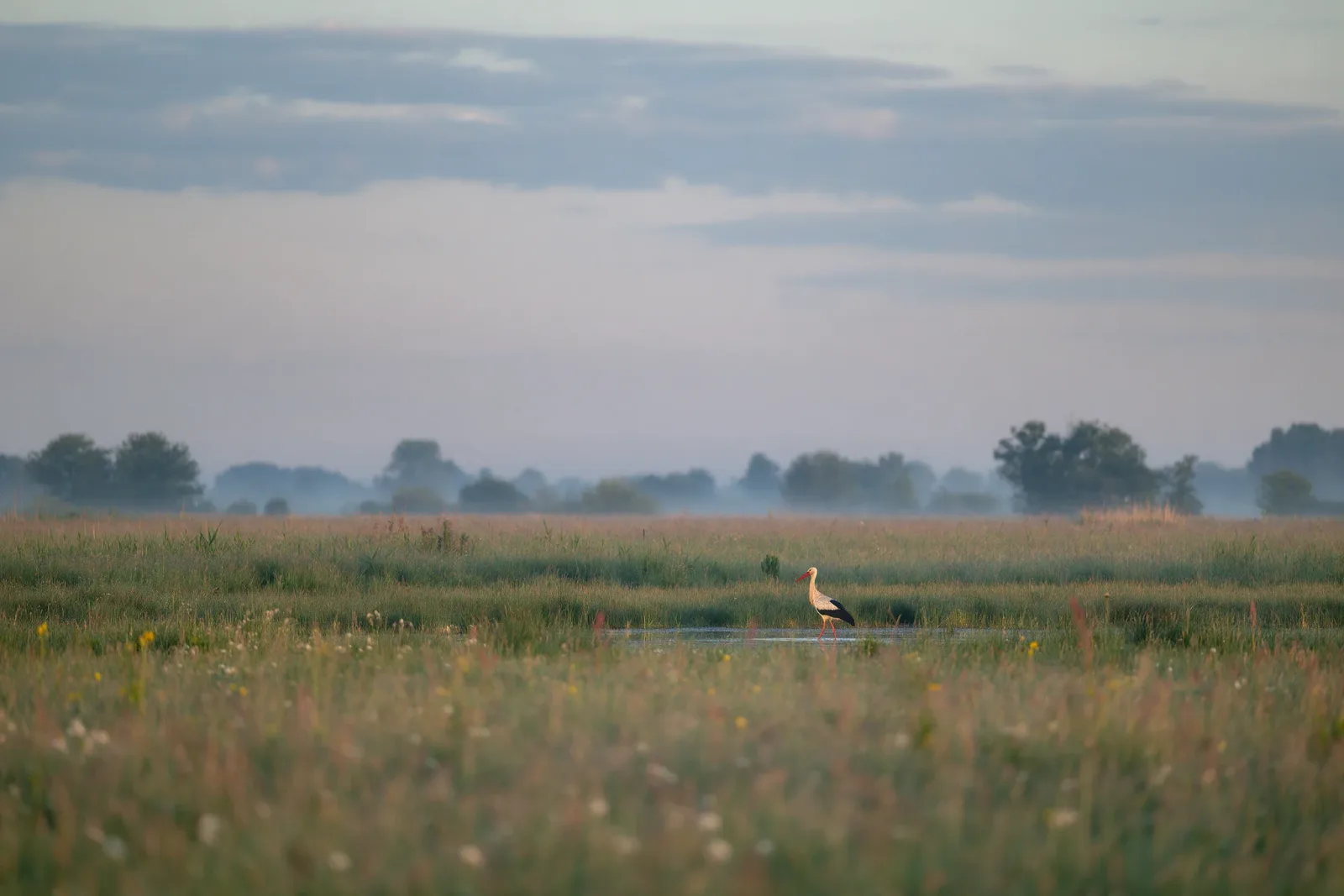
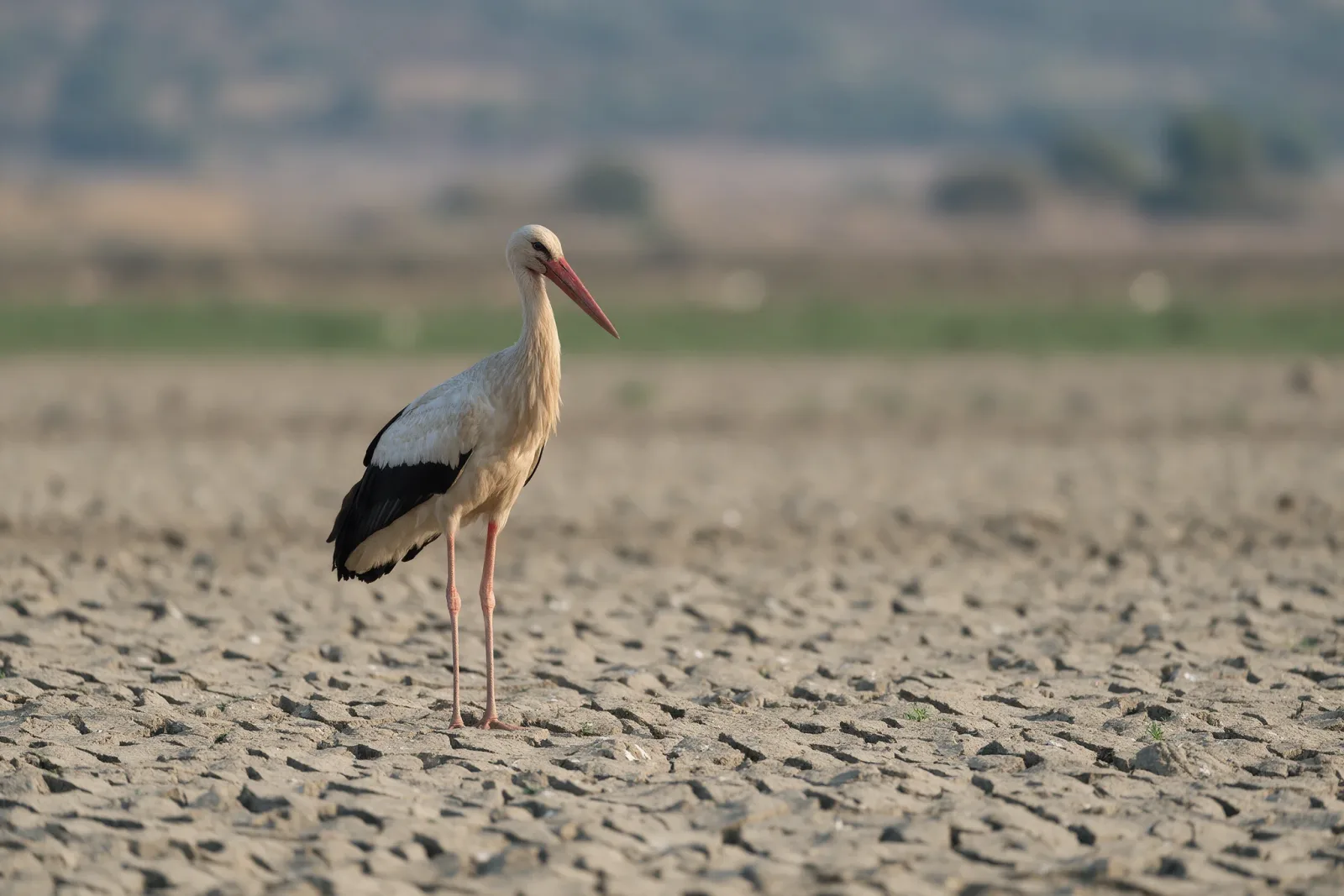
A stork is a specialist of the wet meadow. That soft, shallow ground is where it hunts, and a single field can feed a pair through the whole of a breeding season. Drain it, and the frogs go first, then the insects, then the stork. The bird does not die on the spot. It simply has one fewer reason to return, and a nest that once fledged chicks falls silent.
Multiply one drained meadow by a thousand, and you have the story of the white stork's decline. It was not one catastrophe. It was the slow, methodical removal of food, field by field.
What the village loses
A drained meadow changes more than the birds. The water that used to spread across it in winter now runs straight into the nearest river, all at once, and the village downstream floods. The soil, once a sponge, now bakes in summer and blows away. The well that used to stay clean now draws the chemicals the field was doused with.
These losses are slow and spread out, which makes them easy to ignore. A flood comes one year, not the next. A well fails gradually. By the time anyone connects the dots, the meadow is a memory, and the pavement is already down.
What the child loses
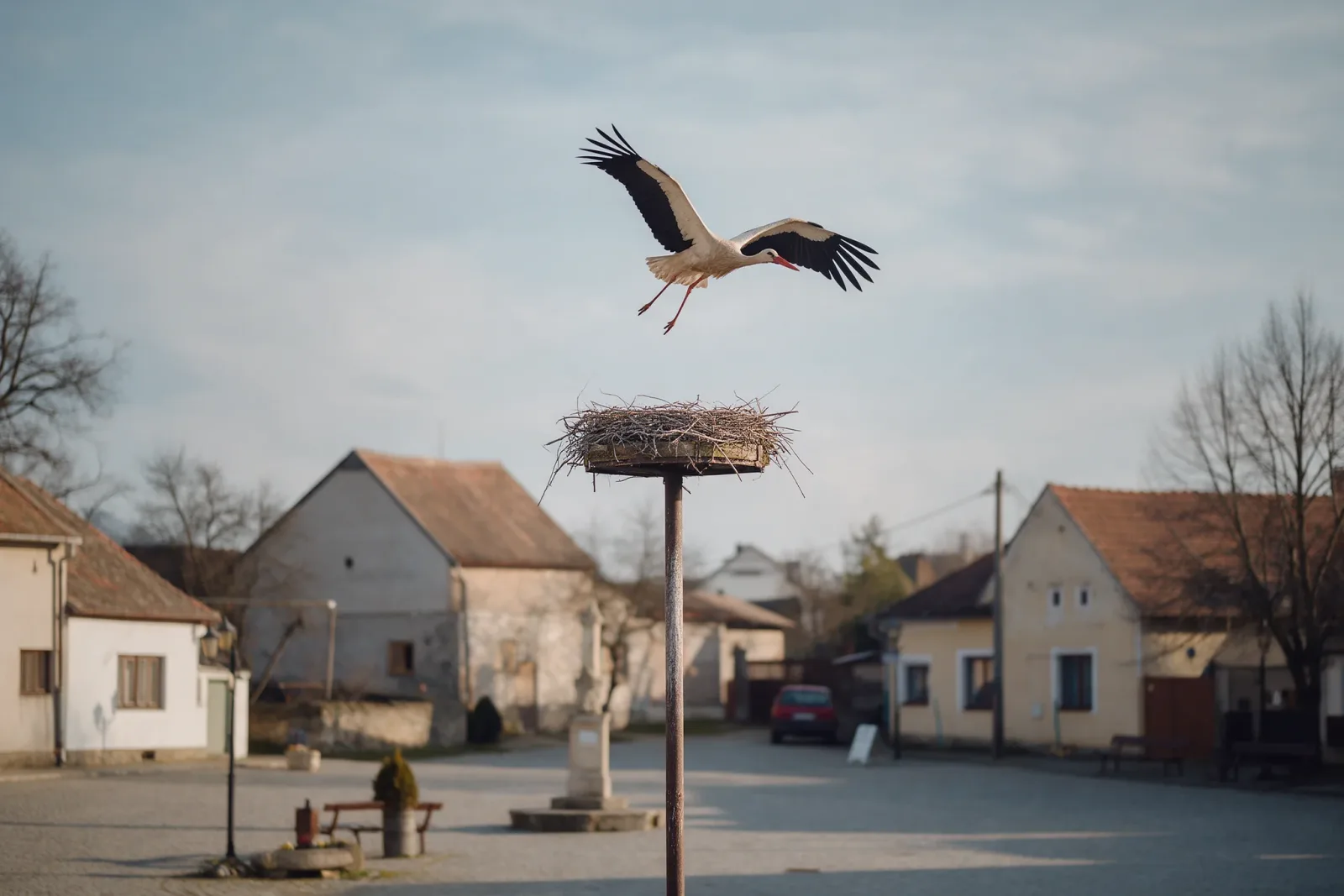
The deepest loss is the one that never appears on any balance sheet. A child cannot be told what a wet meadow sounds like in April. The frog song, the reed warbler, the sudden white clatter of a stork taking off: these are not things that survive in a photograph.
A child who grows up near a drained field has no memory of the marsh that was there before. That absence is the real price. We are not just losing a habitat; we are losing the chance for a child to know, first hand, what it felt like to stand at the edge of water and hear the world breathing.
The bill can be reduced
The good news is that a drained meadow can often be rewet, and the ditch that took the water away can be blocked. The land does not forget. Given half a chance, the frogs return, then the birds, then the people come down to watch. The price of a drained meadow is steep, but it is not always final.
Explore the gift