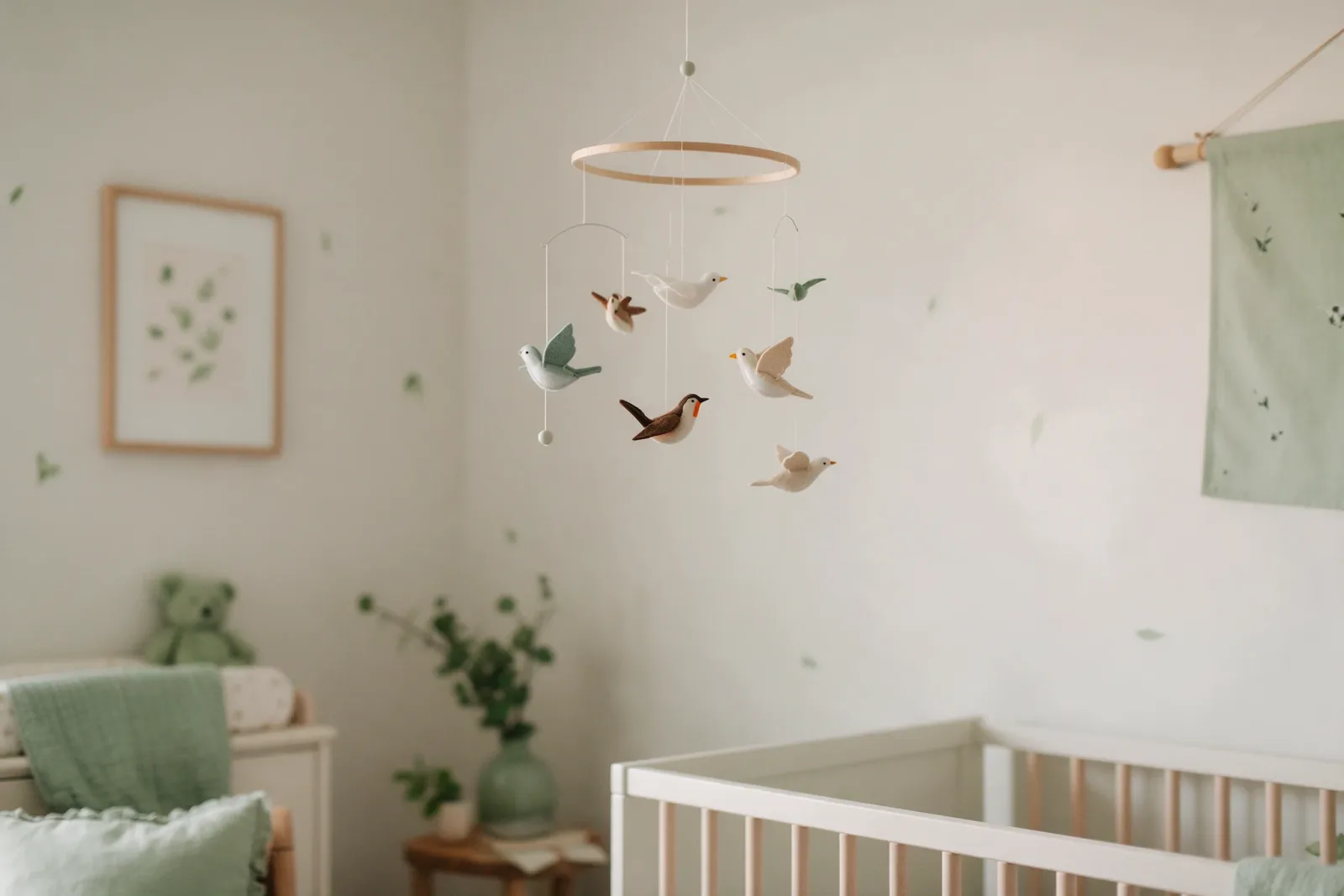
Somewhere in the early weeks there comes a day when nothing gets done. The to-do list sits untouched. The laundry waits. The hours pass in small tasks, feed, change, hold, and by evening you are not sure where the day went. These are the slow days, and they are not wasted. They are the days a baby is built on.
The slow days feel strange because they run against the grain of everything you knew before. You used to measure a day by what you finished. Now you measure it by how many times a small mouth opened and closed, by how long a baby slept in your arms, by the colour of the light when you finally sat down.
Hold without a goal
There is no such thing as holding a baby for no reason. Holding is the reason. A newborn does not understand schedules or plans. It understands warmth, a heartbeat, the rise and fall of a chest. Every hour you spend doing nothing but holding is an hour spent building the child's first and deepest sense of safety.
Feed and be fed
Feeding is another kind of slow work. It cannot be hurried, and it should not be. While the baby feeds, let the world fall away. Watch the small face, the way the eyes close and open, the tiny hand that reaches up and finds nothing, then settles. Nothing else in your life right now is more important than this, and very little ever will be.
Watch like a naturalist
You can watch a newborn the way a birdwatcher watches a stork, with the same patience and the same quiet delight. The baby changes a little every hour. A new wrinkle at the wrist, a new sound, a new expression that crosses the face and is gone. The slow days are for noticing these things, for being the person who saw them first.
Keep no record. The point of this watching is not to log milestones or tick boxes. It is simply to be present, the way a watcher is present at the edge of a marsh, asking nothing of the bird but that it go on being itself.
The birds understand the slow days
A white stork spends whole afternoons doing very little. It stands in the shallows, one leg tucked, watching the water. It preens. It rests. From a distance it looks idle, but it is not. The stork is waiting, conserving, reading the day. It knows that rest is not the opposite of life. It is part of life, and sometimes the largest part.
There will be people who ask what you did all day, and you may find you cannot answer them. The truth is that you did the most important work there is, and none of it is easy to describe. Holding, feeding, watching: these are the verbs of the slow days, and they build the whole of the child's first world.
The slow days are also a kind of instruction. They teach you, gently, to stop measuring yourself by output. A baby does not care whether you were productive. A baby cares whether you were there. That lesson, once learned, changes a person for good.
When the slow days finally give way to busy ones, you may look back on them with a kind of longing. Not because they were easy, they were not, but because they were simple. Hold, feed, watch, sleep. There is a whole philosophy folded inside that small list.
You will not get these days back, and no one expects you to savour every moment, least of all at three in the morning. But there is no harm in letting one or two of them land gently, in noticing the small warm weight of the baby and the way the light moves across the floor. The slow days are passing even as you hold them.
Give yourself the same permission. The slow days will not last. Soon enough there will be schedules and outings and a hundred things to do. But for now, the only task is this: hold the baby, feed the baby, watch the baby, and let the rest of the world wait. It will still be there when you look up.
Explore the gift