Among the quieter fables of the marsh there is one about the stork and the frog. It is the story of a bargain struck at the water's edge, between a bird that walks tall and a creature that crouches low. The two are natural enemies, and that is precisely why the tale needed them.
A meeting at the waterline
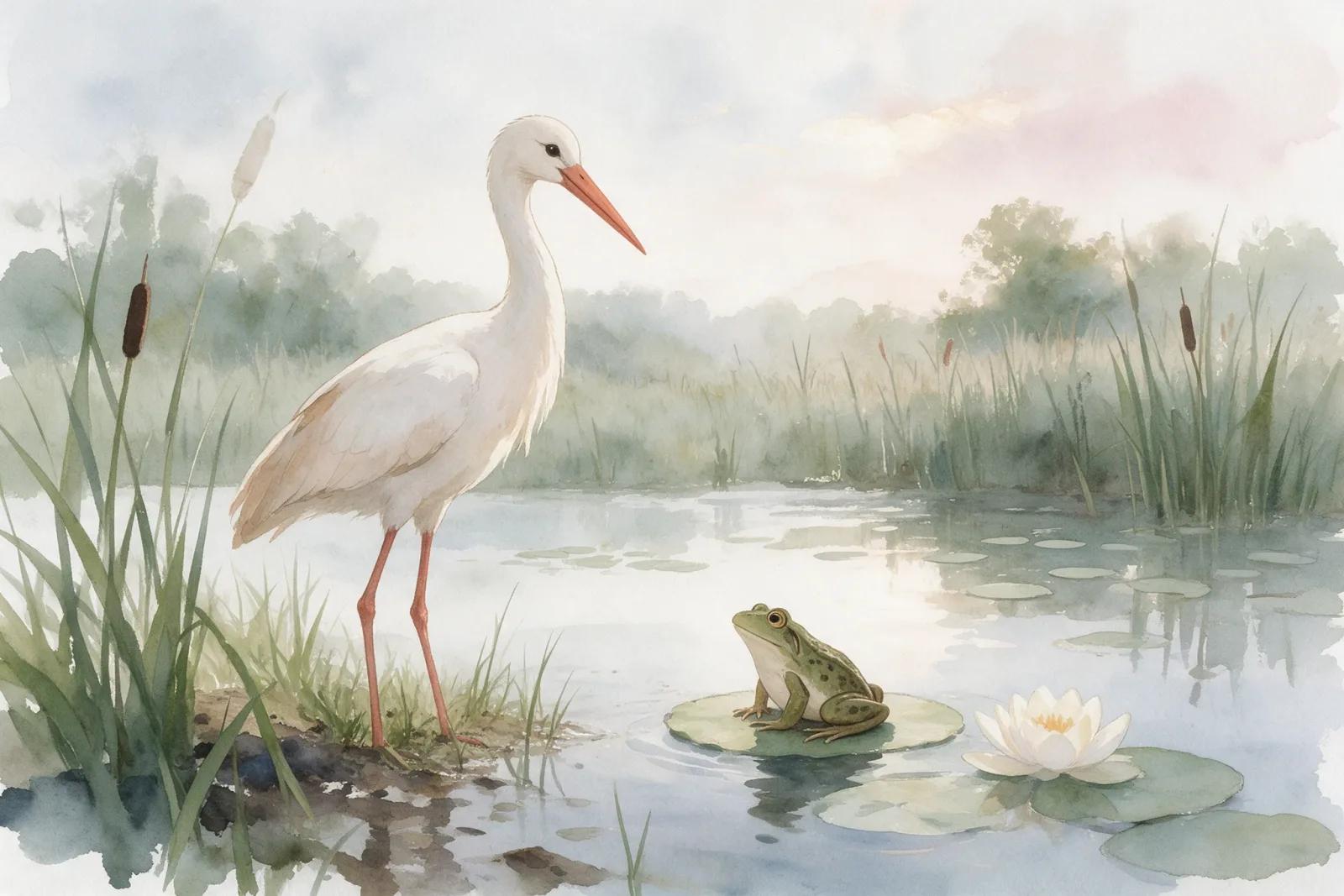
The fable begins at the edge of a marsh, where the reeds part and a stork stands motionless in the shallows. The frog watches from a lily pad, and the two begin to talk. The stork is patient, the frog is wary, and between them lies the whole question of trust.
They are neighbours who cannot be friends. Everything the stork needs, the frog has cause to fear. That tension is the engine of the story, and it pulls the listener in at once.
The bargain that was offered
The details shift with every telling, but the shape is constant. The stork offers the frog something it wants, safe passage, a dry ride across the water, a promise to spare a certain pond. The frog, in return, must give the stork something, and here the fable splits.
Sometimes the frog must lead the stork to the deepest pool. Sometimes it must simply trust the bird long enough to be carried. The bargain is always a test, and the frog's caution is always the point.
The lesson in the reeds
Like most fables, this one ends with a warning. The frog either outwits the stork or is caught by it, and the listener is left to decide who was foolish. The moral is never shouted. It sits in the reeds, half hidden, exactly where the story lives.
The deeper message is about the difference between a neighbour and a friend. A stork and a frog share the marsh, but they cannot share a bargain. Their natures are too far apart, and no promise can bridge the distance between a hunter and its prey.
Why the pair was chosen
The stork and the frog are a natural match for a fable because their relationship is real. A stork does eat frogs, and the marsh is a real meeting place for them. The story borrowed the truth and bent it into a lesson.
Fables work best when the animals are themselves. The stork is calm, tall, and patient, and the frog is quick and clever. Each acts exactly as its kind would act, which is what lets the moral feel earned rather than glued on.
A fable that still speaks
The story survives in fragments and retellings, told at the edge of ponds where storks once fed. It is a small fable, almost forgotten beside the grander myths of delivery and luck, but it carries its own truth.
The stork and the frog are a reminder that the marsh has its own politics, and that even in a fable, the meeting of two very different natures is worth a story.
Explore the gift