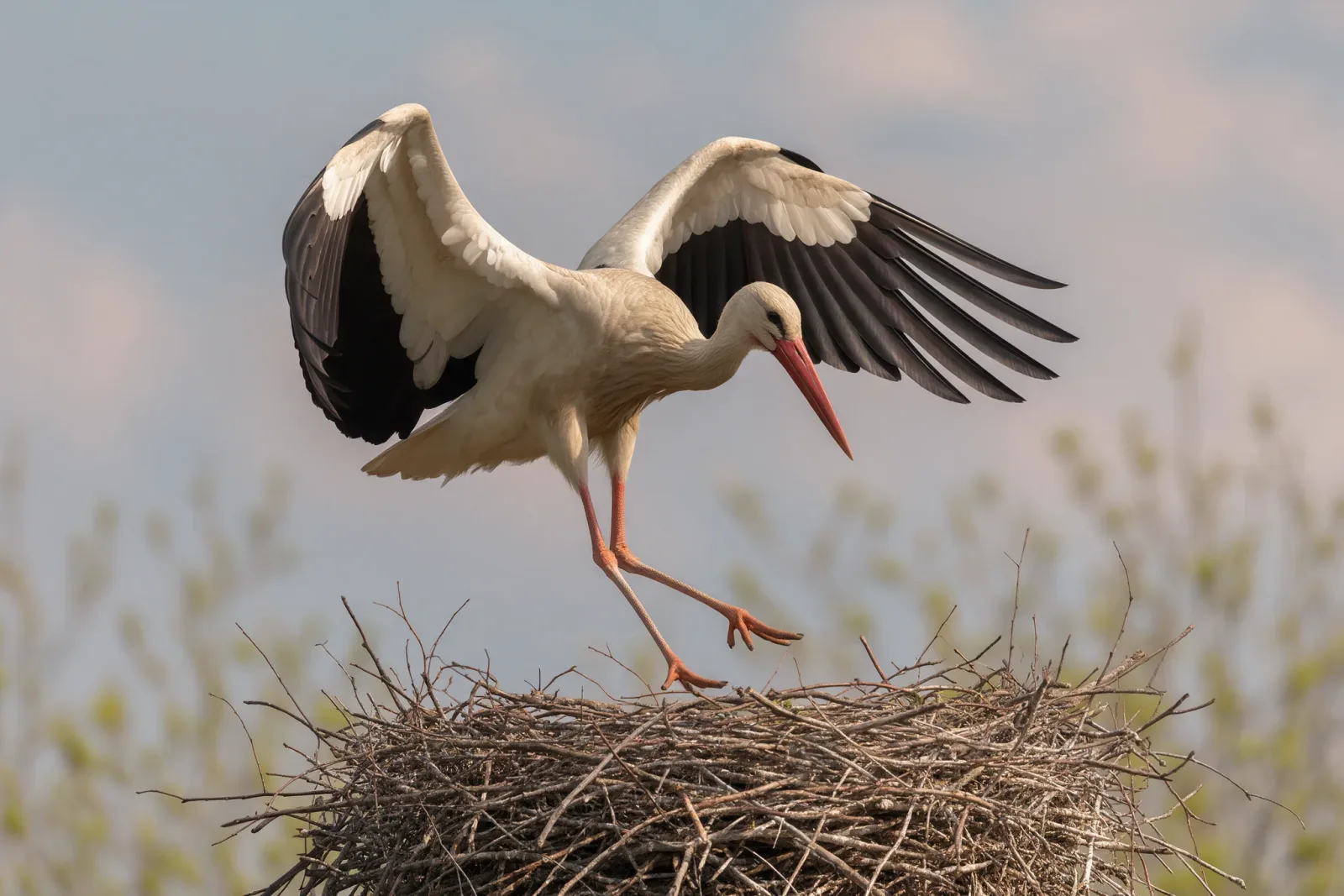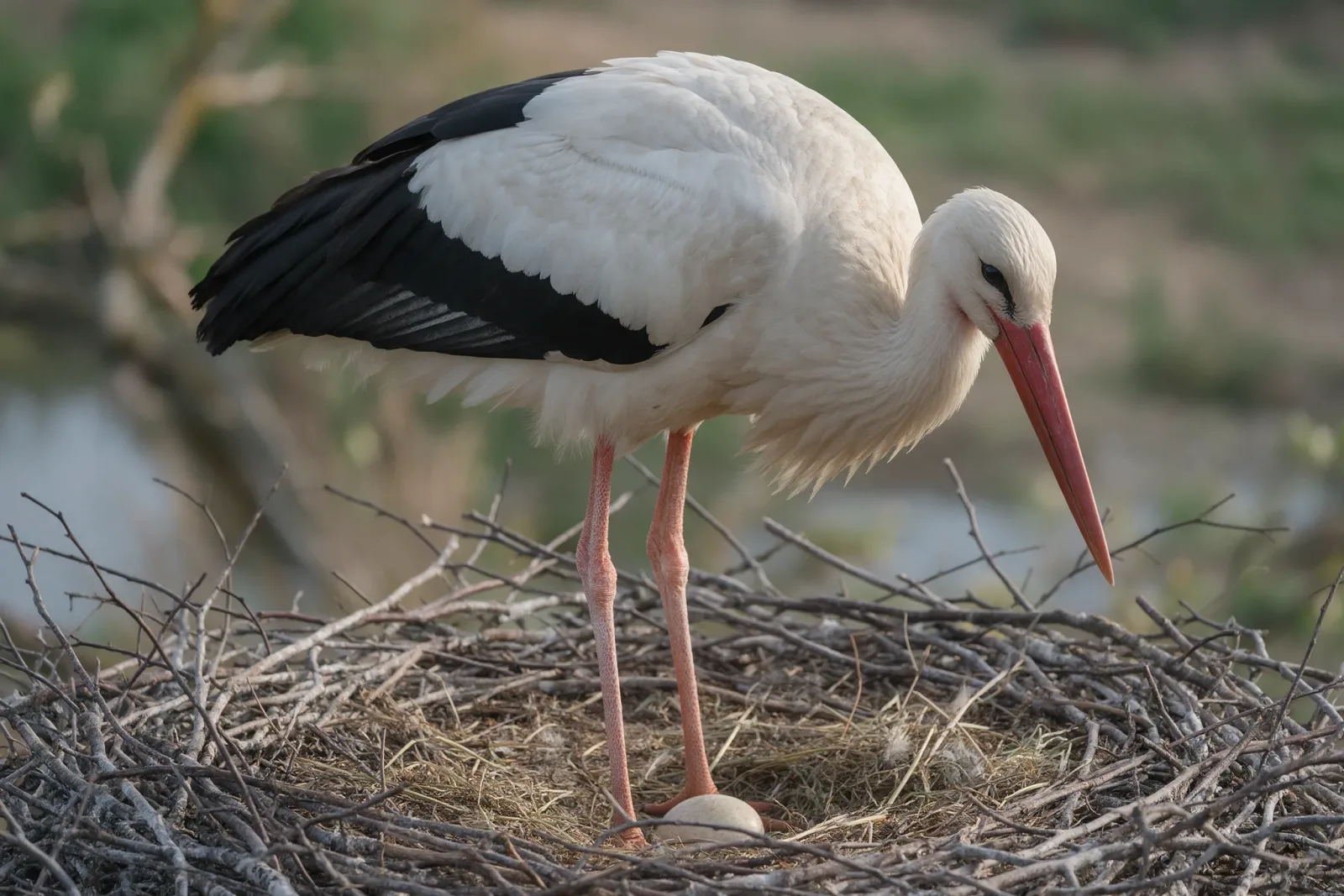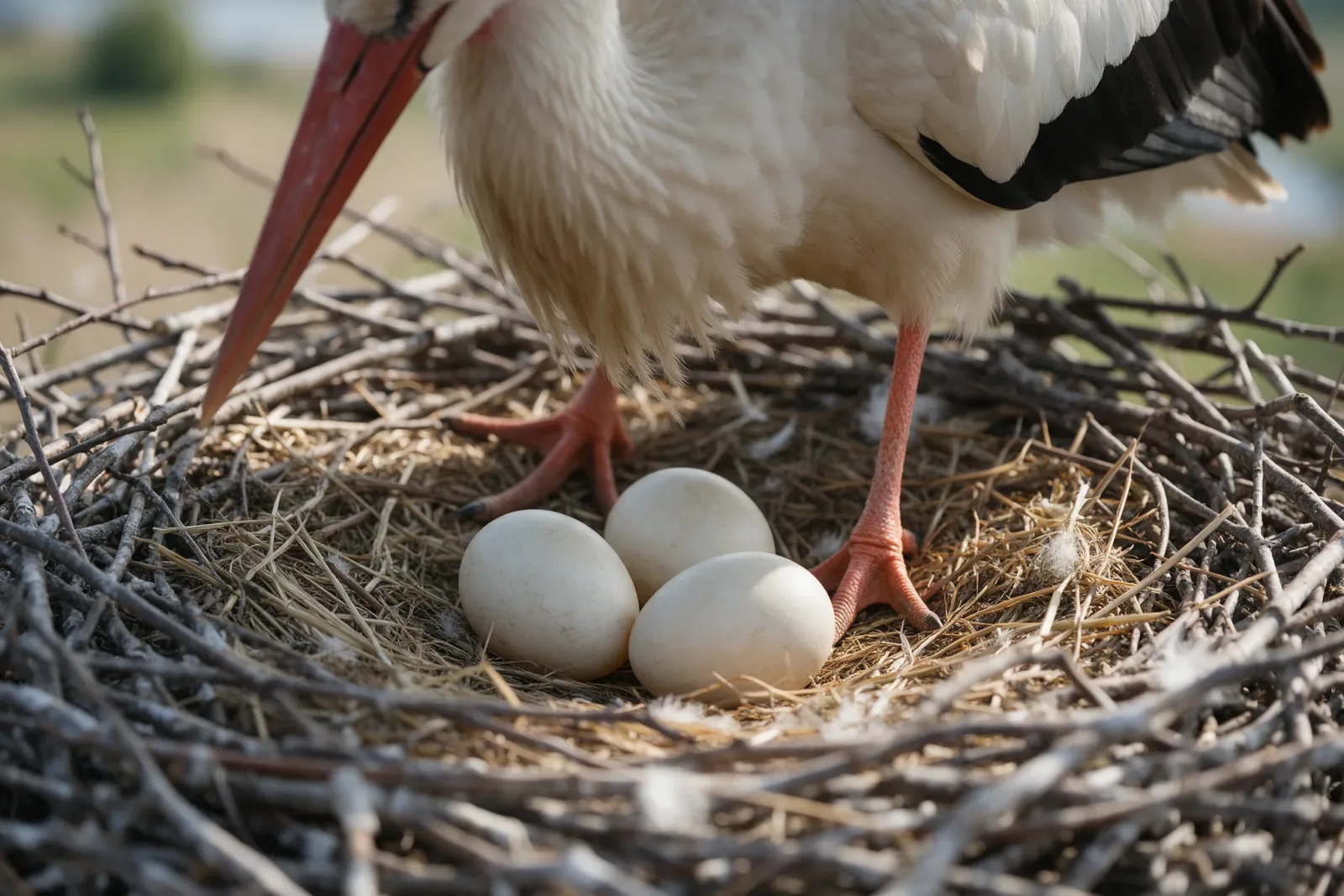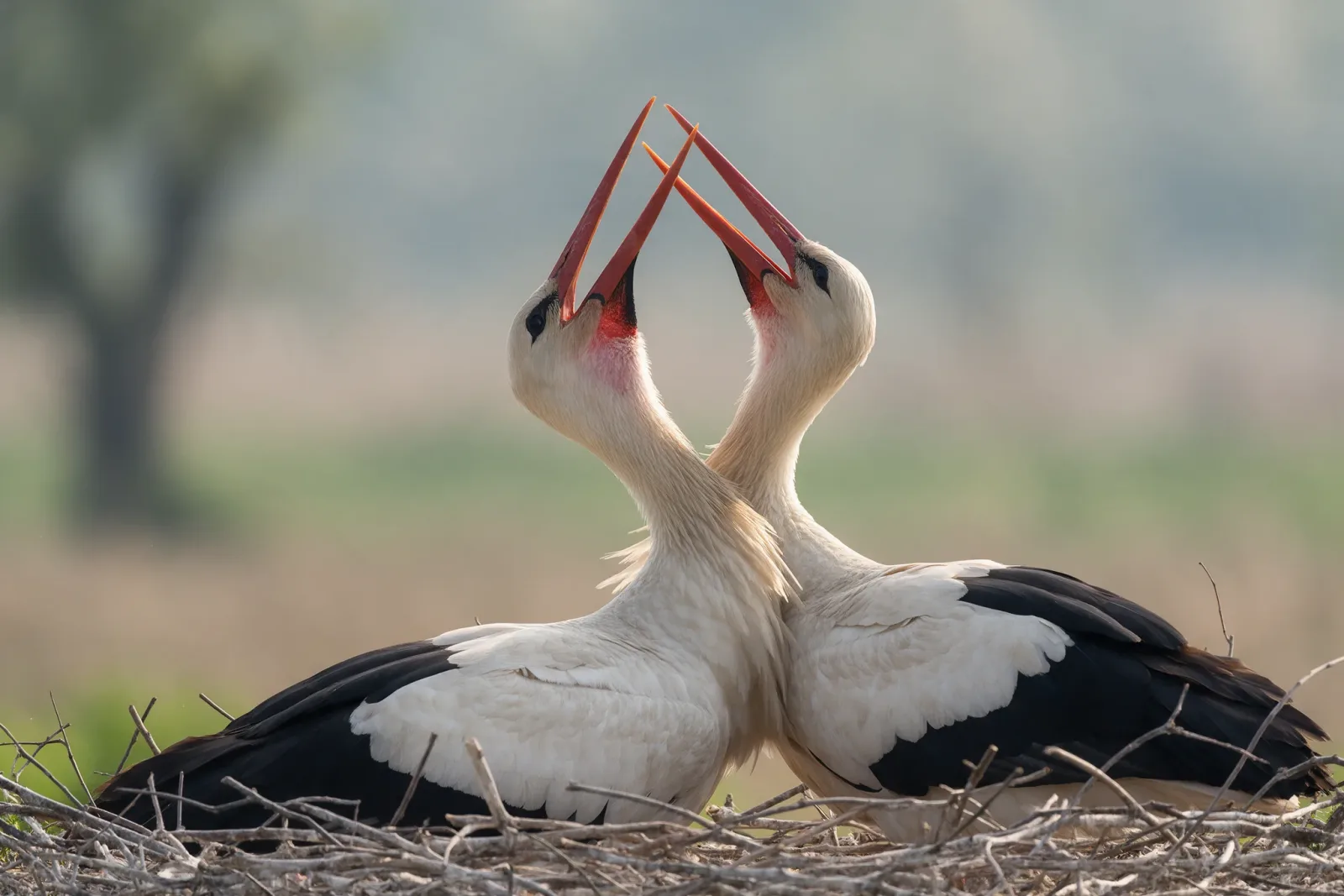
The stork dance is not a dance in any human sense, and yet it is one of the most striking ceremonies in the bird world. When a white stork meets its mate at the nest, or greets a returning partner in spring, it throws its head back until the bill points at the sky and clatters it so fast it sounds like a small drum.
Both birds do it together, heads tipped far back, bills rattling, necks arched. The sound rolls out over the rooftops and carries for some distance. It is part greeting, part claim, and part pure celebration.
Why storks clatter
A white stork has no song. It cannot sing, and it does not call the way most birds do. Instead it uses its bill, snapping the two halves together at astonishing speed to make that rapid, dry rattle. The dance is the stork's whole vocabulary of greeting, and it says everything the bird needs to say.
The clatter happens most often at the nest, when one bird lands beside the other. It is a way of saying, I am here, we are together, this place is ours.
The moves of the dance
The full greeting has a few parts. The returning bird lands and lowers its head, then both birds rear back and clatter. Sometimes one leans down to preen the other's neck feathers, a small gesture of tenderness between the bursts of noise. Then they clatter again, and settle.
It looks theatrical, and in a way it is. The dance is as much for show as for meaning, a public announcement that the pair has reunited and the nest is occupied.
The same ritual each spring
Because the stork dance is tied to the nest, it happens at the same moments every year. The first reunion in spring is the loudest, two birds meeting after a winter apart and filling the air with their rattle. But the dance repeats all season, whenever one bird returns from feeding and the other is there to meet it.
This is why people love it. The dance is a marker of the year, a sign that the pair is back, the nest is alive, and the whole cycle is turning again.
A greeting for a partner
For all its noise, the stork dance is at heart a private thing, shared between two birds who know each other. It is the closest a stork comes to a welcome, and to a name.
And on a spring evening, when the light is going and the pair stands on the old nest with their heads thrown back, the clatter sounds less like a call and more like a home being claimed, loudly and gladly, for another year.
Explore the gift