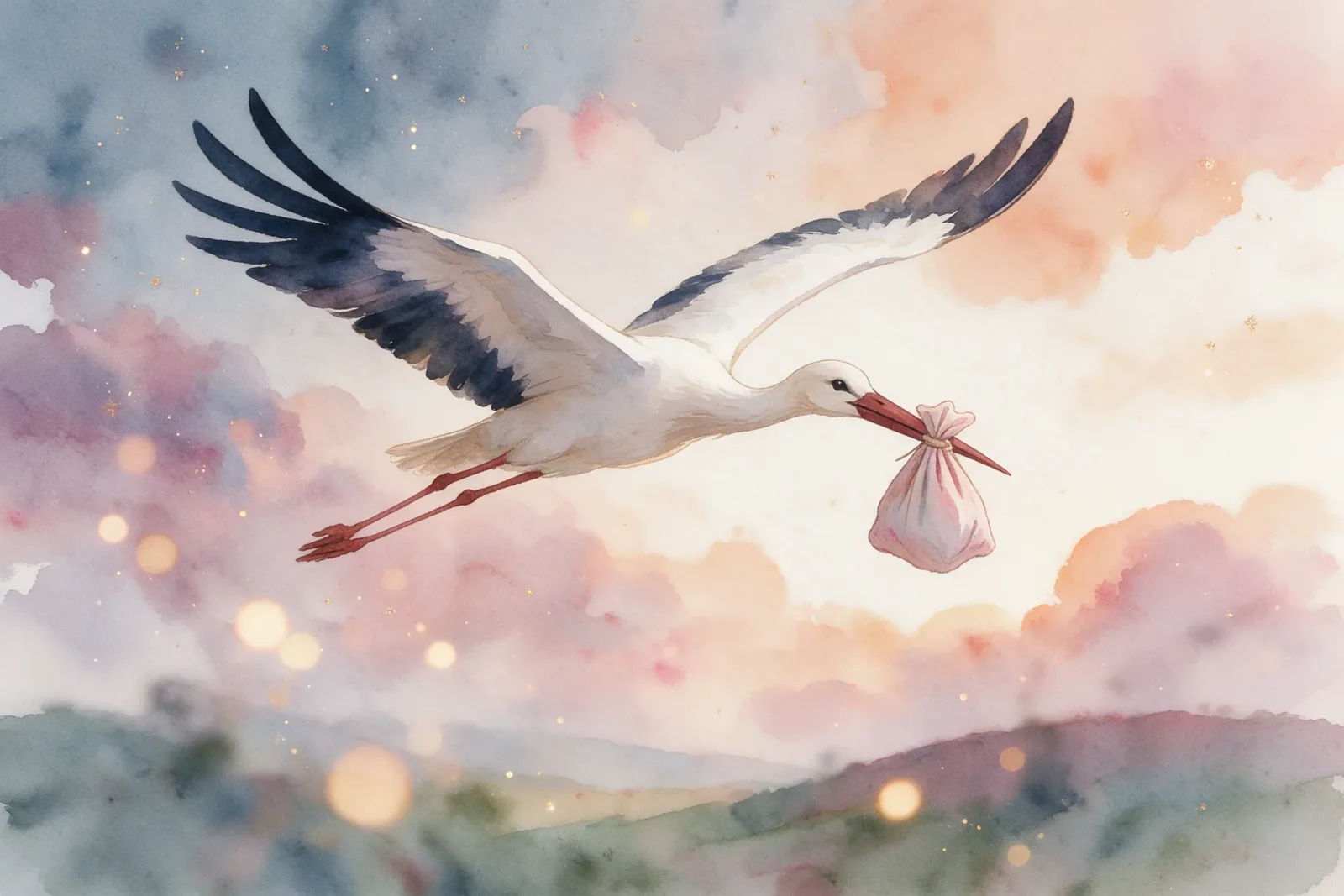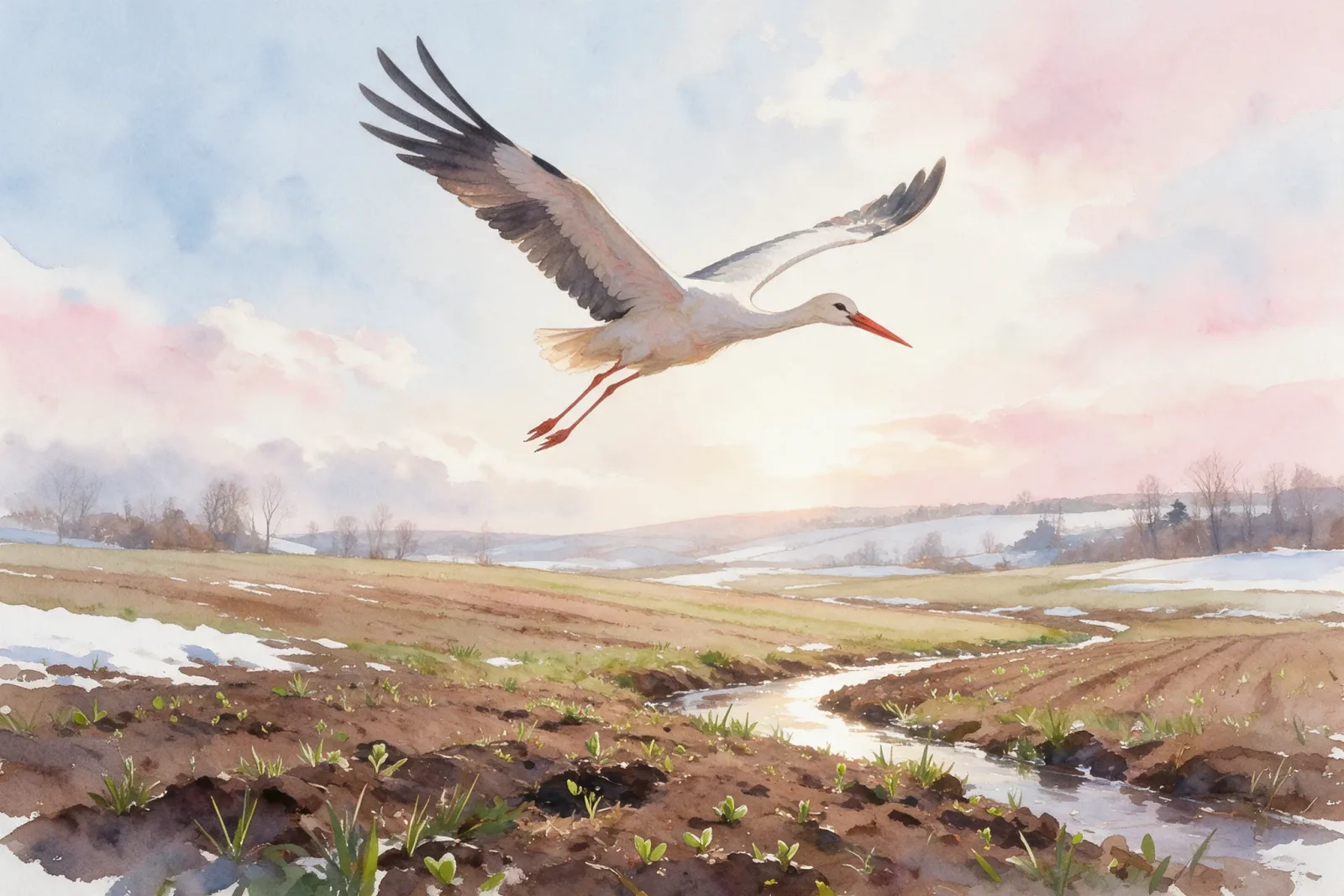
In the old belief, the stork did not simply arrive with the warm weather, it brought the warm weather along. The stork that carried summer was a folk idea with real power in a cold climate, where the return of the bird was read as the return of life itself, and where spring was thought to fly north on white wings.
The bird that ended the winter
To a village emerging from a hard winter, the first stork was a genuine event. The bird came back when the frost loosened and the ground softened, and its appearance meant the worst was over. The stork was not a calendar entry but a deliverance.
So people gave the bird credit for the thaw. It was said that the stork carried the warm air on its back, or pulled the season behind it, and that a late stork meant a late spring for everyone.
The flight north as a promise
The migration itself looked like the work of a messenger. The birds left in autumn, disappeared over the horizon, and came back months later as if sent. The return, so reliable and so welcome, was easy to read as a promise being kept.
A child who asked where summer had gone could be told it had flown south with the storks, and would fly back when they did. The story made the season a passenger, and the stork its patient driver.
The sign in the fields
The first stork over the fields was a signal to the farmer. It meant the plough could soon turn the earth, and the seeds could go in. The bird's arrival and the year's work were bound together, so that the stork became, in practice, the herald of the growing season.
A stork seen walking in a freshly turned field was the picture of the bargain made good. The bird had brought the spring, and now it fed in the wake of the plough that the spring had allowed.
Why the belief felt true
The belief lasted because it matched what people saw. The stork did arrive with the spring, and the warm weather did follow it north. The order of events was real, even if the cause was not.
Folklore rarely troubles itself with cause. It is enough that the bird and the season move together, and that the return of one can stand for the return of the other.
The bird that still brings the season
The science of migration has long since replaced the story, but the feeling survives. When the first stork of the year appears, it is still reported, still pointed at, still greeted as good news.
The stork that carried summer is a belief we have outgrown without quite letting go. The bird still arrives with the spring, and spring still seems to follow a half wingbeat behind it.
Explore the gift