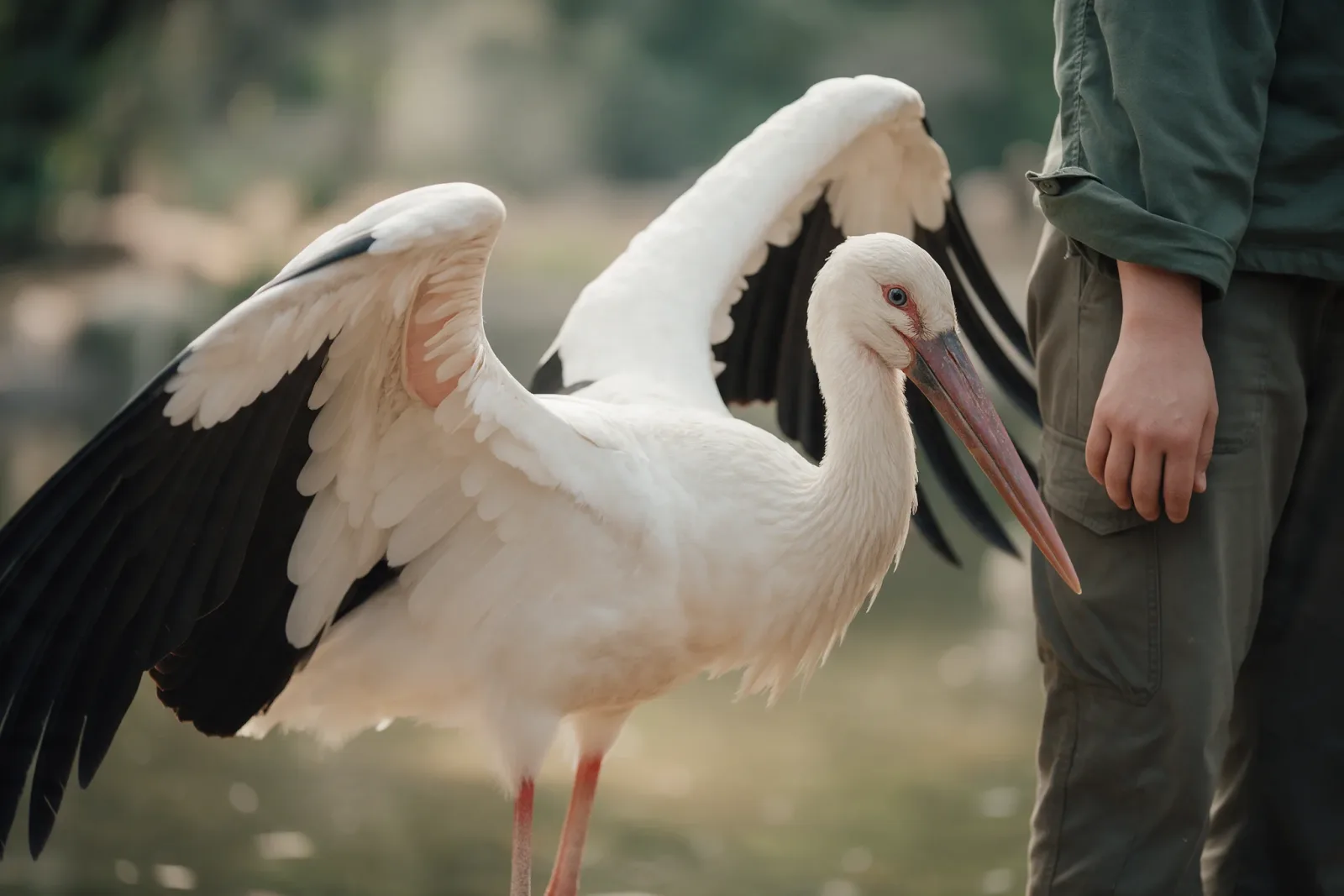
A white stork is a big bird, but it is not a heavy one. This is one of the quiet marvels of its design. A bird that stands nearly a metre tall and spreads wings two metres wide weighs only a few kilograms, far less than most people guess. The weight of a stork is part of what makes its long migration possible, and it is worth understanding how a creature so large can stay so light. The answer is hidden in the bird's bones, its feathers, and the careful way it manages its own body. A bird that weighed what it looks as though it weighs could never cross a continent. The stork's lightness is not a trick or an accident. It is the result of long refinement, a body pared down to the very edge of what is possible so that it might rise on warm air and stay there. Lightness is the stork's first gift.
Big frame, light body
The secret begins in the bones. Like most birds, a stork has hollow bones, strong but filled with air instead of marrow. This lightens the whole frame without weakening it. Add to that a slim body, a long neck with little flesh on it, and feathers that weigh almost nothing, and you get a bird that is mostly wing and air. A stork's size is an outline more than a mass, a grand shape drawn with very little substance, and that is exactly what lets it rise on a warm current.
Feathers weigh little
Feathers are among the lightest coverings in the animal world, and a stork carries thousands of them without carrying much weight at all. The long flight feathers are the heaviest part of the plumage, and even those are light for their strength. A stork is, in a real sense, a light frame wrapped in air and dressed in feathers, which is why it can climb thermals with so little effort. Every gram the feathers save is a gram the bird does not have to lift.
The weight a bird must carry
What a stork weighs matters because of what flight costs. Every gram a bird carries is a gram it must lift with every wingbeat, and on a migration of thousands of kilometres the difference between a light bird and a heavy one becomes enormous. A stork that is lean and light climbs thermals more easily, glides farther, and burns less energy on the long road south. Staying light is not a luxury. It is a matter of survival, and a stork that grows too heavy before a migration has already made its journey harder.
Weight and the seasons
A stork's weight changes through the year. It is lighter after the lean work of breeding and heavier after good feeding in late summer, when it has put on the reserves that will fuel its flight. Before migration a stork must carry enough stored energy to cross long, foodless stretches of desert, yet still stay light enough to soar. It is a careful balance, and the bird manages it the way it manages everything, quietly and by instinct, tuning its own body to the road ahead.
The lightness of being
There is something almost paradoxical in a bird so large that weighs so little. A stork is a creature of apparent contradictions, huge in the air and feather-light on the scale, and that contradiction is the whole secret of its life. It is large because its journey is long, and light because the journey would be impossible otherwise. The two facts belong together, and each one explains the other. To hold a stork in the hand, for those who have, is to be surprised again by how little there is to it, and how much that little can do.
So when you see a stork lift off a meadow, rising without a single flap, remember that the bird is doing a kind of magic. It is large enough to look grand and light enough to float, and that combination is exactly what carries it from one side of the world to the other. Lightness and size, held together, are what make a stork a stork.
Explore the gift