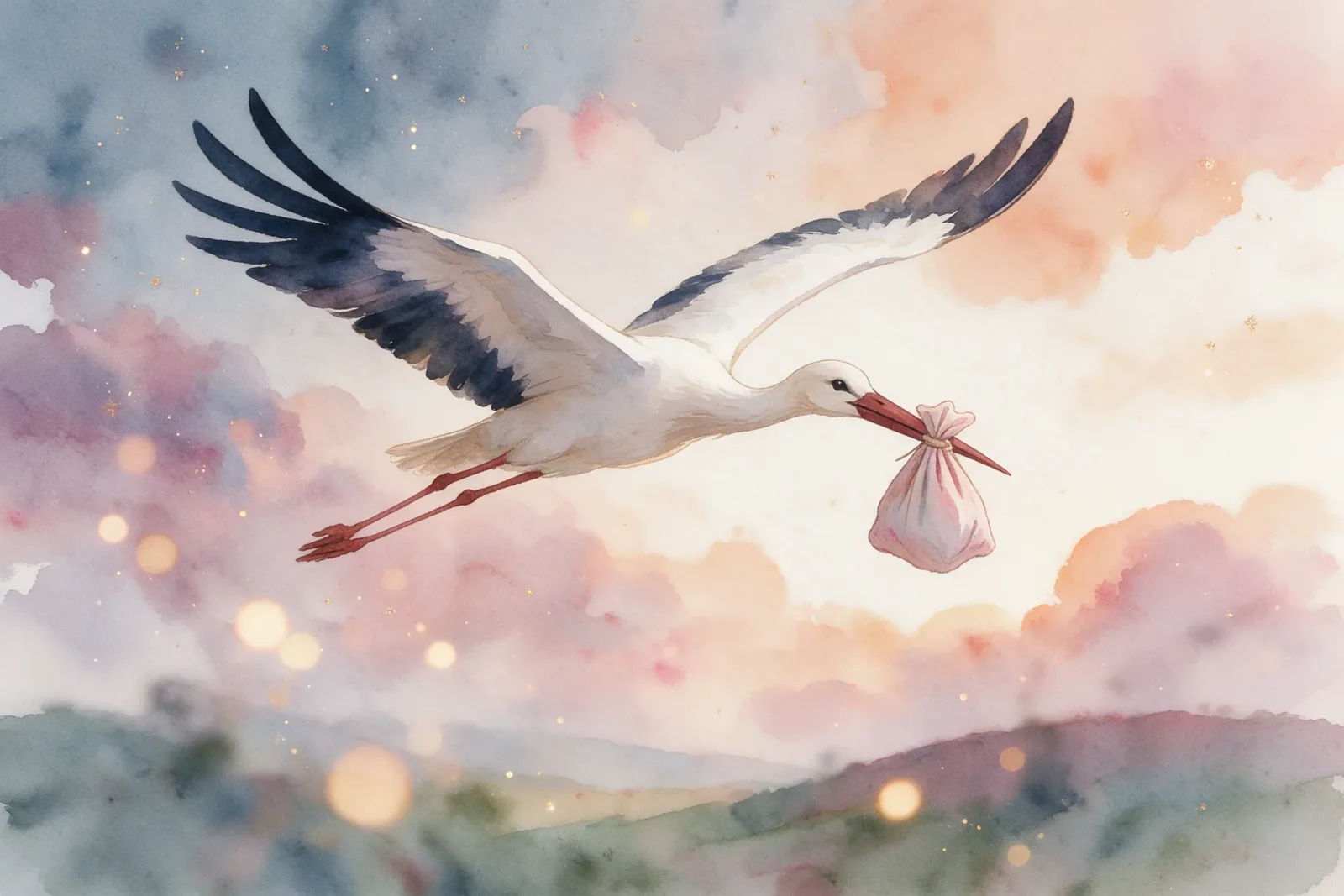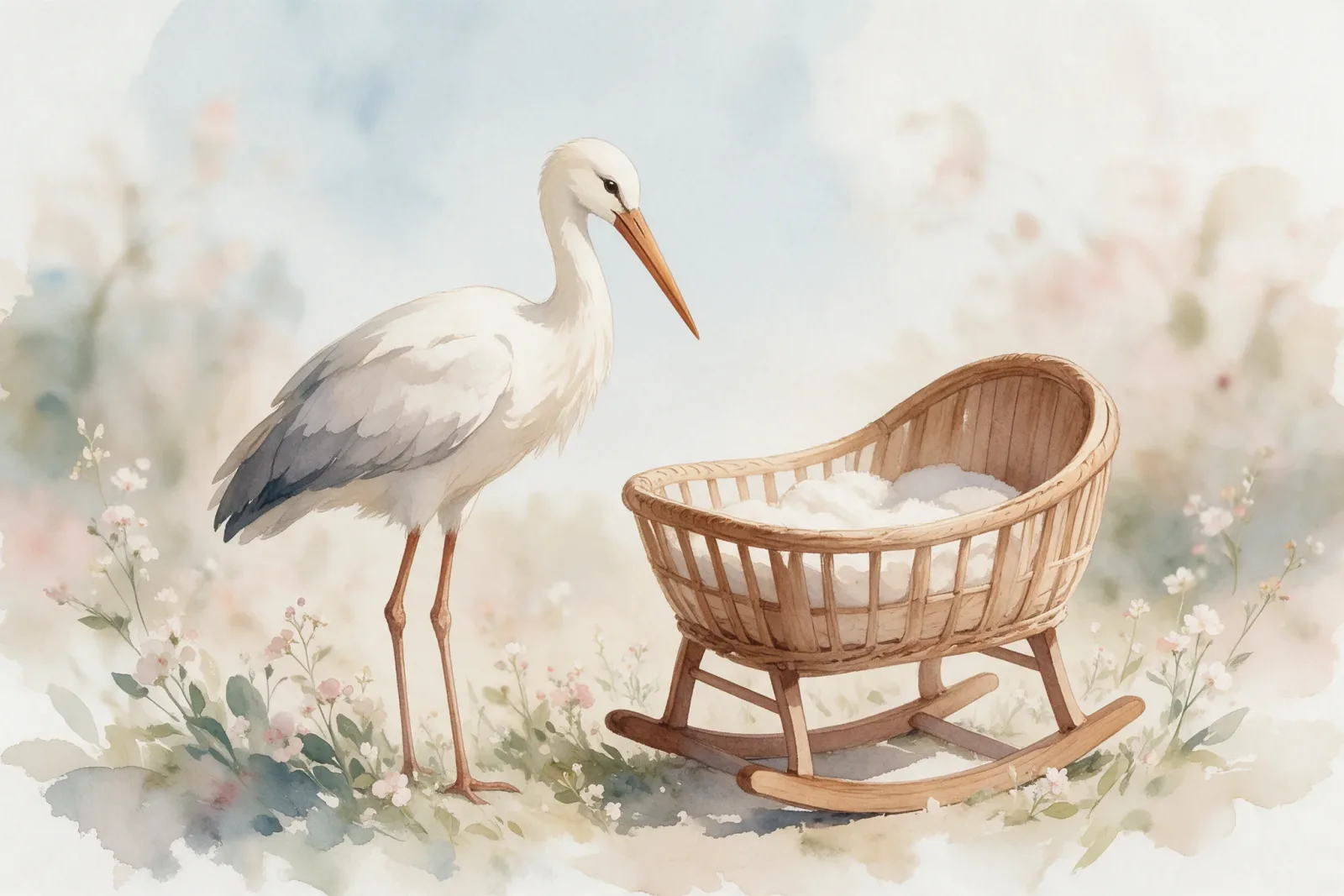
The white bird of promise is the stork in its oldest and kindest office. Before it was a deliverer of babies, it was a bearer of good news, a sign of marriage, and a blessing on a new home. The bird's whiteness, its faithfulness, and its spring return made it a promise that people could almost see.
A sign that good news was near
To see a stork in flight was, for many communities, a good omen. The bird did not bring the news itself, it announced it, the way a herald rides ahead of a king. A stork overhead meant that something welcome was on its way.
The promise was deliberately open. It might be a child, a wedding, a fine harvest, or simply the end of a hard winter. The bird carried the general shape of hope, and each household filled it with its own longing.
The bird of marriage
The stork's faithfulness made it a natural symbol of marriage. The bird returns each spring to the same nest and, in the folk understanding, to the same partner. That loyalty looked to human eyes like a wedding vow kept year after year.
A stork seen by a young couple was read as a promise of a good match, and the bird appeared on embroidered cloths and gifts meant for a bride. It stood for the idea that love, like the stork, could be counted on to come home.
The blessing on a new home
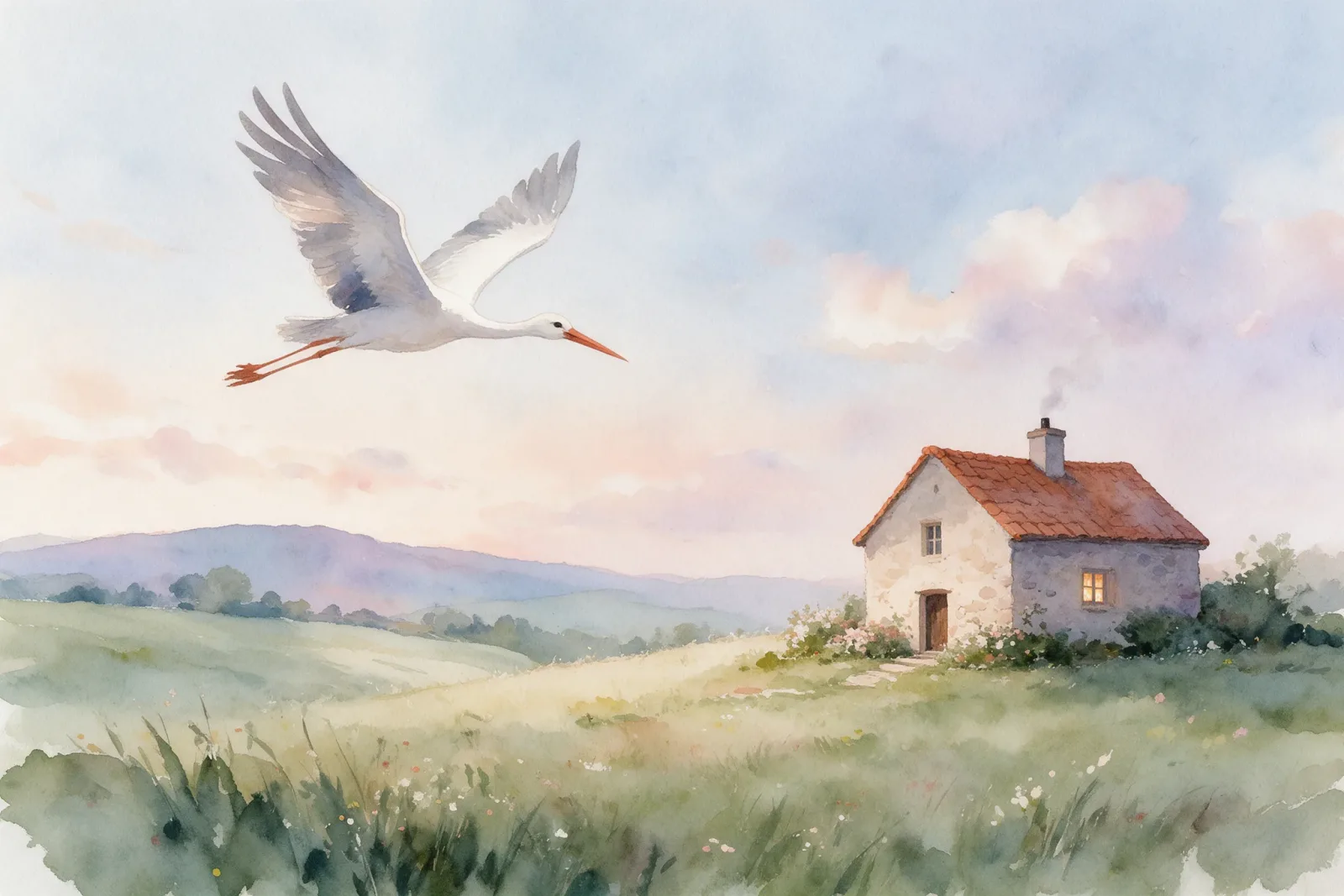
When a family moved into a new house, the hope was that a stork would one day settle on the roof. The nest was the final blessing, the mark that the house had been accepted and would be protected.
So the stork became part of housewarming itself, a sign that a new roof would gather luck as well as rain. The bird was imagined gliding toward a lit window, bringing the promise of a warm and full house.
Why the bird could carry a promise
The stork earned this office through its own habits. It is white, and white meant purity and good intention. It is loyal, and loyalty meant it could be trusted with a promise. It returns with spring, and spring is the season when all promises seem possible.
The bird did not have to do anything magical. It simply had to be itself, faithfully, and the meaning gathered around it the way a nest gathers twigs.
A promise that is still read
The world has other signs now, and the stork is no longer consulted the way it once was. Yet the bird still carries the old meaning, and a white stork overhead still makes a person look up with a small, unwilled hope.
The white bird of promise is folklore, but the hope it stands for is real. That is why the image has never quite gone out of use, and probably never will.
Explore the gift