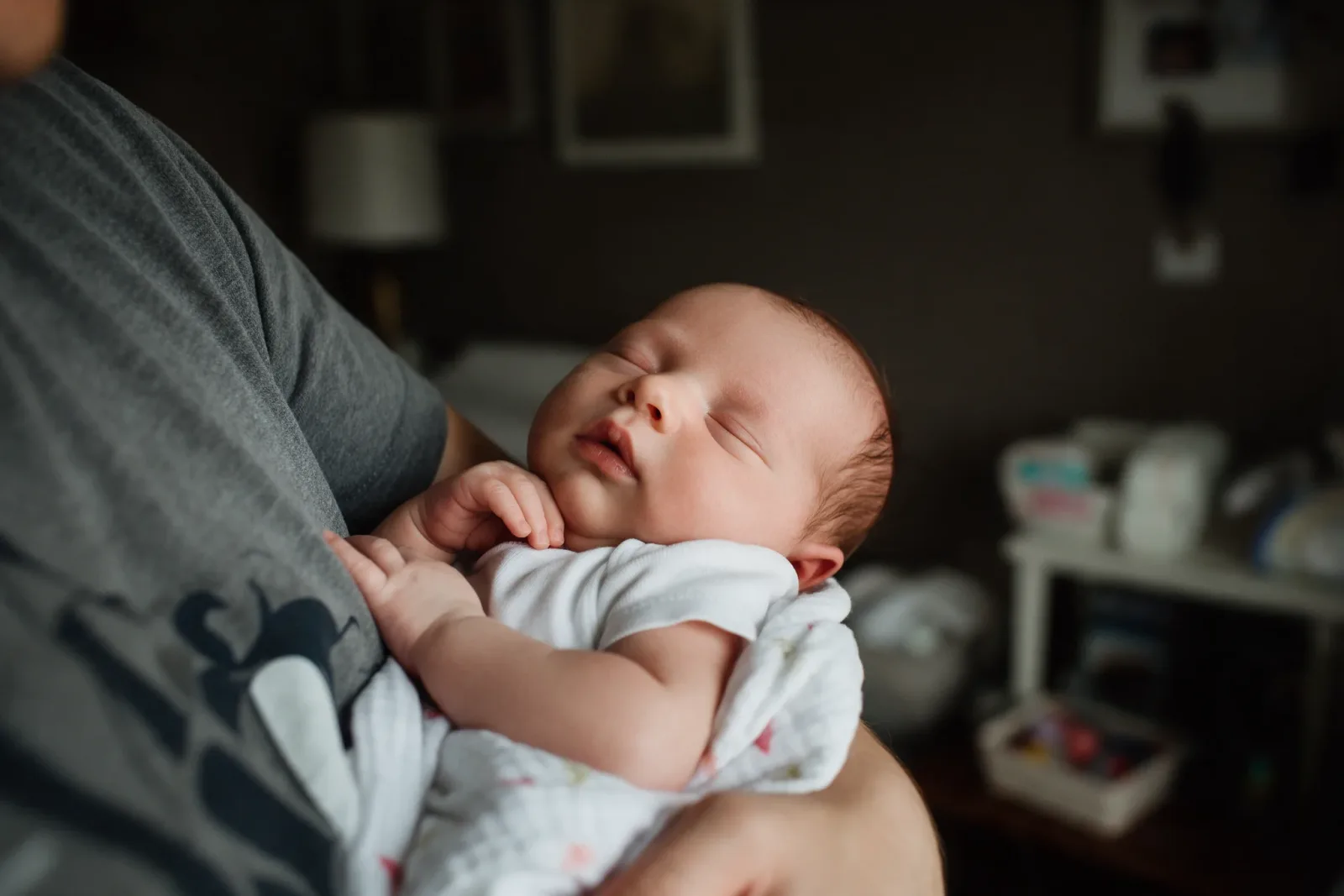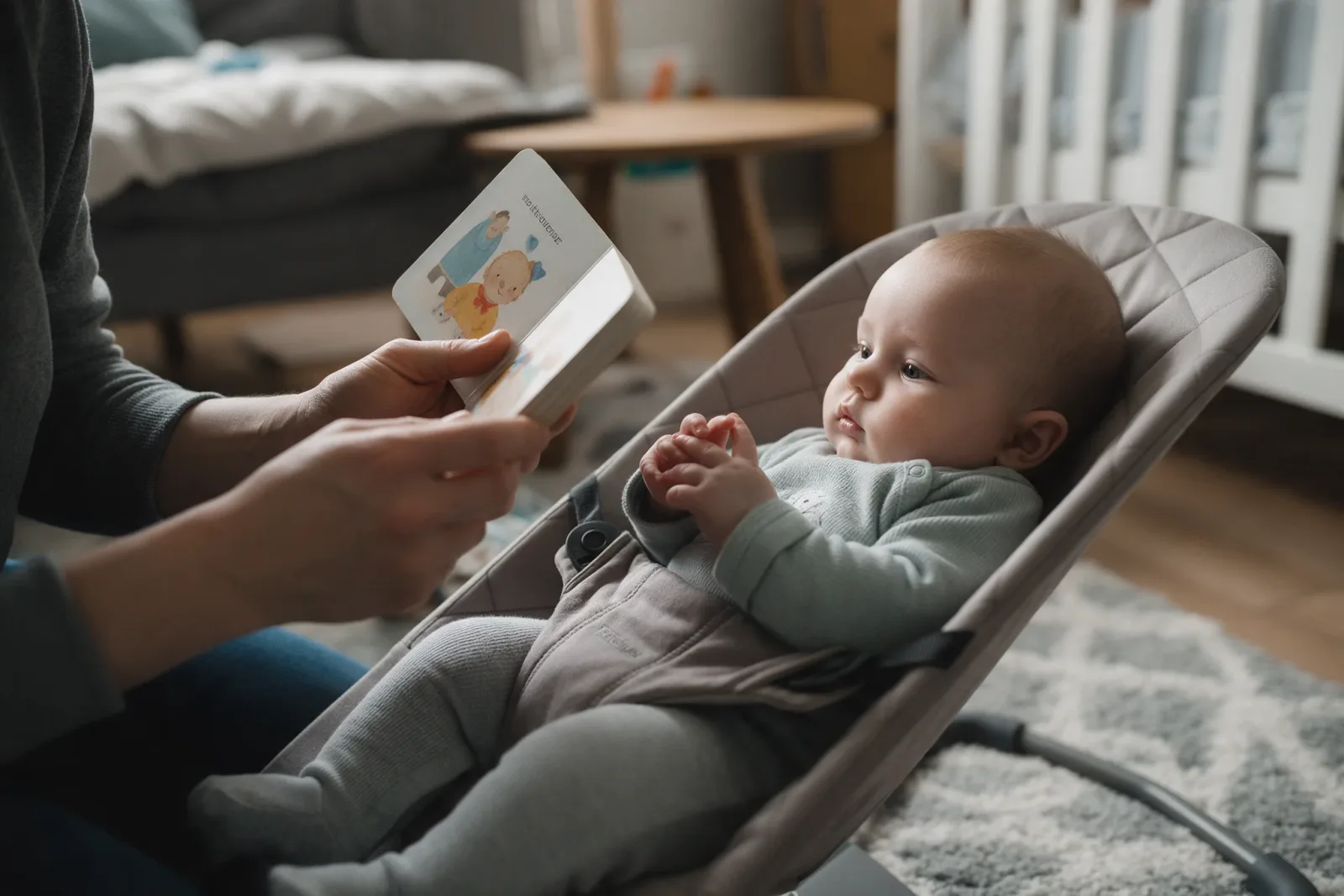
A newborn's world is made of sound before it is made of anything else. Before the eyes can focus, before the hands can reach, before the legs can hold any weight at all, the ears are already working. What a baby hears in those first weeks is the raw material out of which everything else, language, music, a sense of safety, will slowly be built.
You may not think much about the soundscape of your home, but the baby is living inside it. The clink of a cup, the hum of a fridge, the creak of a floorboard, the far-off bark of a dog. All of it arrives unedited. The baby has no filter yet, which means the quiet of your house is, to a newborn, a kind of music.
Your voice is the anchor
Above every other sound sits your voice. It is the sound the baby knows best, the one it heard through the water before it was born. When you speak or sing, the baby's whole body attends. You could be reciting a shopping list, and it would land with the same warmth as a lullaby. The baby is not listening to the words. It is listening to you.
Songs do more than soothe
A simple song, sung the same way each time, is one of the first patterns a baby can predict. Prediction is the beginning of comfort. When the melody dips and returns, the baby learns, without words, that things come back, that a sound can rise and fall and rise again. Lullabies are not only for sleep. They are early lessons in constancy.
You may worry that you cannot sing well. The baby has no such concern. To a newborn, the finest singer in the world and a parent humming off key are the same thing: a familiar voice, close by, carrying a tune through the dark. That is the whole of it.
The world outside the window
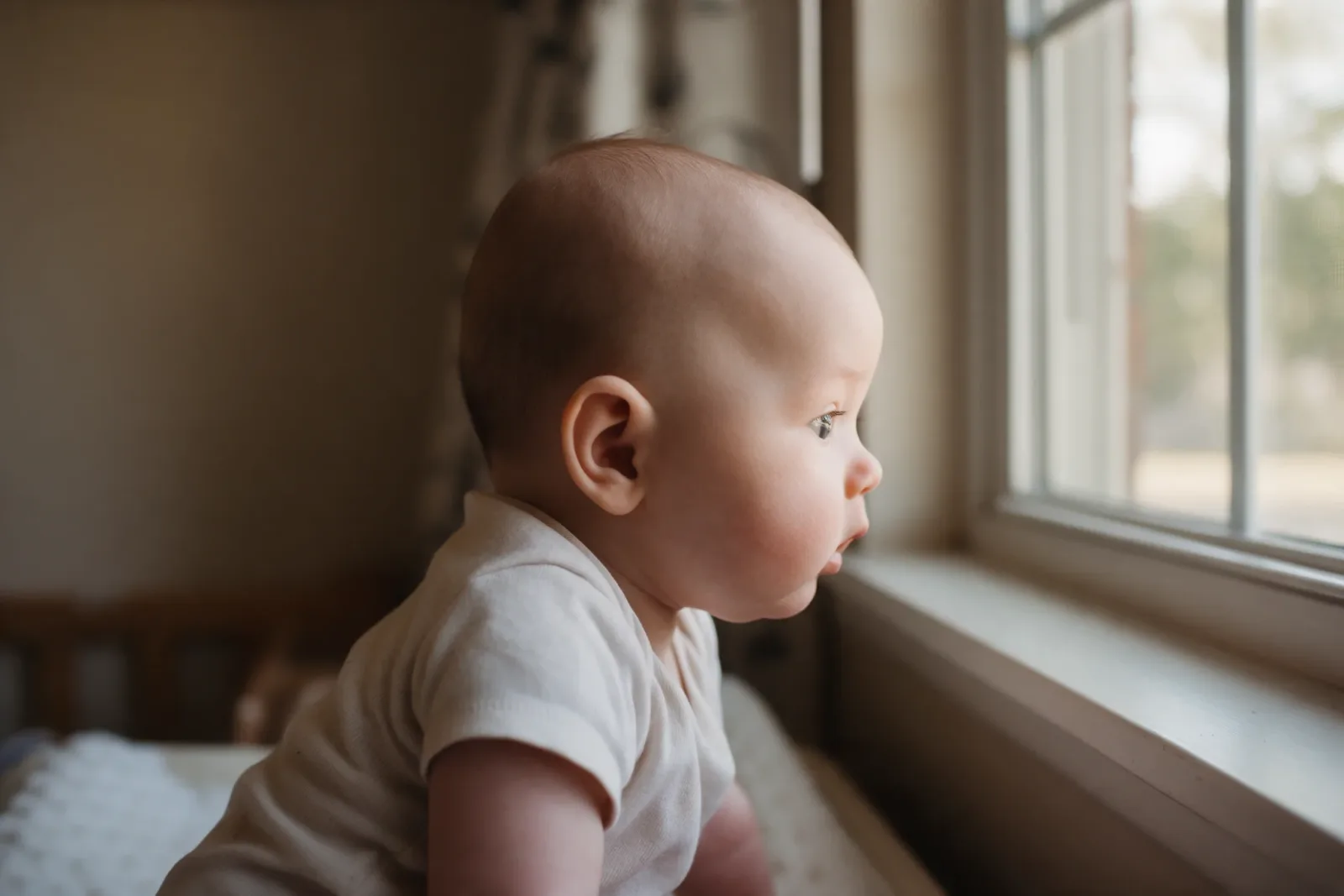
If you open a window on a still morning, the outside comes in as sound. Birdsong, wind in a tree, the first traffic of the day. A baby cannot go out into that world yet, but it can hear it, and hearing is a kind of belonging. Somewhere in that chorus, if you are lucky, a stork may clatter its bill, that strange dry rattling that stands in for a song.
Let there be silence too
It is tempting to fill the nursery with music and white noise and the murmur of a machine. But silence has a job as well. In the quiet, a baby learns to rest, to notice its own breath, to feel the difference between sound and its absence. The best soundscape for a newborn is a gentle mix: your voice, the real sounds of the house, and long stretches of plain, unbroken quiet.
You might notice that your baby turns toward a particular sound before all others, the rustle of a feed, the low note of a familiar laugh. These preferences are early signs of a forming self, a small person beginning to choose what belongs to them. Listen for them. They are the first edges of a personality.
The sounds you make now will echo for years. A child who was sung to will carry the memory of those songs into adulthood, even if the tune is half forgotten. The lullaby is not really a song. It is a container for the feeling of being held, and it holds that feeling for a long, long time.
As the baby grows, the soundscape grows with it. The first words, the first belly laugh, the first time a small voice says your name. All of it began here, in the early weeks, when the only story the baby knew was the sound of you.
You do not need to fill the air with sound. In fact, the baby may need more of your quiet than your noise. But the sounds you do make, the song, the hum, the soft words in the dark, are doing a quiet work all their own. They are building a voice out of yours, and that voice will one day speak back to you.
Listen to what your baby hears, and you will start to hear your home differently too. The ordinary clatter of a life being lived is exactly what a child needs. It says, without a single word, that this is a safe place, that someone is here, that the world is close and warm and full of sound.
Explore the gift