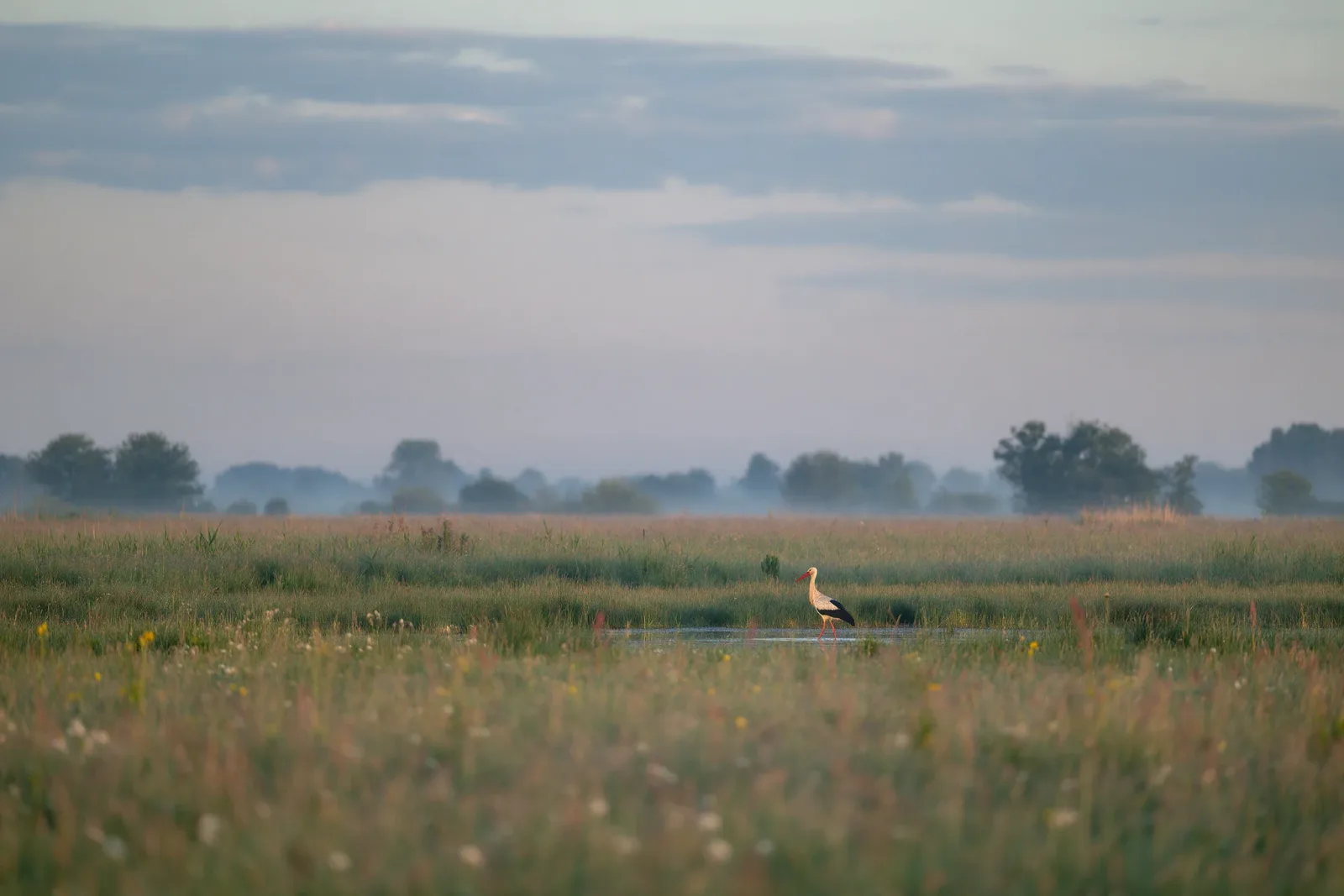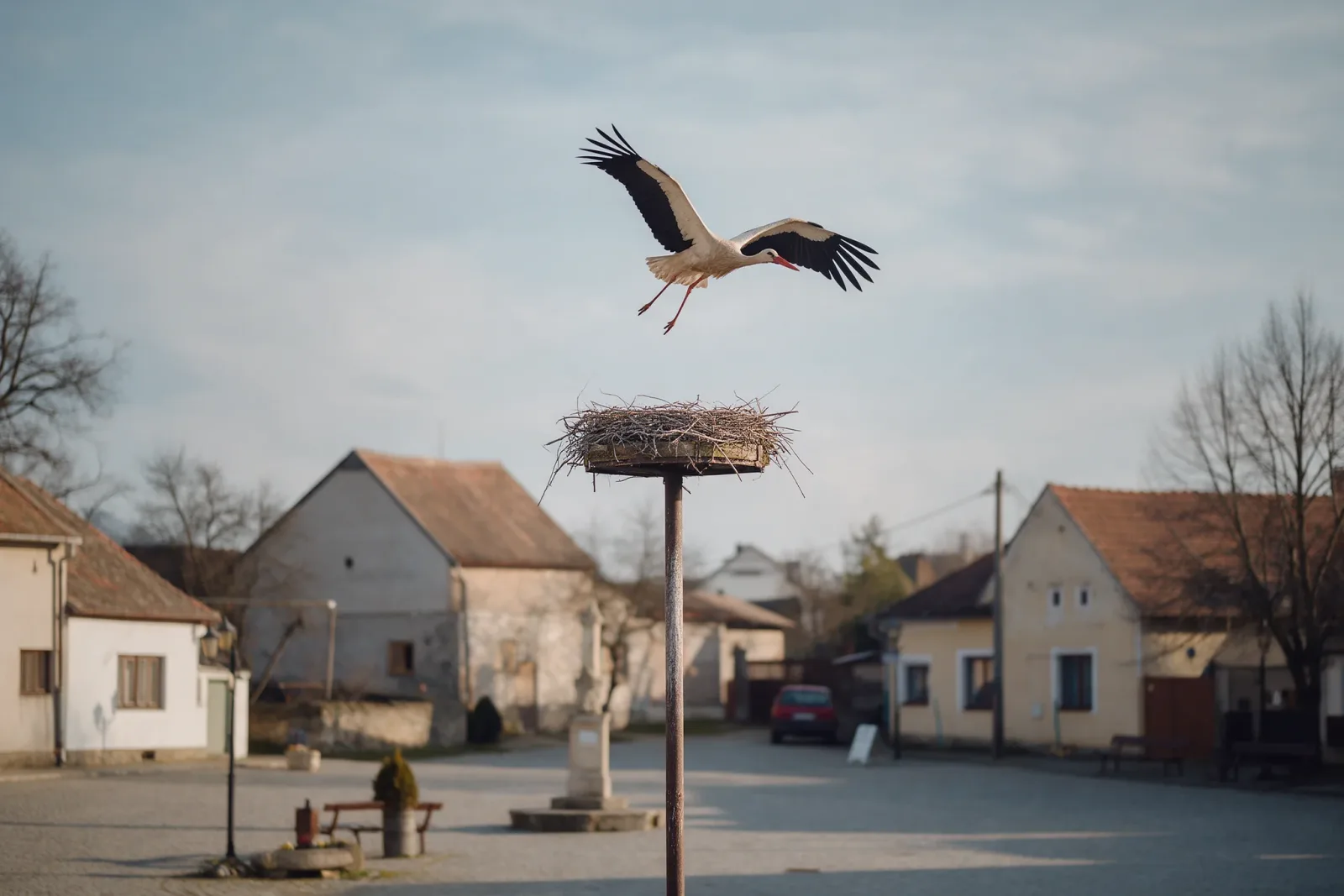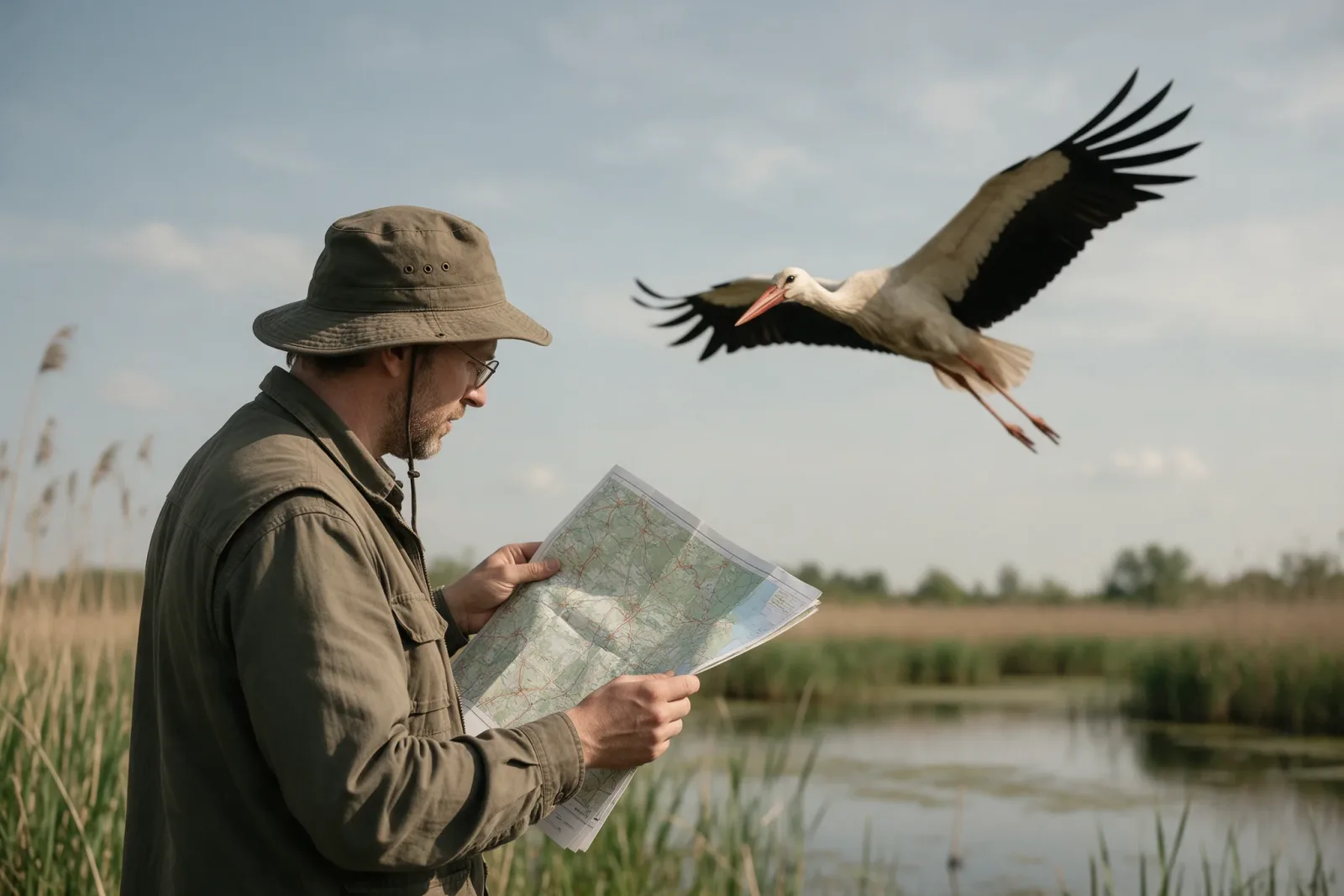
What a tracking study protects is far larger than the bird wearing the transmitter. A single white stork with a small device on its back becomes, in the hands of patient researchers, a drawing of an entire route. Every point it sends home is a thread, and pulled together those threads trace a flyway: the chain of wetlands, stopovers, and crossings that a whole population depends on. Follow one bird, and you begin to see the map the birds have always known.
One bird, many places
The LifeTrack White Stork SW Germany study has followed named storks across the seasons, and the lesson of its data is that no stork lives in one country. A bird that breeds on a rooftop in Europe spends its autumn crossing the sea, its winter in African savanna, and its spring travelling back again. Its year is a line drawn across dozens of landscapes, each of which it needs alive.
That is what a tracking study makes visible. Without the data, a stork disappears over the horizon and we imagine it somewhere safe. With the data, we see exactly which field it stopped in, which river it followed, which power line it nearly struck.
The gaps tell a story too
The points a tracker sends are honest. Sometimes the signal pauses, and a gap appears on the map. Researchers read these gaps carefully, because a silence can mean a bird resting in a remote place, a device that has slipped, or a stretch of the journey where the hazards concentrate.
Those gaps are not noise. They are where the questions begin. If many birds fall quiet in the same valley, that valley deserves a closer look. A tracking study turns the unknown into a place with a name, and a place with a name can be protected.
Protecting what you can name
It is far easier to care for a route you can point to than for a vague idea of migration. When a study shows that storks funnel through a particular strait, or feed in a particular marsh on their way south, those places become something concrete. A wetland that was anonymous becomes a critical stopover. A stretch of wire becomes a known danger that can be marked or moved.
The LifeTrack study, and others like it, have done exactly this work. The birds they follow are not celebrities; they are instruments of understanding. Amadeus, Andreja, and the rest are researchers in their own right, carrying their instruments on their backs.
From a dot to a duty
Following one bird teaches us to protect a whole flyway because it shows that the flyway is real, and shared, and fragile. Every point on the map is an argument for leaving a marsh wet and a sky clear. The transmitter does not save the bird. What it saves is our attention, which is the one thing every conservation effort needs most of all.
Explore the gift