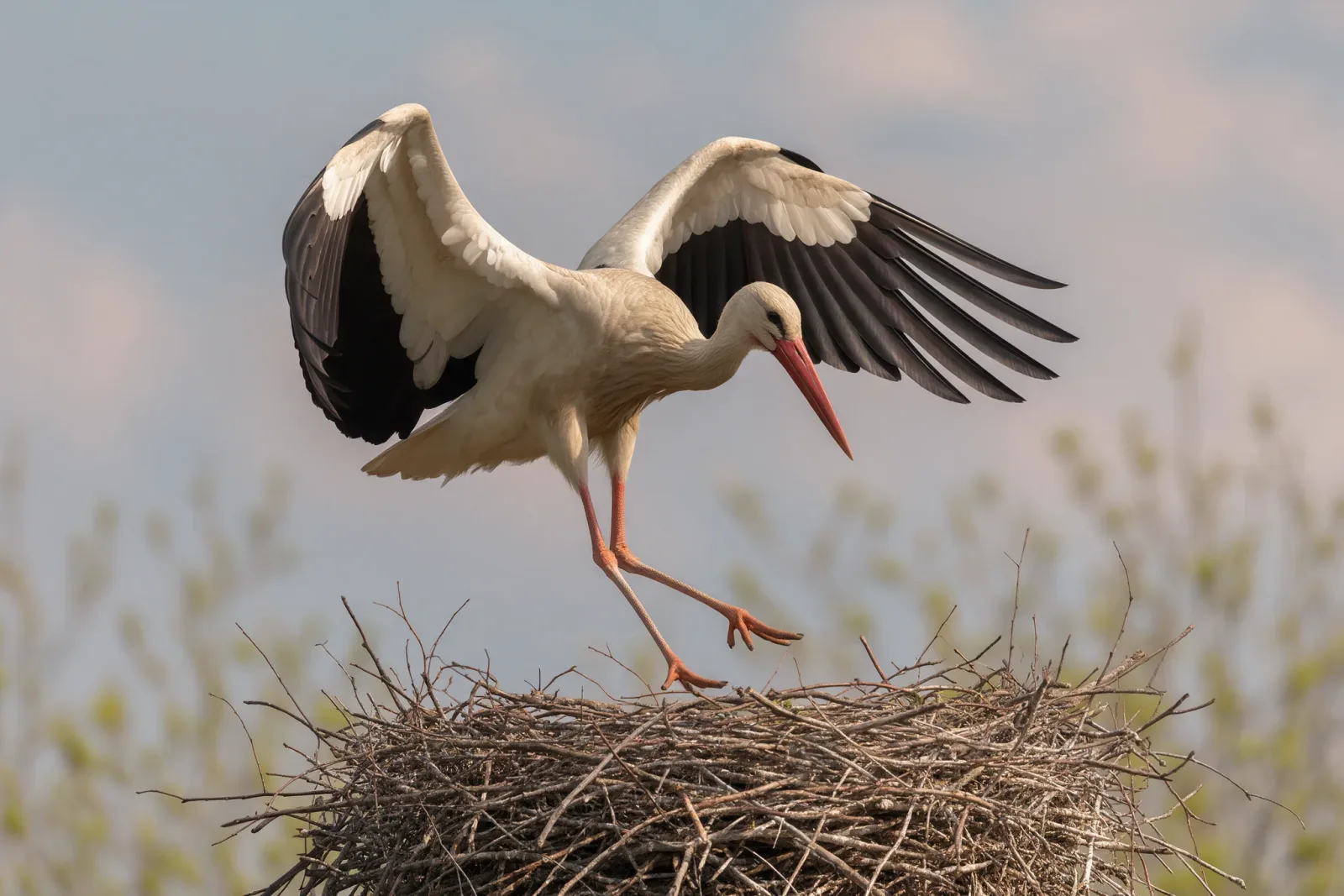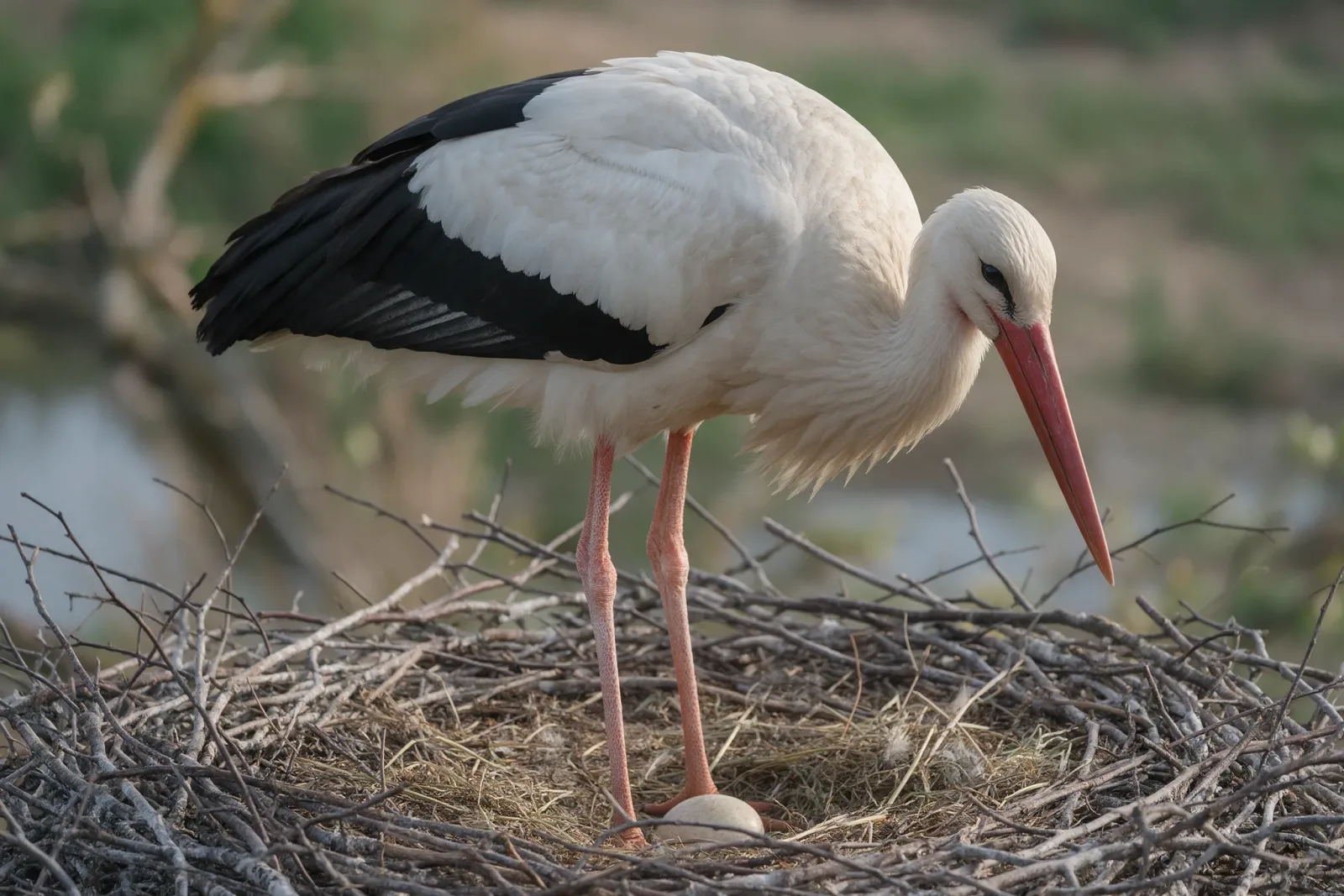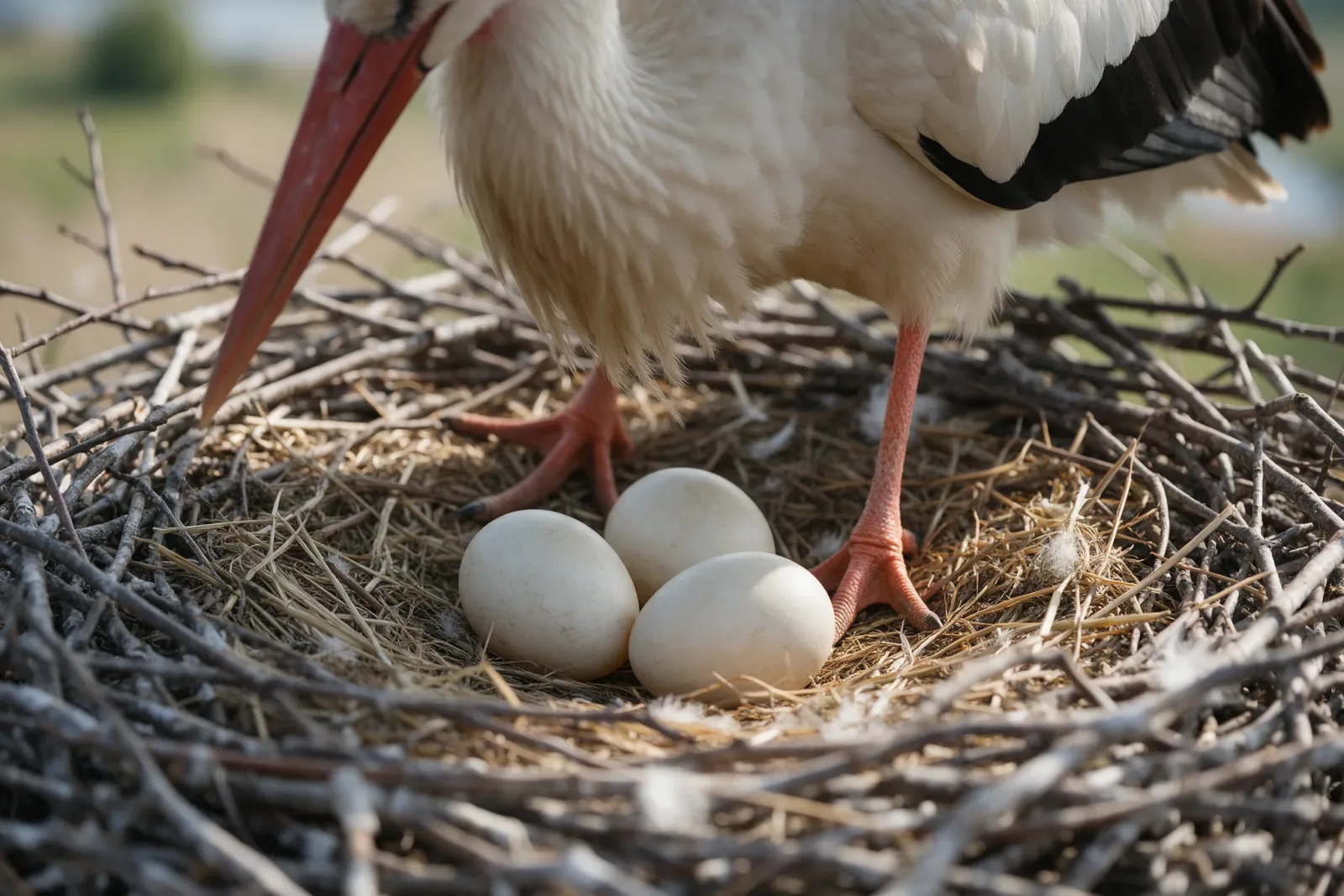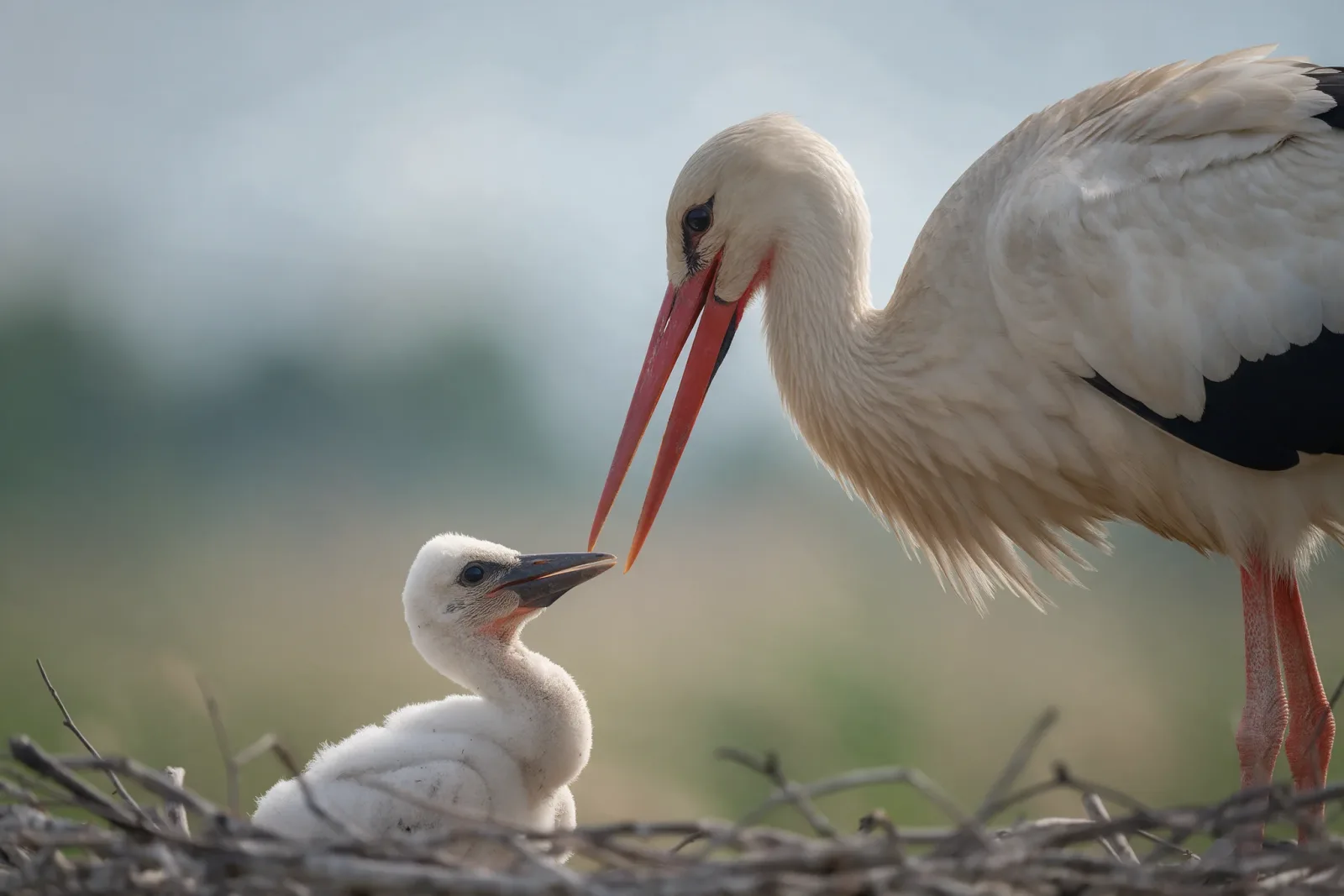
A stork parent teaches very little, and yet it teaches everything that matters. The white stork has no school and no song, and the lessons it passes to its young are taught by example, in the short weeks between fledging and the great departure south.
Most of what a young stork needs is already written inside it. It does not need to be taught to migrate, or to fly, or to build a nest. What the parents give is the finishing, the small corrections and quiet demonstrations that turn instinct into competence.
Learning by watching
The young stork learns chiefly by watching. It follows its parents to the feeding grounds and sees how they walk the wet meadows, how they pause and strike, how they find frogs and insects in the grass. It copies them, awkwardly at first, then with growing skill.
No bird explains this. There is no moment of instruction, only the steady example of two adult birds going about their work while the young one follows and mimics.
The lessons of the air
The air is the same. The fledgling watches its parents ride the warm rising thermals, climbing in wide spirals without a single flap, and it learns to do the same. It learns to read the wind, to hold its wings still, to let the air carry it upward with no effort at all.
These are not small lessons. They are the difference between a bird that struggles across the sky and one that glides. And they are taught only by being seen and tried and tried again.
The limits of teaching
There is a hard limit to what parents can pass on. The route south is not taught. Each young stork finds its own way, following an instinct that no parent demonstrated and no parent followed for it. In this, the birds are alone from the start, and the parents know it.
So the lessons end early. The parents feed the fledgling for a few weeks, then withdraw, and the young bird is left to complete its education on its own. The parting is gentle and complete, and the family does not meet again.
What remains
What remains is a kind of inheritance that has nothing to do with the individual bird. The young stork carries forward everything the species has learned across thousands of generations, compressed into instinct, and shaped at the edges by the example of two parents.
And so the parents teach what they can, briefly and without fuss, and then they let go. The rest, the whole long journey of a life, the young bird must learn for itself.
Explore the gift