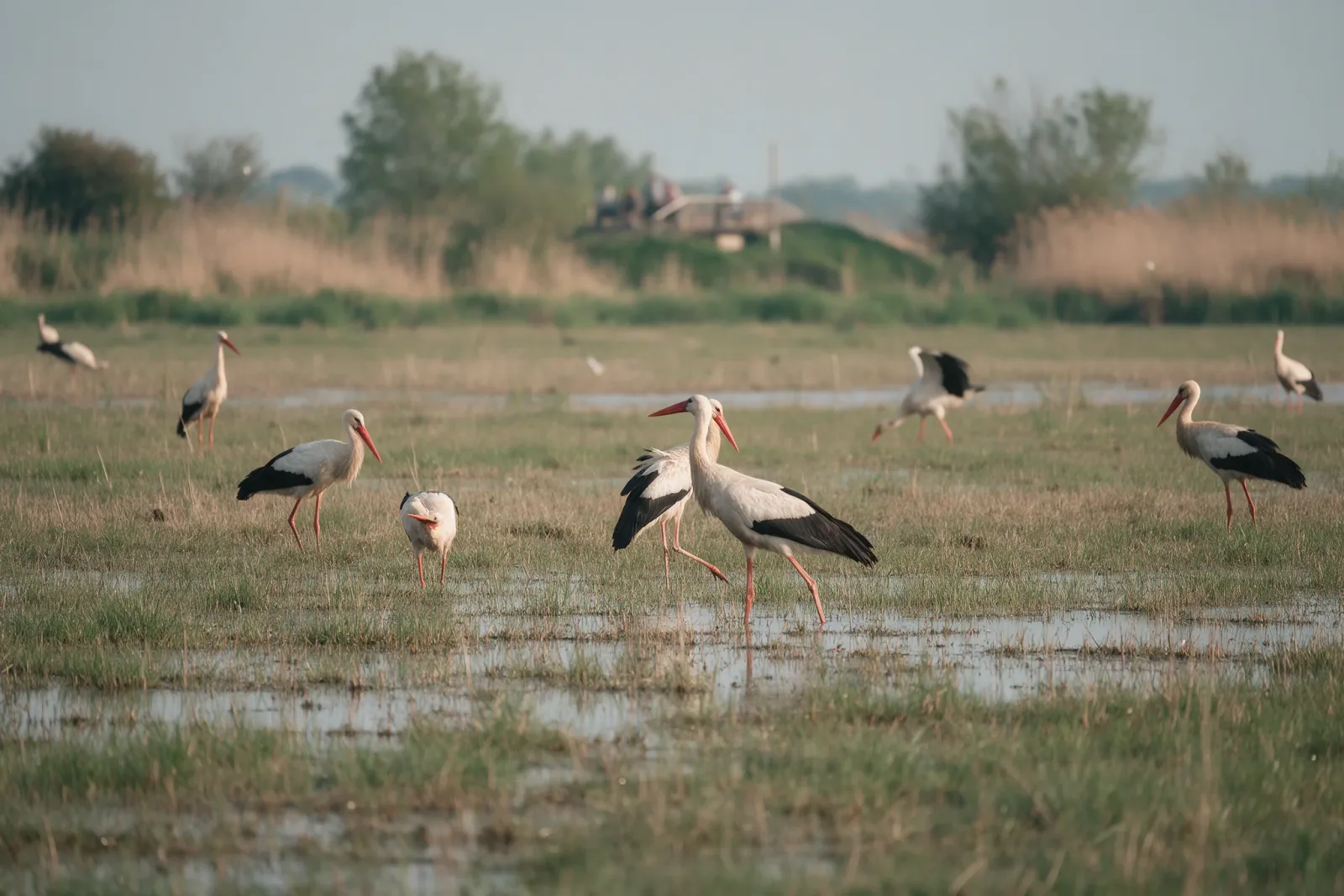
What storks eat is an unglamorous list, and that is exactly what makes the bird so watchable. A white stork is not a hunter of grand prey. It eats frogs, insects, and small creatures, the damp, wriggling life of wet grass and shallow water, and it spends its days walking it down. Watching a stork feed is watching a whole meadow's worth of small animals pass through one patient red bill.
Frogs and the wet meadow
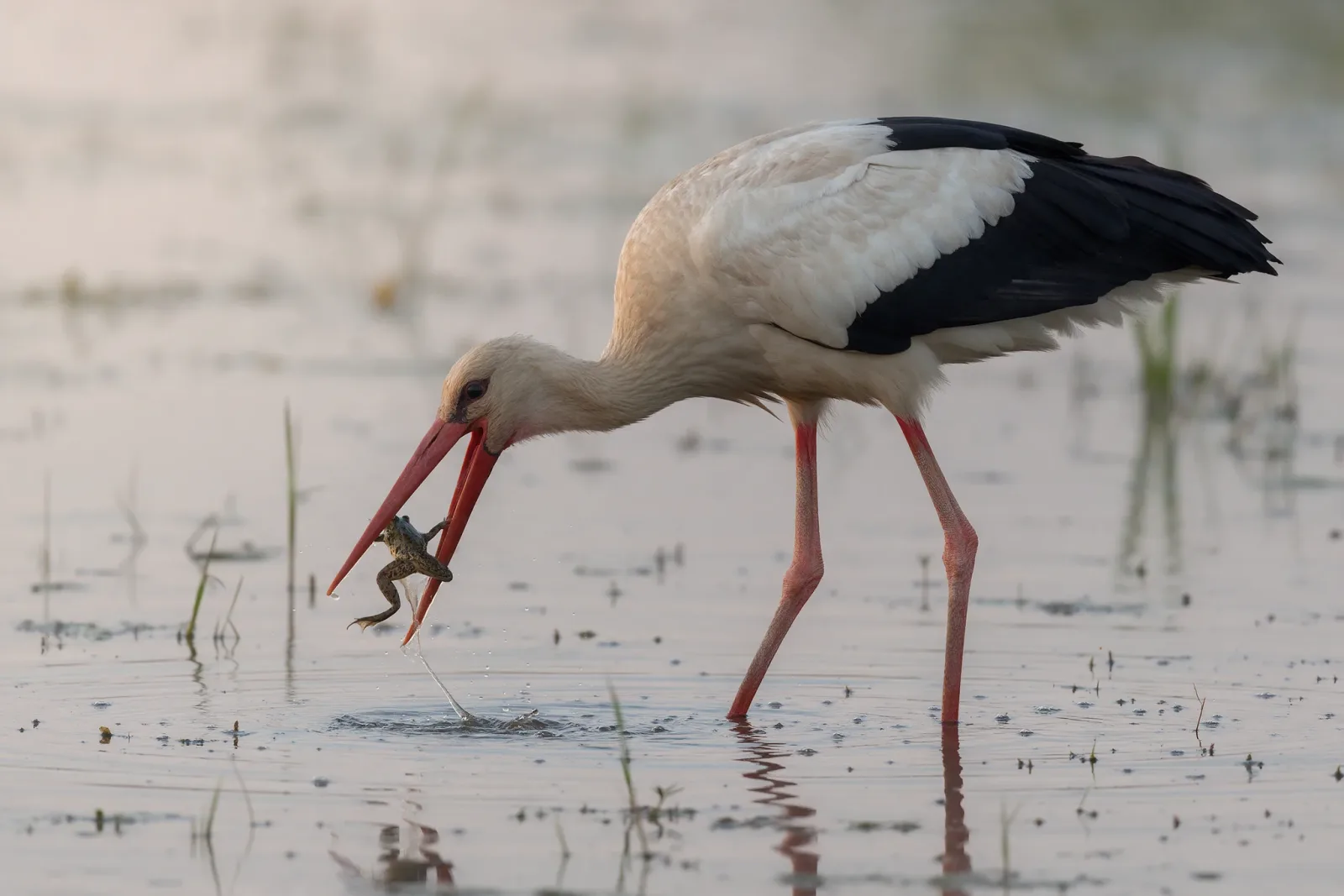
The frog is the classic stork meal, and it is the reason the bird follows the water. In a wet meadow or a shallow marsh, frogs are everywhere, and a stork can stand in one place and pick them off as they move through the grass. The strike is quick, a jab and a gulp, and the frog disappears almost before you have seen it. This is why mown fields and flooded pastures draw storks so reliably.
Insects and the dry days
When the ground dries and the frogs retreat, the stork turns to insects. Grasshoppers, beetles, and the large crawling insects of summer meadows are all taken in their thousands. A stork will walk a dry field just as happily as a wet one, dipping its bill for a grasshopper that a moment earlier was invisible. The bird's diet shifts with the season, and its feeding grounds shift with it.
Small creatures of the field
Beyond frogs and insects, a stork will take what the field offers. Small rodents and voles caught in the open, earthworms after rain, a slow lizard on a warm bank, even fish in the shallows when the water is clear and calm. None of this is dramatic, and that is the point. The stork is a generalist, and its skill is in finding the ordinary life that most of us never notice at all.
The feeding technique
The stork eats the way it walks, patiently and without waste. It watches the ground just ahead of its feet, and when it finds prey it drops the head in a single precise movement. The long bill is built for grabbing, not tearing, and food is swallowed whole and quickly. After a strike the bird often pauses, head raised, then walks on, and within a few strides it has already forgotten the frog and is looking for the next one.
Why the menu matters to the watcher
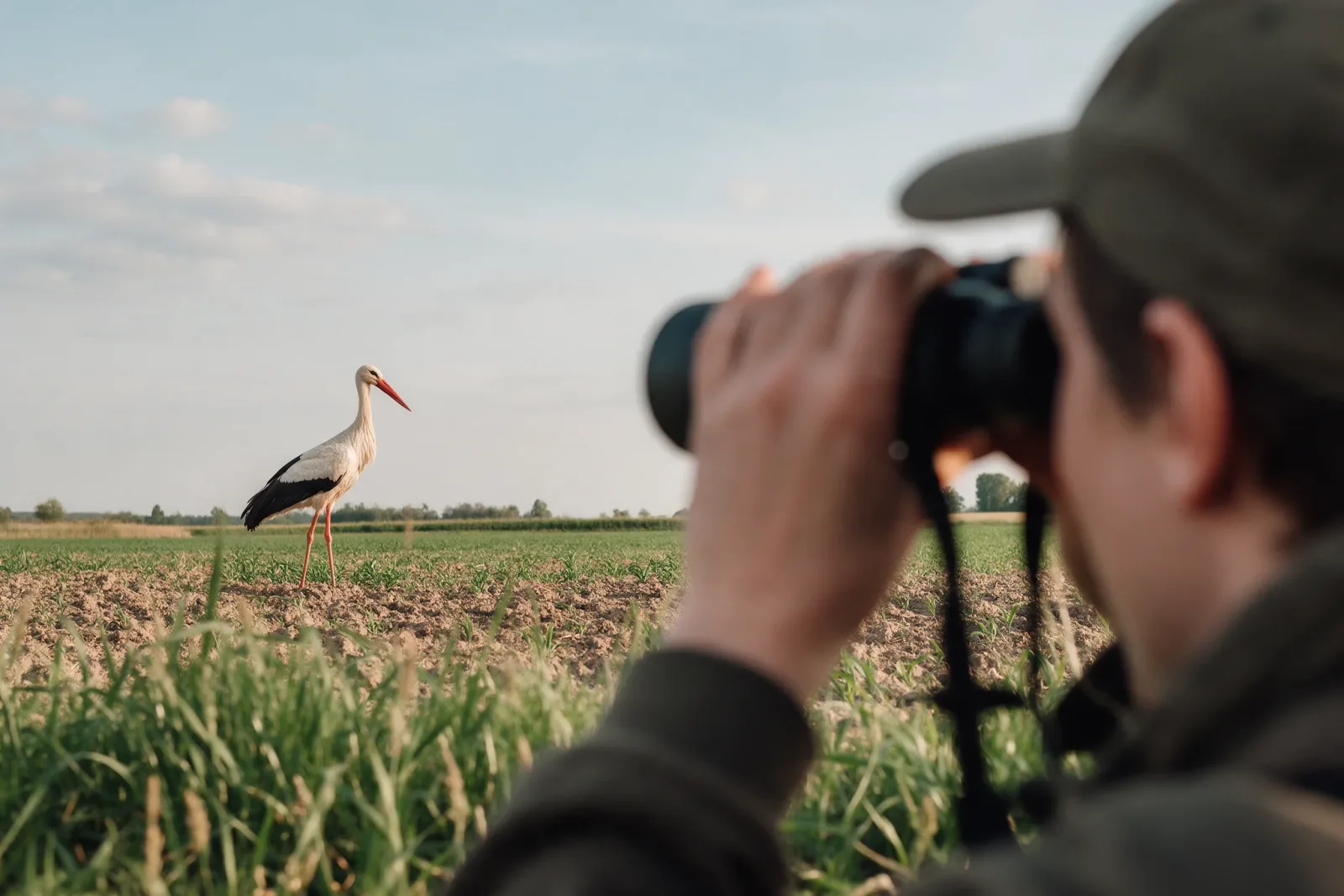
If you know what a stork eats, you know where to find it. Frogs mean wet grass and water. Insects mean warm, dry fields. The bird is always somewhere its food is, and its food is always somewhere the ground is a little damp, a little overgrown, a little alive. Follow the food, and the stork will not be far behind.
Explore the gift