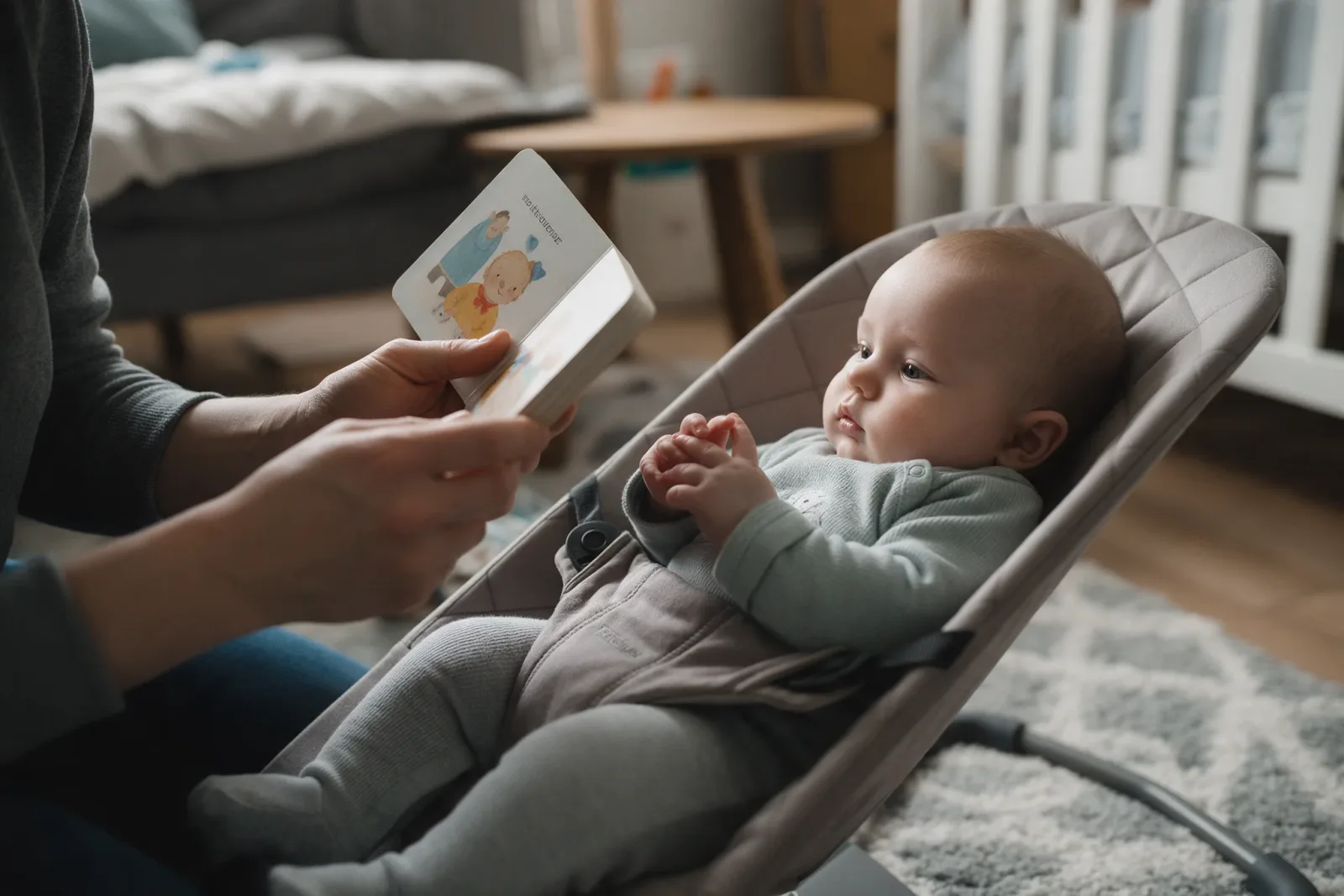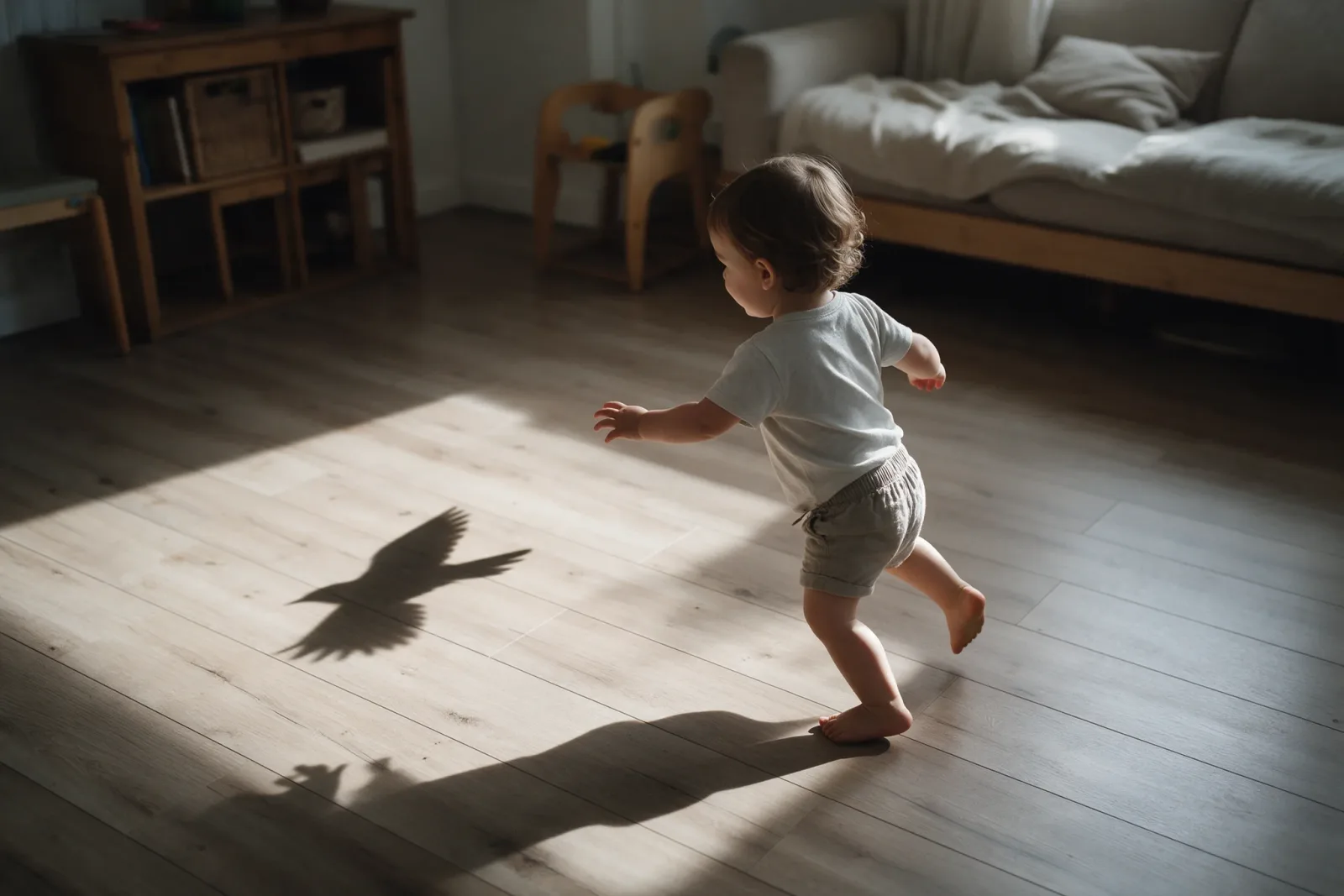
There is a moment, somewhere in the second year, when the baby you have been carrying becomes someone else. A toddler who walks, who points, who has opinions, who meets the world on its own two feet. When baby becomes toddler, a whole new understanding flickers on. And suddenly, a gift that once seemed abstract starts to make sense to the child for the first time.
For months a keepsake card and a named stork were mostly yours to enjoy. The baby slept through the explanations, chewed the corners, ignored the map. That was fine. The gift was waiting. Now the child is old enough to point at the bird on the wall and say a word that might, generously, be taken for stork.
The age of pointing
The toddler years are the age of pointing. The child's arm is a constant, outstretched, aimed at dogs and birds and aeroplanes and anything else that moves against a background. This is the first real conversation about the world, and a stork is a marvellous thing to point at. It is big, it is white, it is unmistakable, and it knows how to fly.
The name that finally fits
A name becomes real to a child when the child can say it. The day the toddler first tries the stork's name, and gets it mostly wrong, and beams anyway, is the day the gift stops being yours and becomes theirs. From now on the bird belongs to the child in a way it could not before, because now the child can call it.
Do not correct the mispronunciation. The mangled version is the child's own, a first act of naming that matters more than the spelling. The right word will come later. For now, the reaching, garbled sound is the beginning of a friendship.
Let the child lead
Follow the child's interest rather than steering it. If the toddler wants to carry the card around the house, let it. If the toddler wants to hear the same two facts about the stork forty times in a row, tell them forty times. Repetition is how a toddler builds the world. The bird that eats frogs and flies to Africa is a genuinely good story, and it only gets better with retelling.
The gift grows with the child
This is the quiet genius of a gift that is not a toy. A toy is outgrown in a season. A story is not outgrown at all. The stork that charmed a toddler will one day teach a schoolchild about migration and weather and maps, and the same bird will be there, still flying, still returning, still called by the same name.
The transition from baby to toddler can feel like loss as much as gain. The baby you knew is gone, replaced by a running, reaching, opinionated person. But the same child is still in there, and the gift that grows with them is one of the few threads that holds the early years together.
A toddler's attention is brief but fierce. The bird that flies, the dot on the map, the name that can be shouted across a room: these are the hooks that catch a toddler's mind. Follow them. The stork is large and strange and wonderful, exactly the kind of thing a toddler wants to love.
There will be days when the child cares more about a fallen leaf than about the stork, and that is as it should be. The gift is not a lesson plan. It is a companion, and companions wait. The stork will still be there when the toddler looks up again.
Enjoy this window. The toddler years are brief, and the child's delight in the stork will never again be quite so whole and unguarded. This is the age when wonder is biggest and smallest at once, and a bird on a map can hold a child's whole attention. It is a lovely thing to watch.
Let the toddler be loud about it. The joy of this age is that nothing is held back, and the bird will hear its name shouted across gardens and car parks. That unselfconscious love is a treasure, and it will not last. Soak it in while it does.
When baby becomes toddler, the gift does not need replacing. It needs only waiting, which it has already learned to do. The child has finally arrived at the age where the stork's story can be heard, and from here it only widens.
Explore the gift