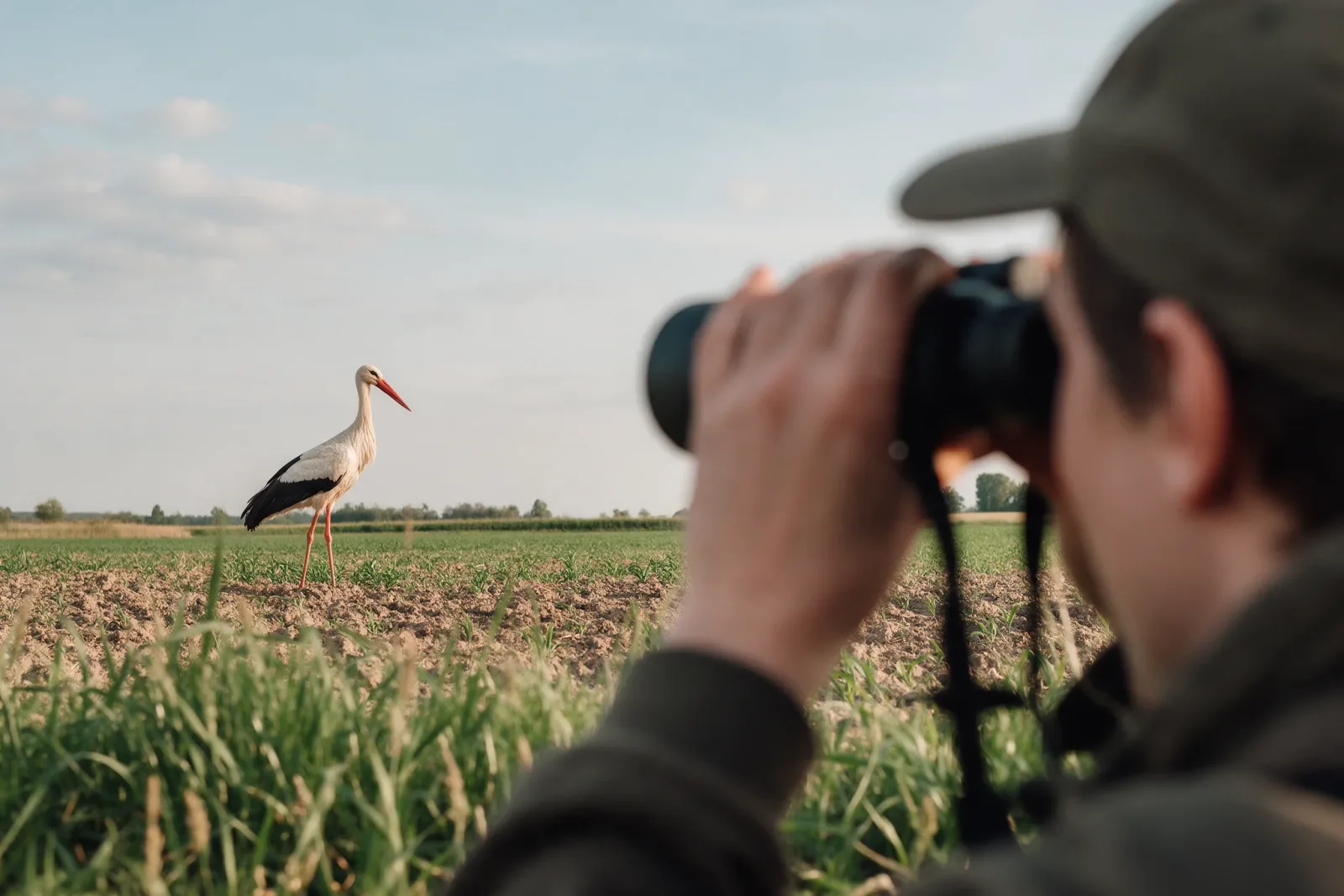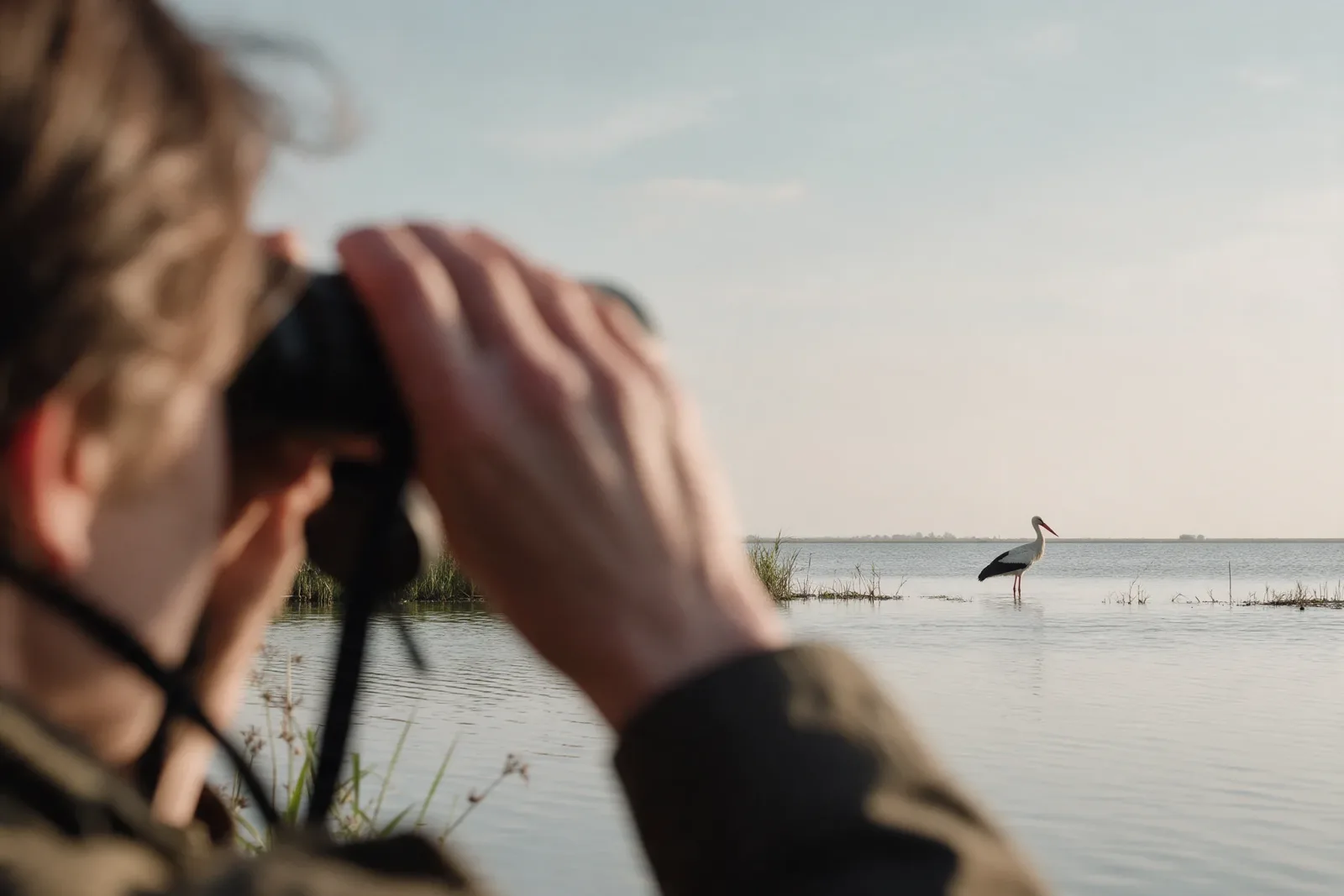
When to put down the binoculars is one of the first questions a careful watcher learns to answer, and the answer is usually sooner than you think. Binoculars are for seeing, but there are moments when the seeing has to stop, when the bird has noticed you, or when the distance is too small, or when the bird is breeding. A good watcher knows that the best way to keep a bird is sometimes to lower the glass and step back.
Watch for the signs of alarm
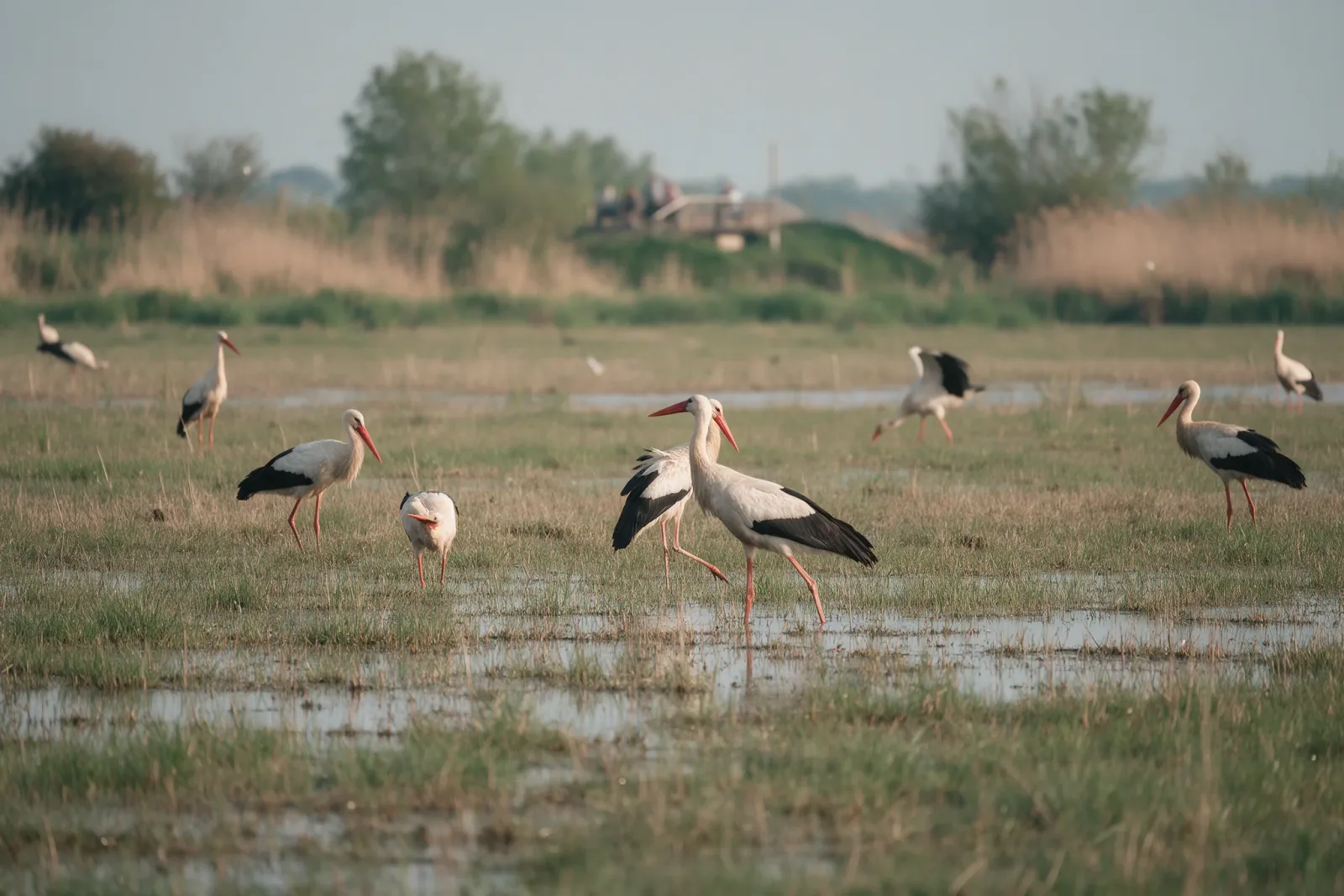
A stork tells you when you are too close. It stops feeding and stands tall. It turns its head to fix you with one eye. It may lift off, or walk slowly away, or begin the quick head-bobbing that means unease. These are not invitations to move closer. They are the bird asking for space, and the correct answer is to lower the binoculars, stay still, or back away.
The breeding season asks the most
Around the nest, the rules tighten. A breeding stork must be able to incubate its eggs and feed its young without being disturbed, and a watcher who lingers too close to a nest can keep a parent away just when the chicks need it most. During the nesting season, keep a long distance from any nest, and if a parent will not settle, you are too close. No photograph is worth a failed nest.
The distance that keeps the bird wild
The point of watching a wild stork is that it stays wild. A bird that grows used to people is a bird that loses something, its caution, its wildness, the very quality that made you want to watch it in the first place. Keeping a respectful distance is not a rule against the watcher. It is a gift to the bird, and it is the only way the sighting stays true.
When the glass gets in the way
There are also times to put the binoculars down simply because you are seeing better without them. A stork watched with the naked eye, moving through the whole of its field, is a different and often fuller sight than one pressed into a narrow circle of glass. Lower the binoculars now and then and let the bird be a bird in the whole field, not a trophy in a lens.
Leaving well is part of watching
The last act of a good sighting is the leaving. Back away quietly, keep to the path, and leave the bird as you found it, feeding or standing in its field. The stork will stay for the next watcher, and the next, because you knew when to put down the binoculars and go.
Explore the gift