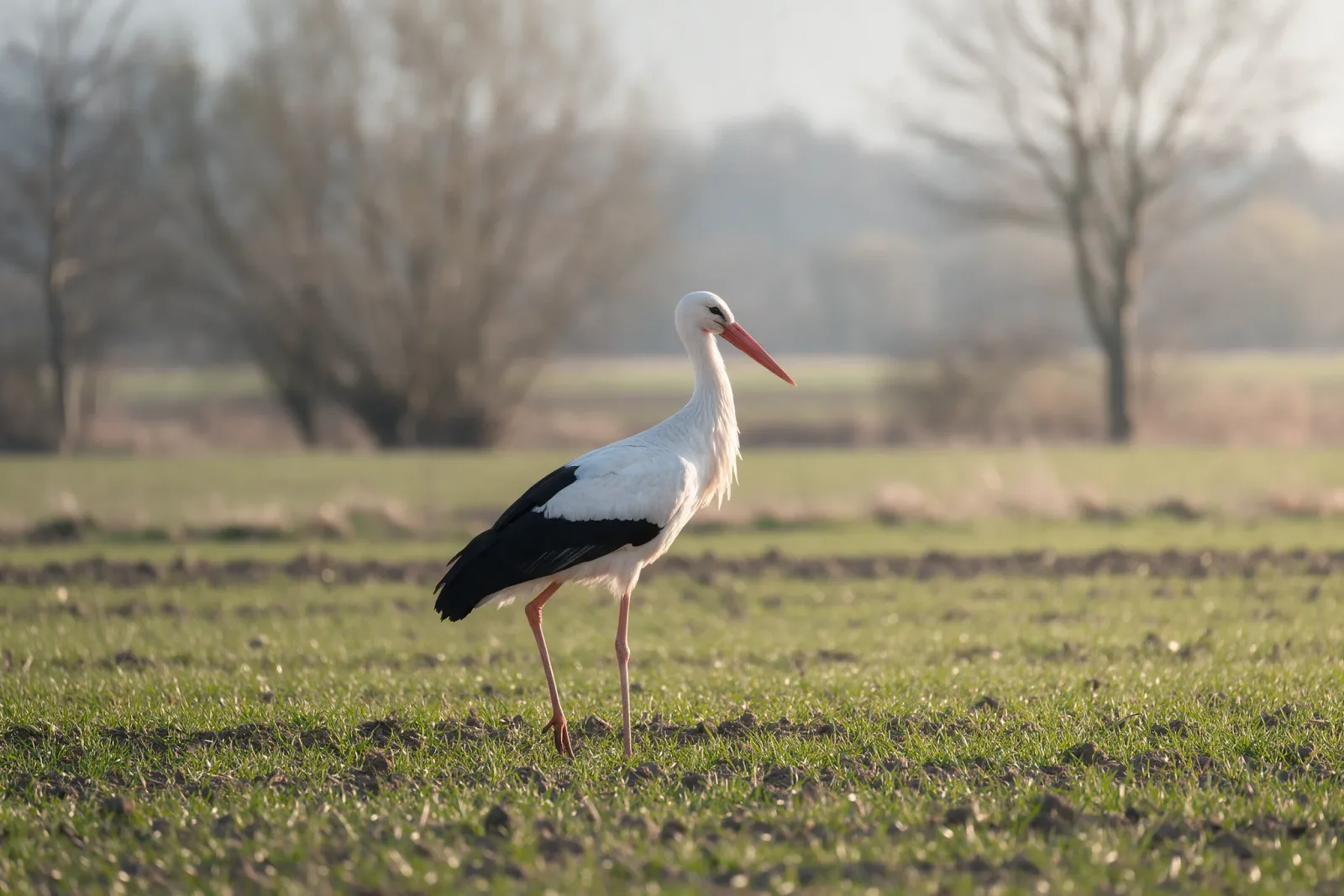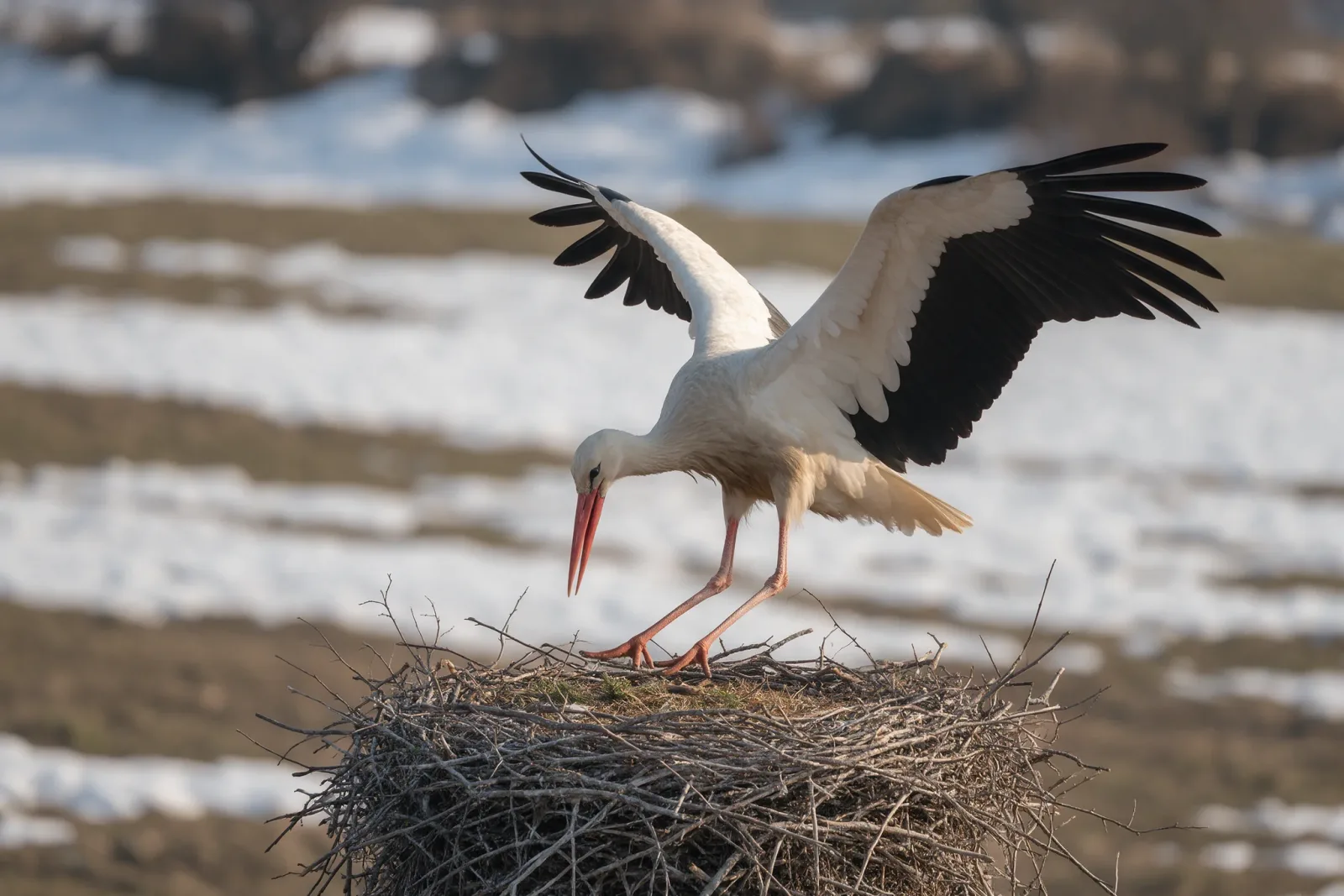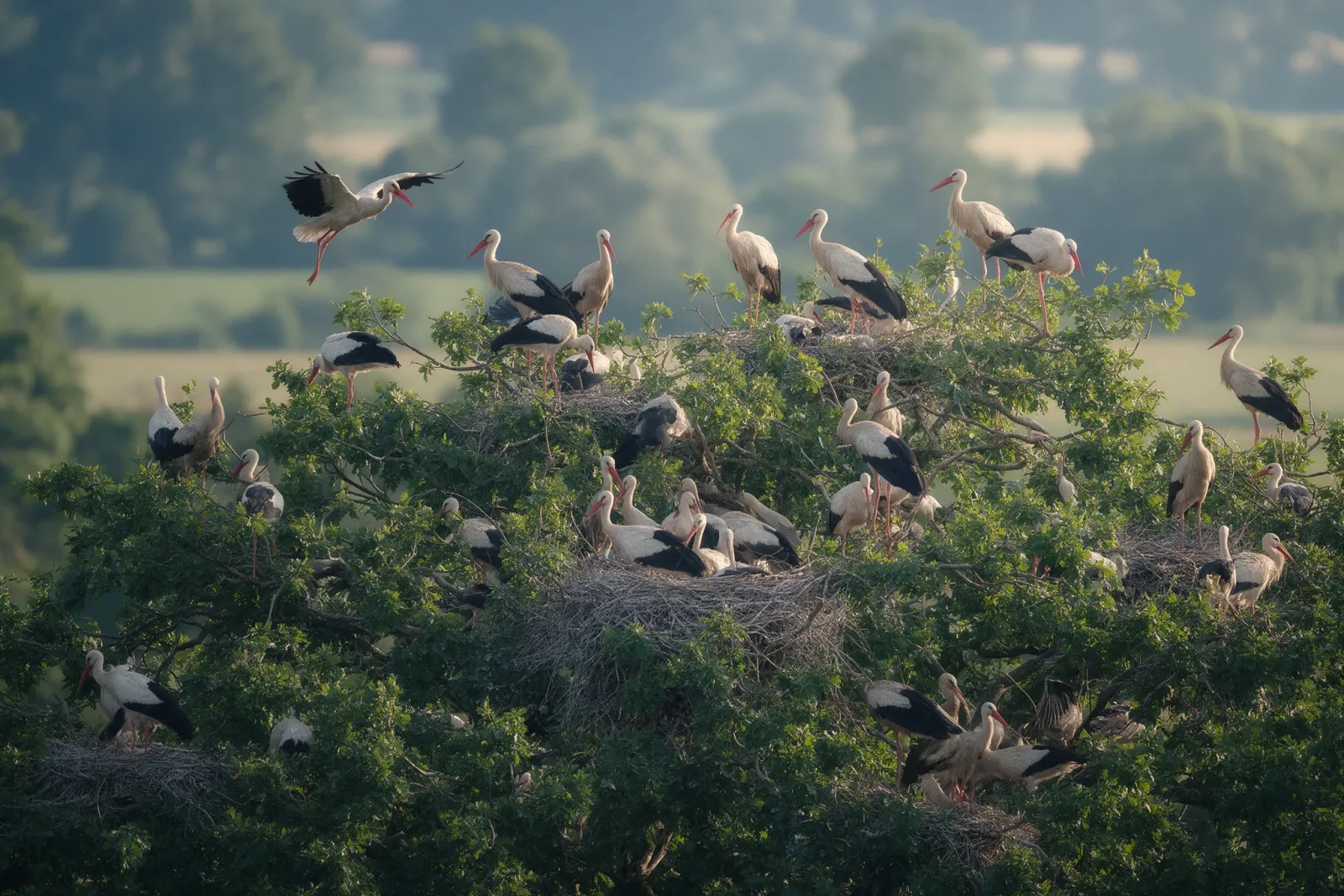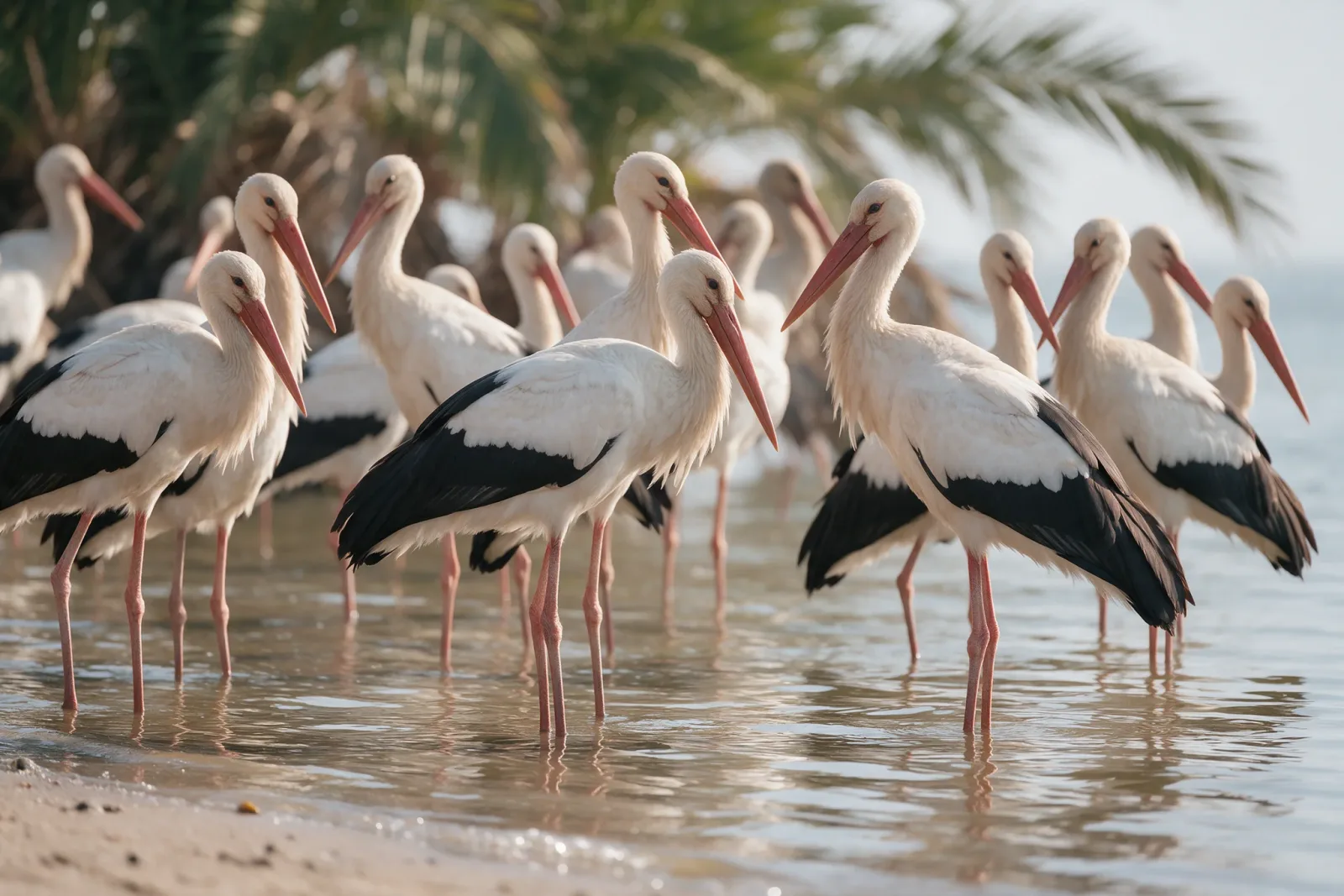
Where do storks go in winter? The short answer is south, far south, to the warm lands beyond the Sahara. While we stand under grey northern skies and wonder where the birds have gone, the storks are living in another kind of country entirely, a place of open ground and short winter days where food is easy and the air stays warm. Their winter is not an absence. It is a whole other life, lived out of our sight.
The long road south
To reach their winter home, the white storks of the north must cross a good part of the world. Many follow the western route, turning away from the Mediterranean and crossing at the Strait of Gibraltar, where Europe and Africa almost touch. Others take the eastern way, over the Bosphorus and down through the Middle East. Either path is long and demanding, and it takes the birds weeks to complete. They travel by day on thermals, resting at night, moving steadily toward the warmth.
The lands they find
The wintering grounds are unlike the north. The birds settle across savanna and grassland, near water, in country dotted with scattered trees and warmed by a sun that stays high in the sky. There is no snow here, no frozen ground to shut off the food supply. A stork can feed freely through the whole winter, walking the open land for insects and other small creatures, fattening itself against the spring journey that will one day carry it home.
A quieter season
Winter for a stork is slower than summer. There is no nest to build, no young to feed, no territory to defend. The birds spend their days feeding and resting and moving about in loose flocks, and their lives fall into an easier rhythm. This is the season of recovery, the part of the year that lets a bird gather its strength after the long effort of breeding and before the long effort of returning. The warm south is where a stork recharges.
Different storks, different winters
Not all storks winter in the same place. Some travel farther than others, and a few stop short of the Sahara altogether, finding enough food in warmer parts of the Mediterranean. The young on their first journey may wander more than the adults, exploring a route they have never flown. And a handful of birds do not migrate at all, staying put where the winters are mild enough to carry them. The answer to where storks go in winter is, in truth, as varied as the birds themselves.
Following them home
For the people who miss their storks each winter, there is comfort in knowing the birds are simply somewhere else, living the same old life under a different sun. The tracking points on a map can show exactly where a particular bird is standing at this very moment, half a continent away. It is a strange and lovely thing, to sit in a cold northern kitchen and know that your stork is walking a warm savanna. The distance is real, but so is the thread that connects you, and it holds until spring.
Explore the gift