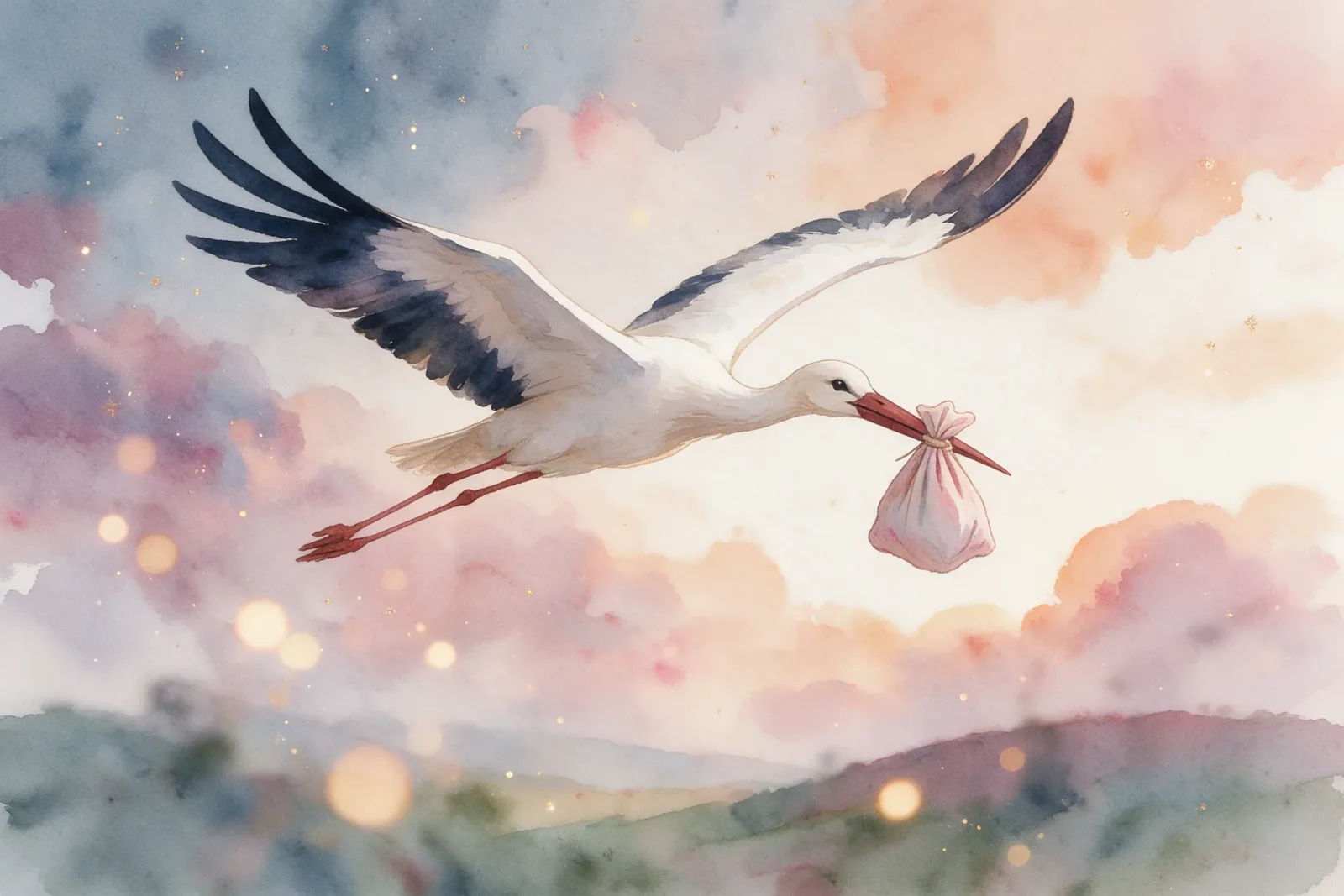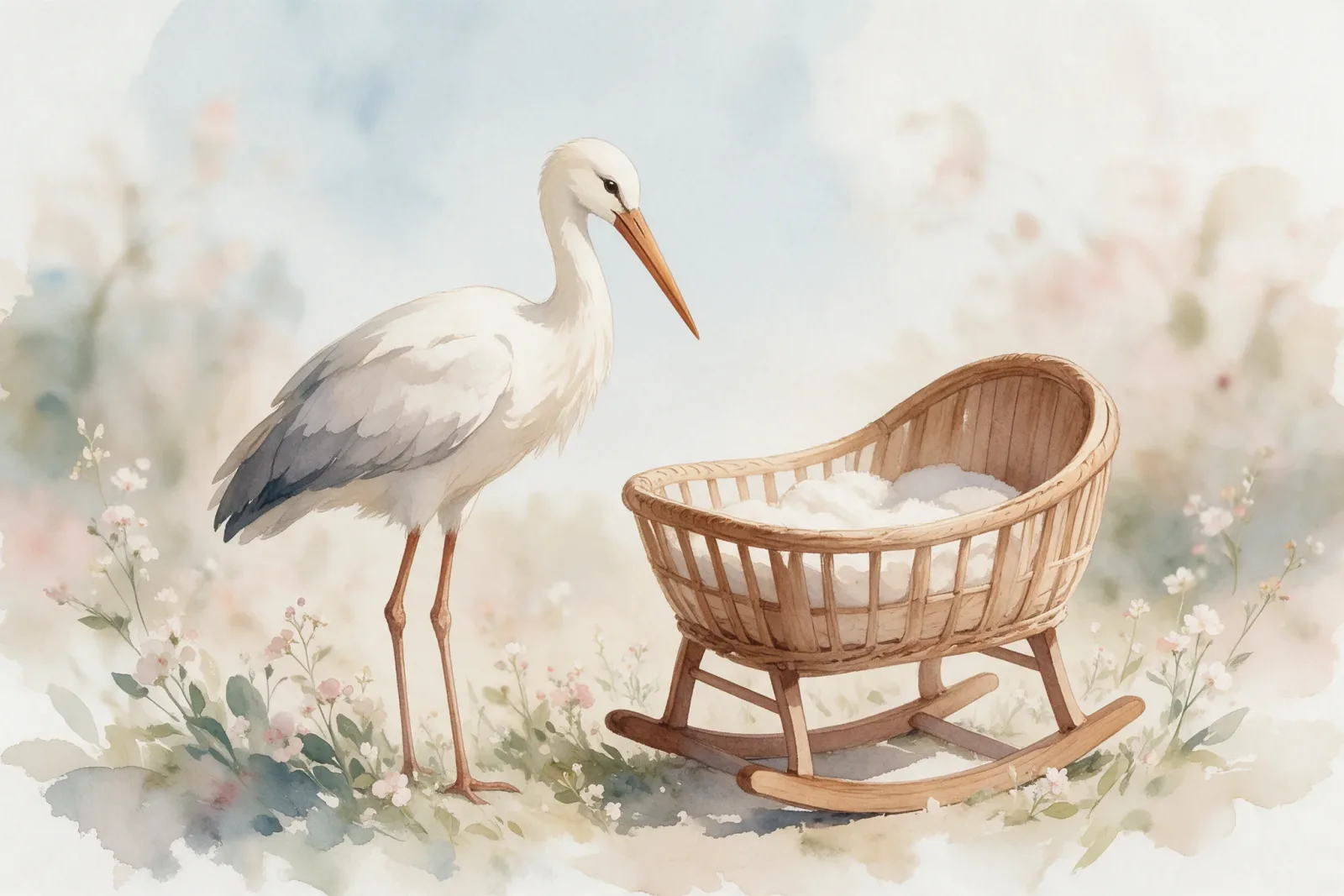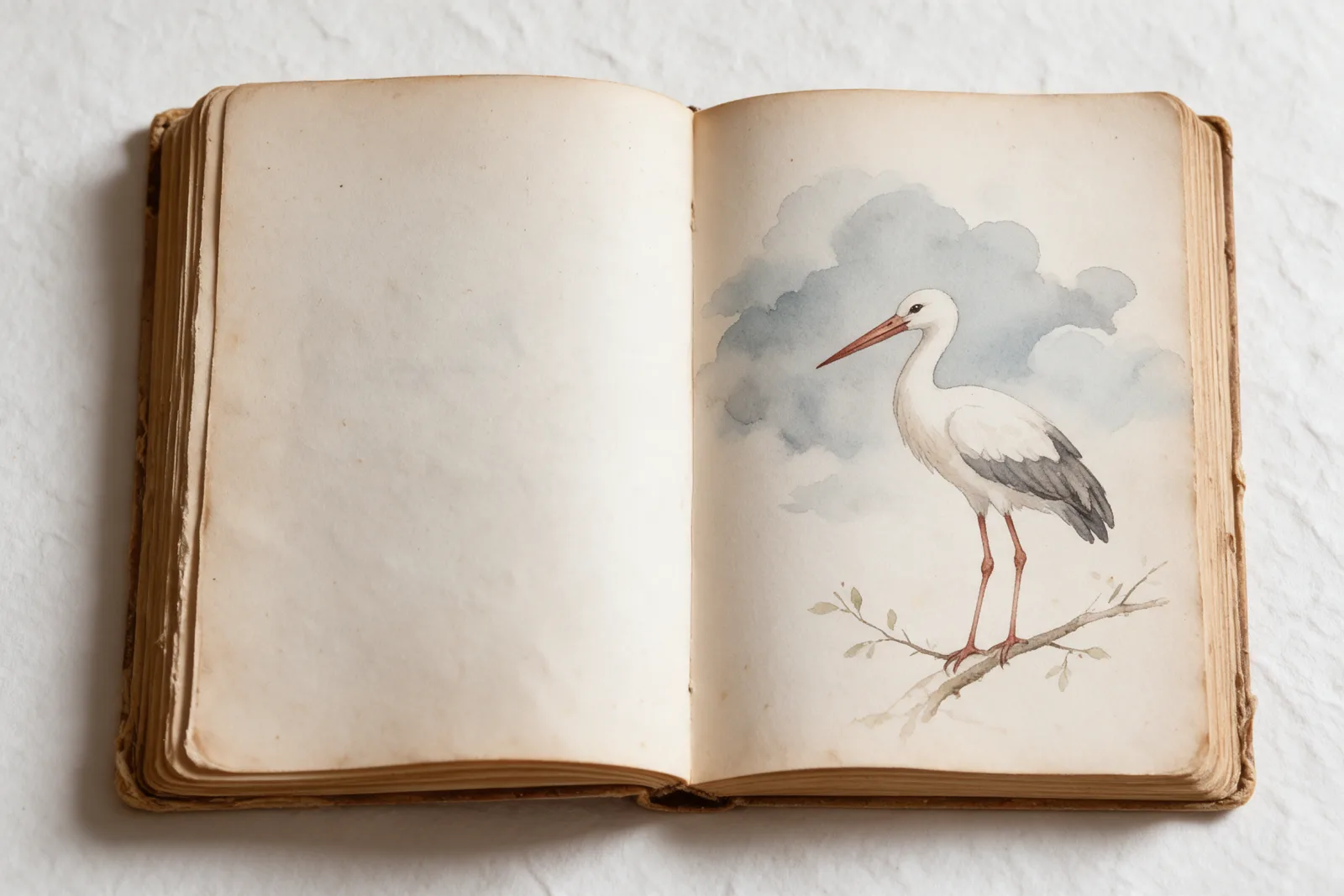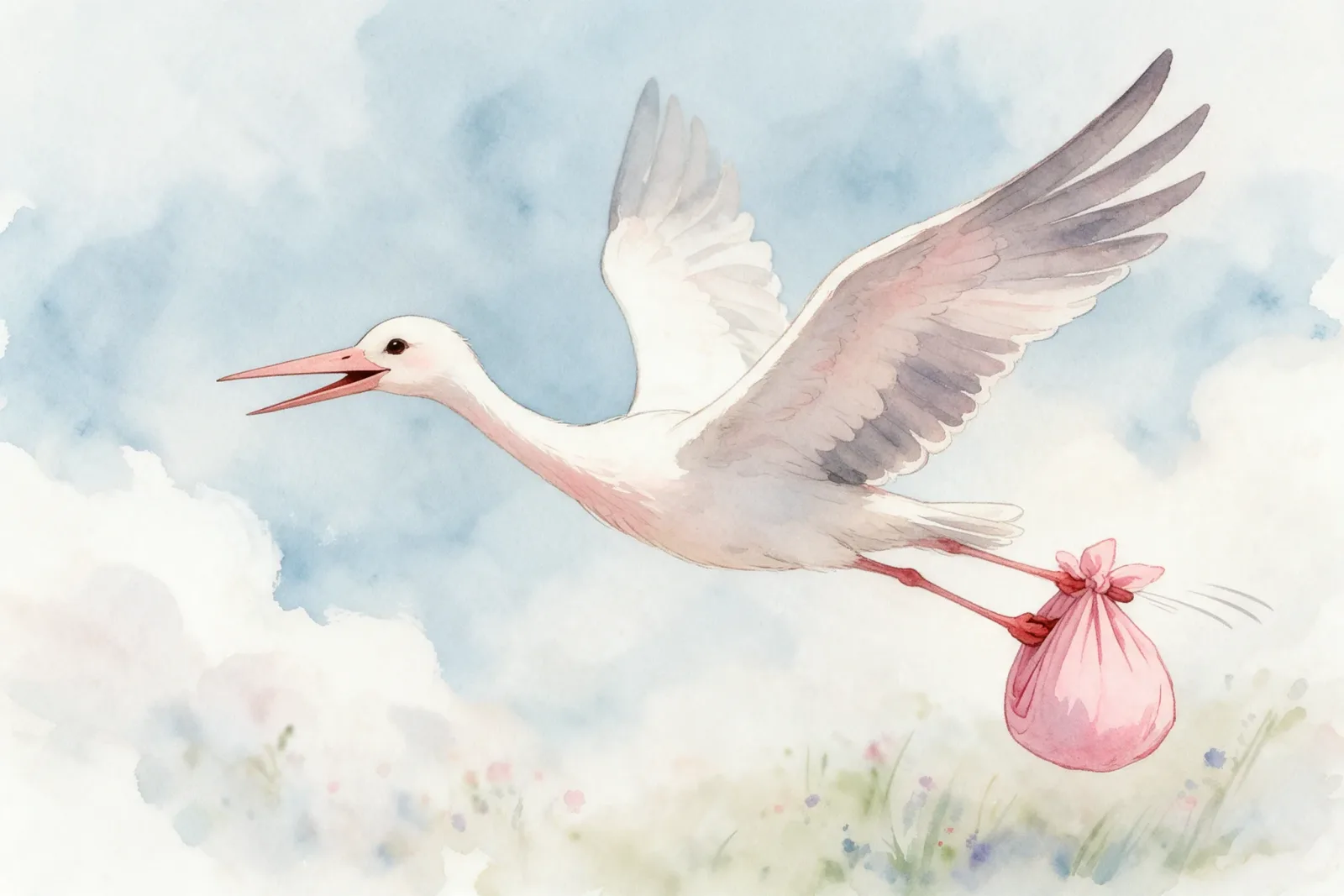
The stork is a nearly songless bird, and the old myths noticed. Why the stork is silent is a question that the folk imagination answered with stories, most of them resting on a single strange fact. The bird does not sing, but it clatters, throwing its bill back and rattling it so loudly the sound carries across a field.
A bird with no song
Unlike the thrush or the lark, the stork has no real voice. It does not sing on the wing, and its calls are scarce and low. For most of the year the bird goes about its business in a silence that can feel almost deliberate.
That silence struck older people as meaningful. A bird so large, so white, and so close to the household surely had something to say, and its refusal to say it asked for an explanation.
The lost song
One old story held that the stork once sang beautifully, and lost its voice as a payment or a punishment. The details vary. Some said the bird gave up its song to carry a child safely. Others said it was silenced for a wrong it had done, condemned to a life of quiet.
In every version the stork's silence is a sacrifice. The bird that could have sung chose, or was made, to be still, and the clatter became the poor substitute for a voice that was once lovely.
The clatter as speech
What the stork lacks in song it makes up in bill clattering, the rapid rattle it performs at the nest, especially when a mate arrives. The sound is loud and strange, and the old myths treated it as a form of speech, the stork's only word.
People said the clatter was the bird talking to its family, or drumming a blessing over the house, or calling the spring north. The sound meant the stork was home, and it announced the bird's return as clearly as any song.
The silence that protects
There was also a gentler reading. The stork's silence was a form of discretion. A bird that carries children and watches over households should not chatter. Its quiet was dignity, a creature too wise to fill the air with noise.
This is why the stork, in art and story, so often stands motionless and calm. The silence became part of its character, the quality that made it seem like a guardian rather than a garden bird.
A silence we still respect
The stork is silent still, and the myth has not been needed to explain it for a long time. Yet the bird's quiet remains part of its appeal. It does not sing for us or perform. It simply returns, stands watch, and clatters when it is happy.
Why the stork is silent may have a scientific answer, but the folk answer is warmer. The bird keeps its song to itself, and gives us instead the steady, rattling news that it has come home.
Explore the gift