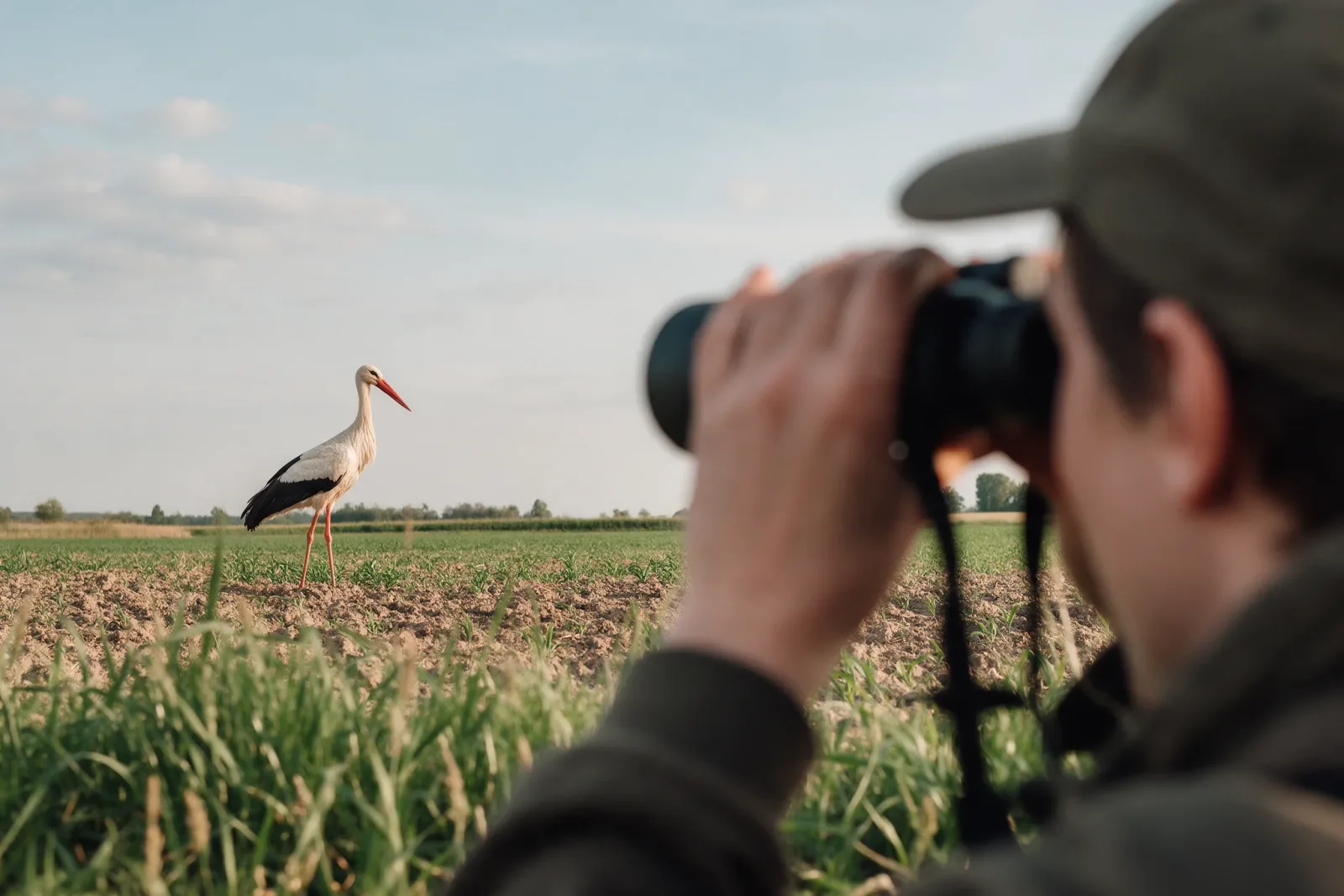
Your first stork sighting will probably catch you unprepared, because first storks do not arrive on schedule. You will be walking somewhere ordinary, a lane, a field edge, a car park, and a large white bird will cross your path or rise from the grass, and for a second your brain will refuse to name it. Then it will come to you: a stork. And the ordinary day will quietly split in two.
What the first sighting looks like
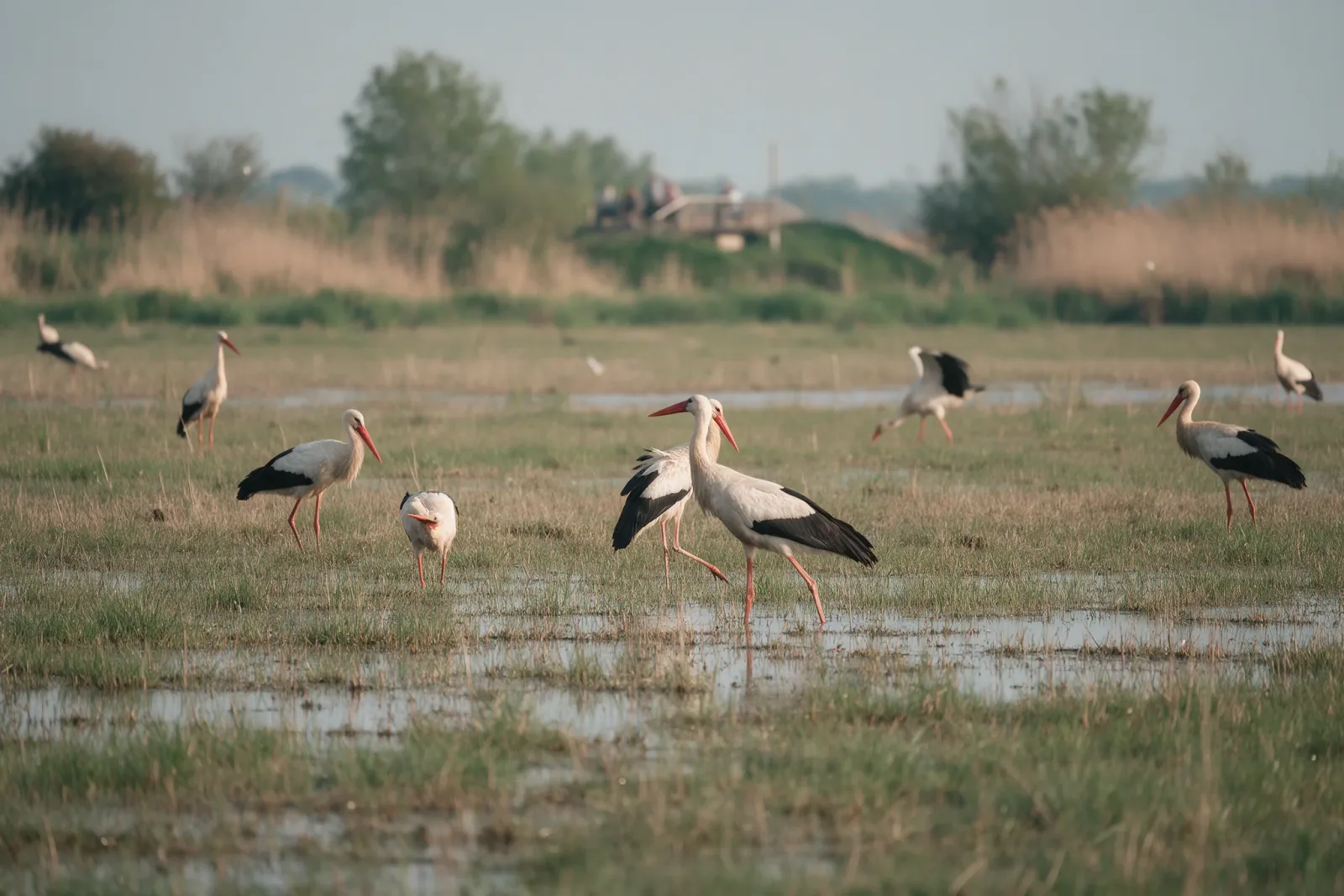
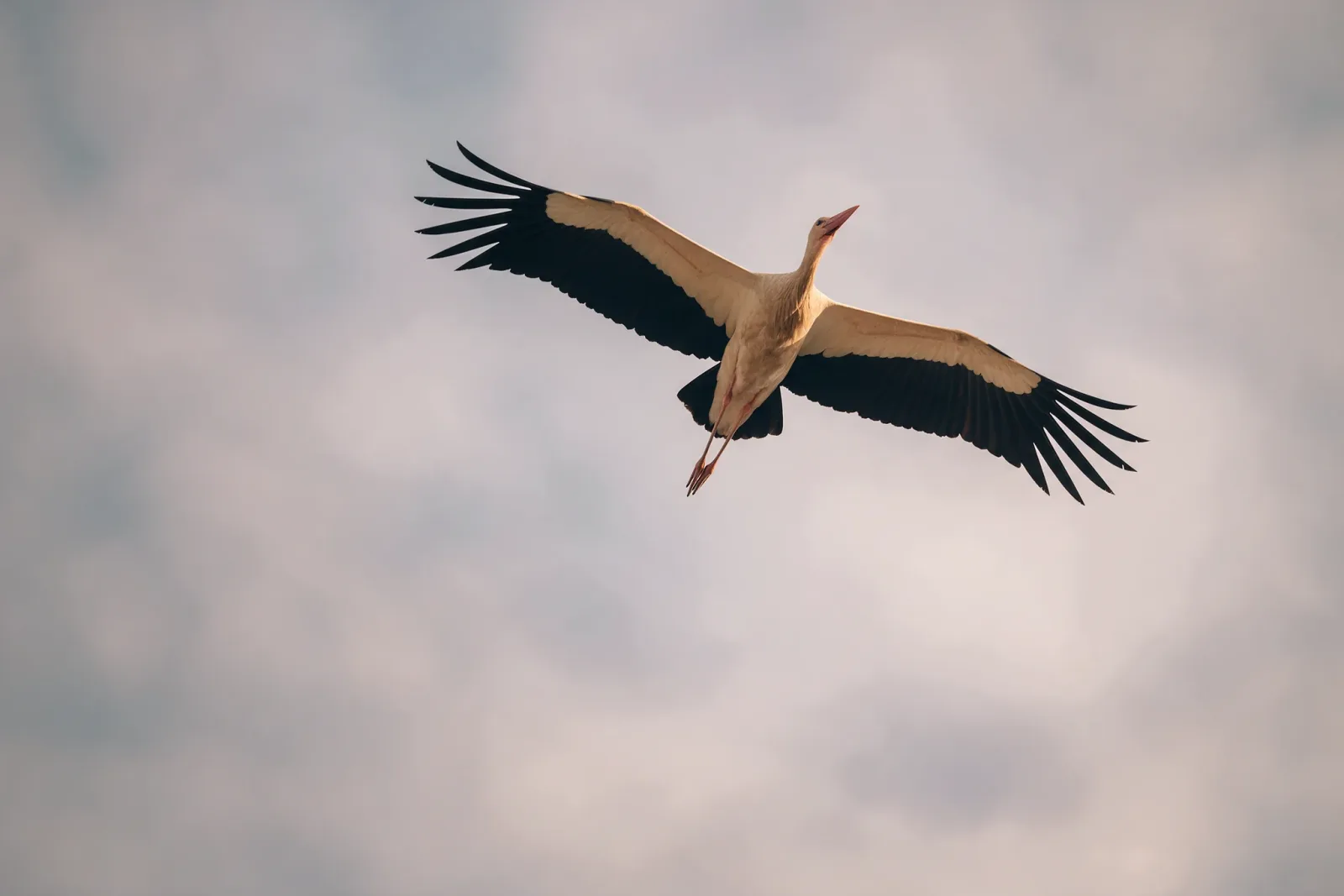
The first sighting is usually a shape before it is a bird. A flash of white too large to be a gull, black along the back edge of the wing, a long neck stretched out, long legs trailing. It may be on the ground, walking slowly, or it may be overhead, gliding without a wingbeat. Either way, the size is the first thing that tells you this is not the usual bird of the morning.
The moment of recognition
There is a small click when the shape becomes a name. You know storks from pictures, from stories, from the rooftops of photographs, and suddenly one is here, real, in front of you. That click is the whole point. It is the moment a bird that belonged to the page and the film moves into your own sky, and nothing about the day is quite the same afterward.
The first sighting is rarely perfect
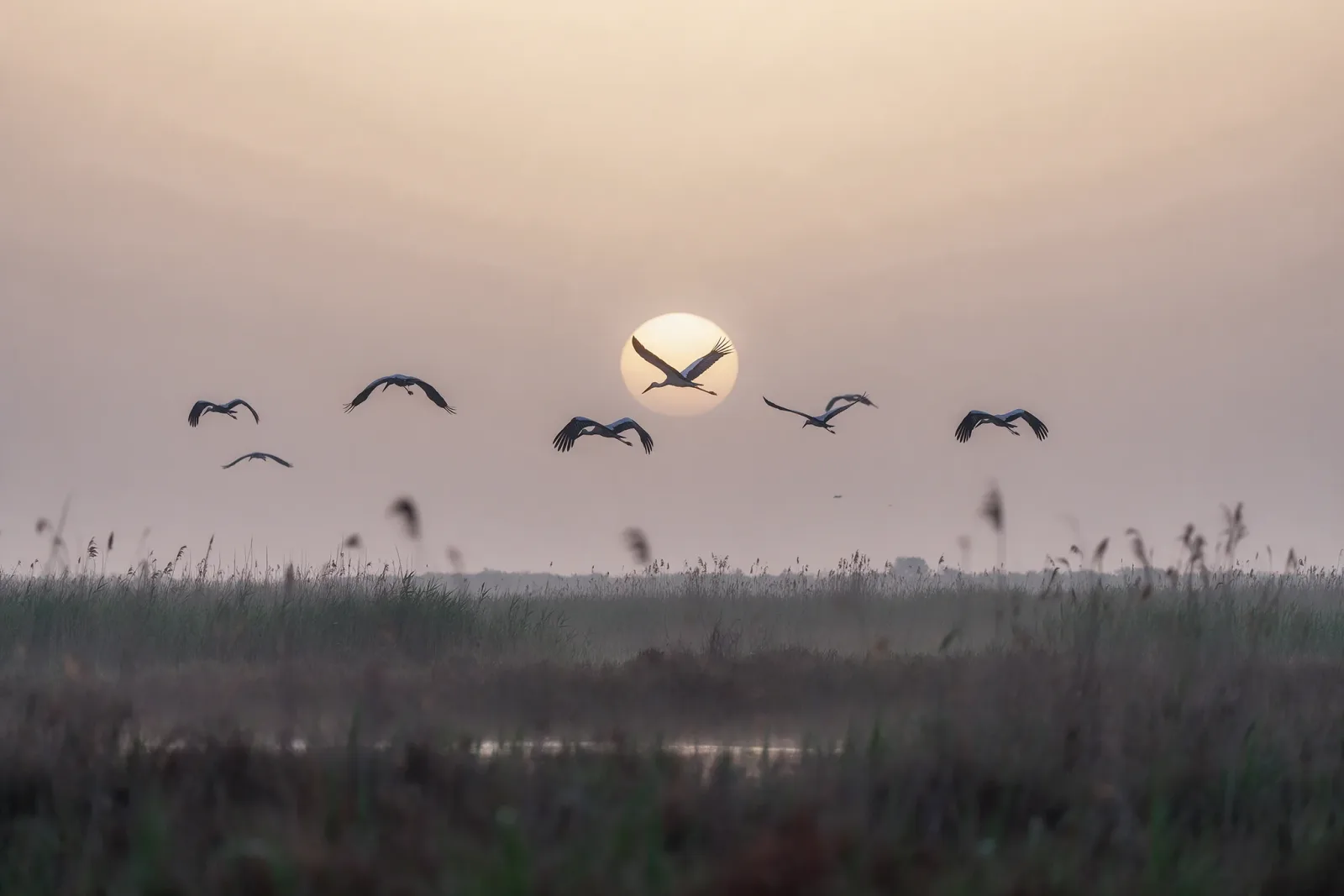
Do not expect the first stork to pose. It will likely be distant, or backlit, or already flying away. That is how first sightings go. The bird is not performing for you, and its brevity does not make it less real. Take what you are given, the glimpse, the silhouette, the sound of the wings if you are lucky, and let it be enough. The memory will smooth itself out over time.
You will look again
The surest effect of a first stork is that you will start looking for the next one. The sky that was once just weather now has a possibility in it. You will find yourself scanning fields you used to cross without a thought, and every large white bird will make you slow down. The first sighting does not end when the bird is gone. It begins a habit that will outlast the moment by years.
Wherever you were, remember it
Note the place and the date, because you will want them later. First sightings have a way of becoming landmarks in memory, the way the stork's own first migration becomes the route it will follow for the rest of its life. You did not choose the day the stork crossed your path. But you can choose to remember it, and that is where the watching really starts.
Explore the gift